 York Illustrated
Tower 32 on the northern section of York's City Wall has been known as the 'New Tower' since at least 1380, so it's not really 'new' at all.
Image 1
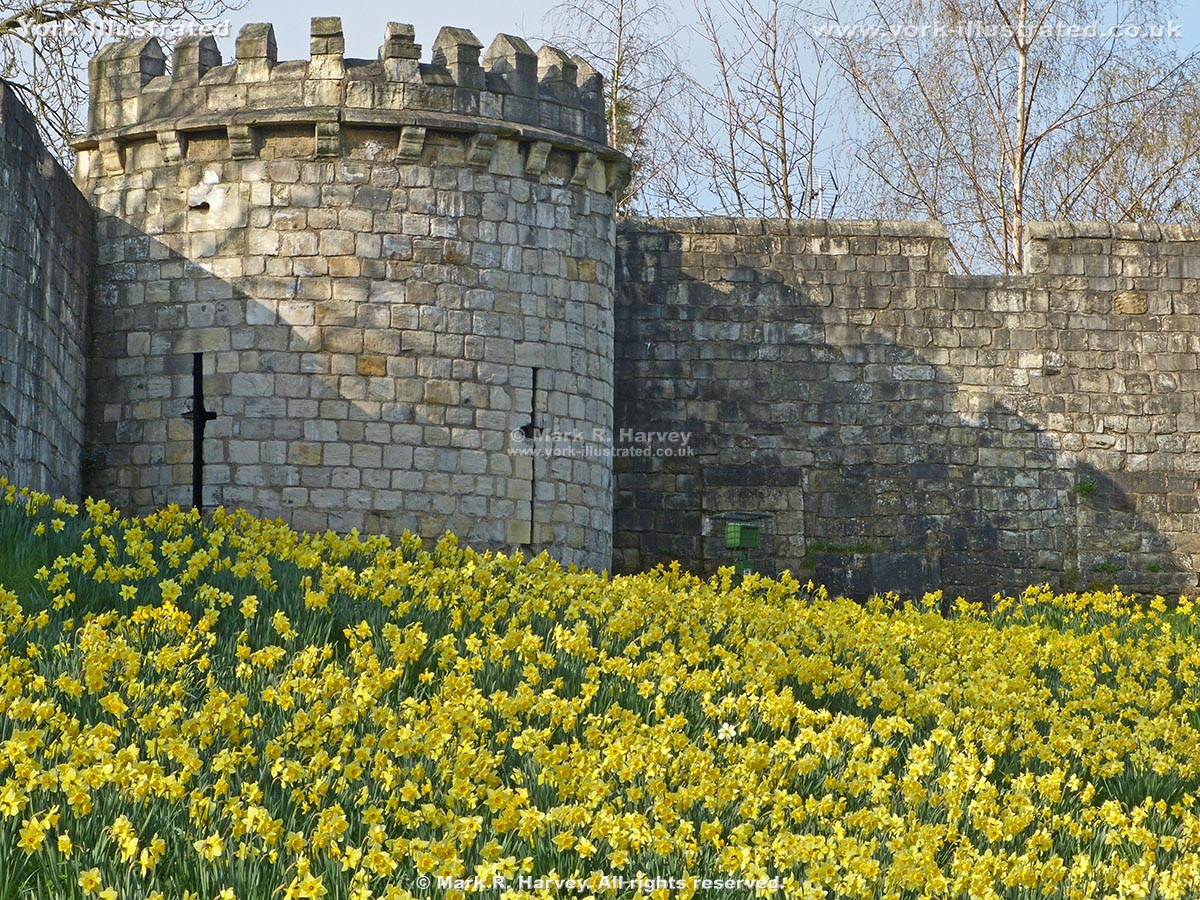
Image 2
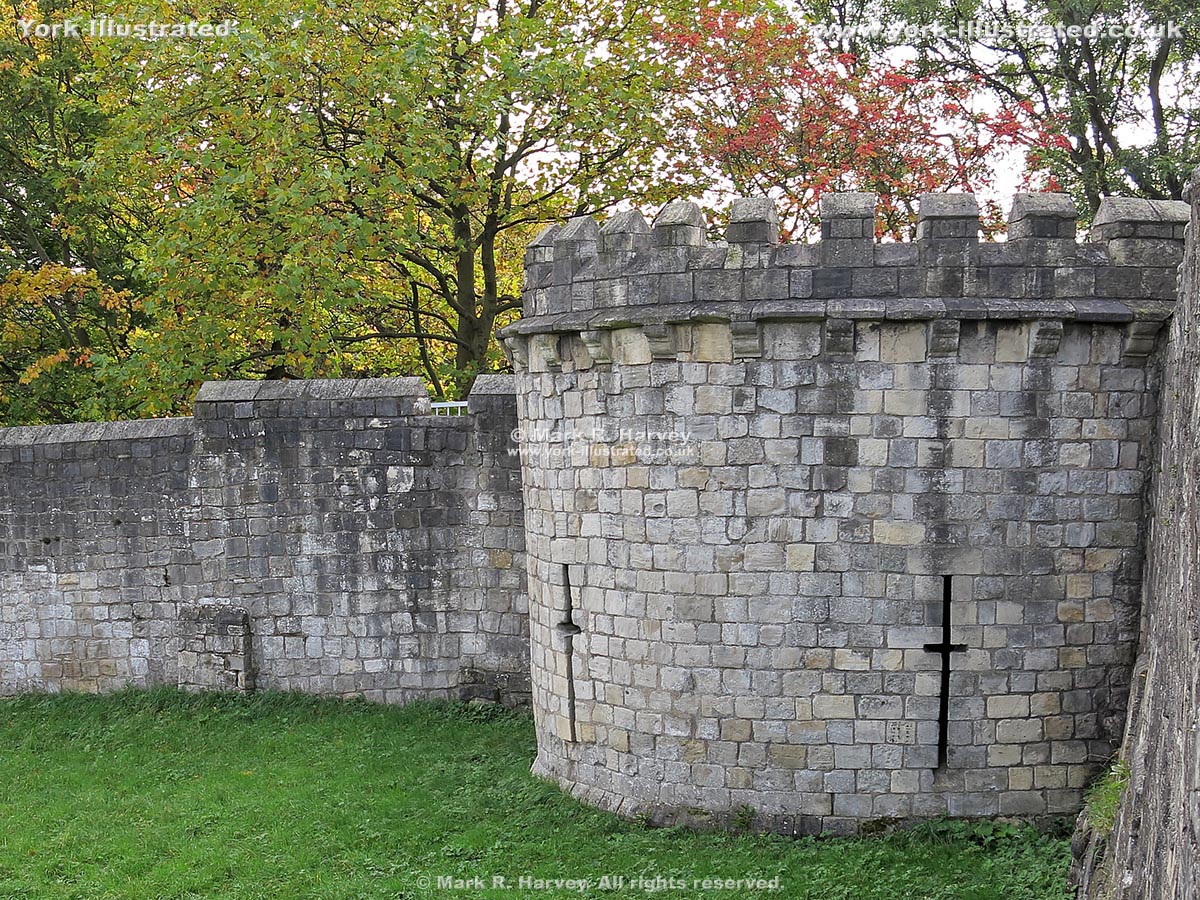
The tower was originally semi-elliptical in shape and, prior to 1851, it had no wall on the city side.
The lower portion of the tower's outward-facing wall (including the three elongated cruciform arrow slits) is believed to date from the mid-14th century (circa 1333 to 1366).
The upper portion (including the crenellations) is the result of 'restoration work' during the 19th century. One of the stones in the re-built upper section includes an oilet that would originally have formed the end of a different style of arrow slit. (See Image 1, towards the top-left of the tower's wall.)
A brick-vaulted roof was added to the tower in 1871, but this was replaced with a flat concrete slab in 1950.