 York Illustrated
York Observatory opened in 1832. A transit telescope installed in 1844 allowed citizens to set their clocks. As each visit cost sixpence, time really was money.
York Observatory was built (to a design attributed to William Wilkins) during the winter of 1831-2. The £300 building cost was covered by donations from the Yorkshire Philosophical Society.
A 'transit telescope' (manufactured by Thomas Cooke of York) was installed in 1844. This allowed astronomers to use the transit of the stars to accurately set a master timepiece. York citizens were then encouraged to visit the observatory on a regular basis to set their clocks and watches. Members of the Yorkshire Philosophical Society were allowed to use this service free of charge, but everyone else had to pay a fee of sixpence per visit.
Image 1
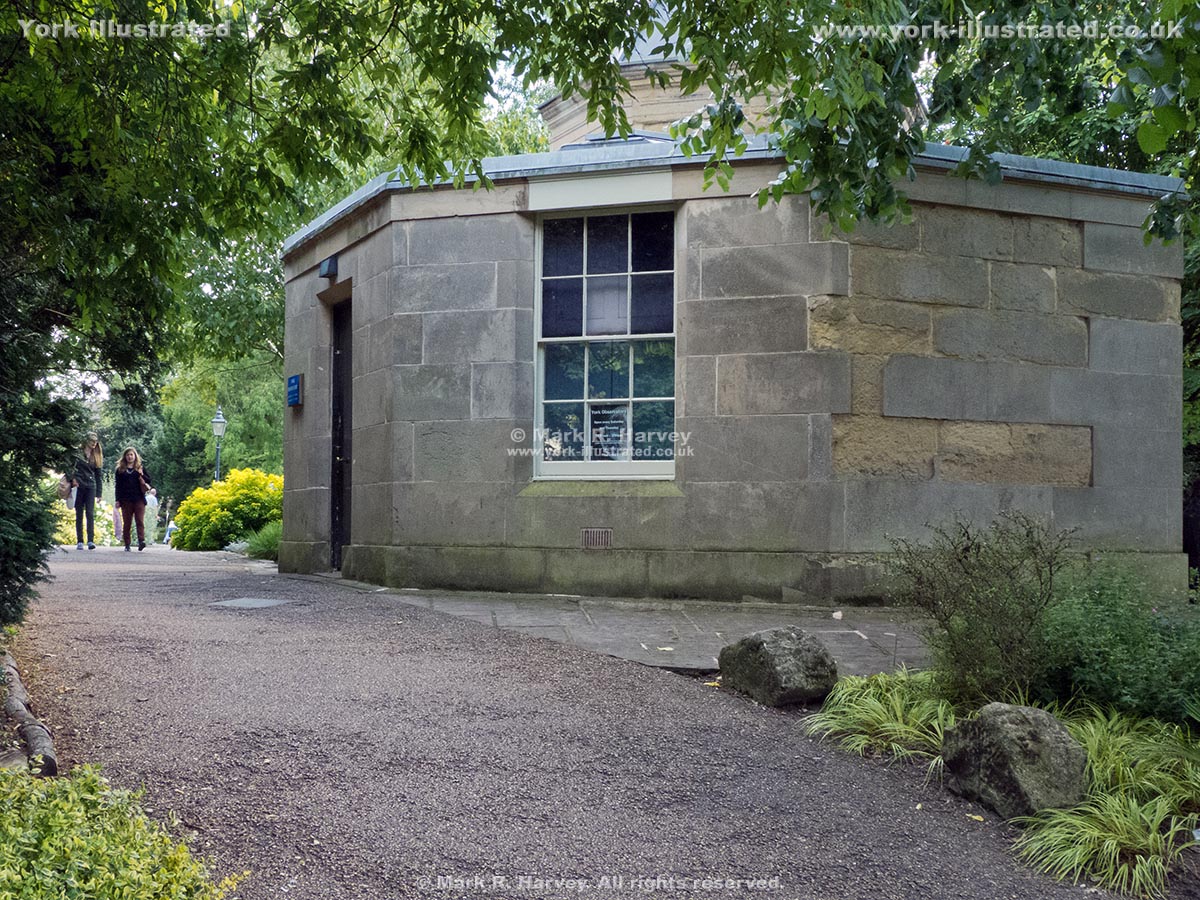
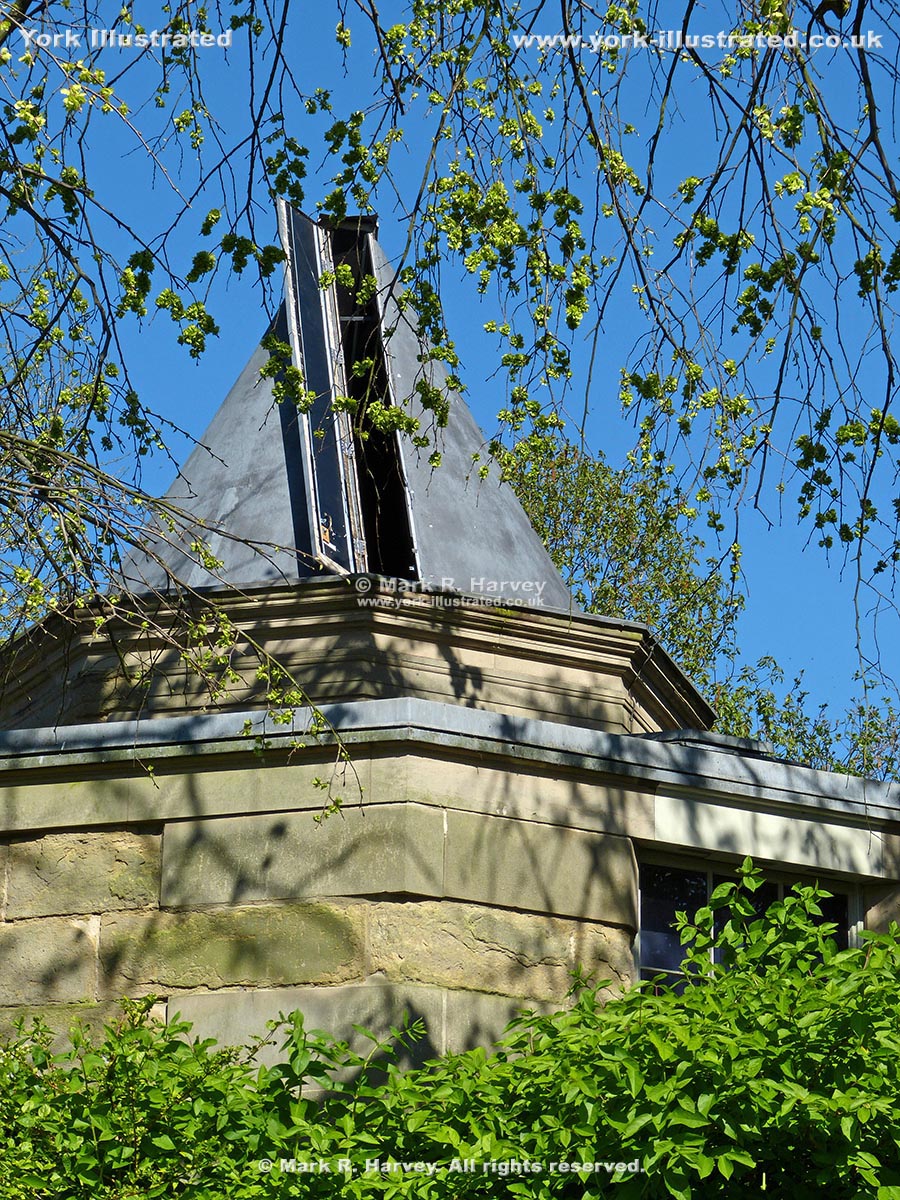
Image 2
The observatory building fell into disrepair after the Second World War but, following a successful public appeal for donations, it was restored in 1981.
The building is grade II listed and it currently houses a 4" refracting telescope built in York in 1850. It is also used to display a series of interpretation panels relating to
- the observatory;
- 'time' in general; and
- the astronomical instrument maker Thomas Cooke (who had no connection with the founder of the travel company of the same name).
Volunteers occasionally open the observatory to the public and this was the case when Image 2 was taken. The viewing slot in the roof was open (during the day) because the telescope inside was being used to allow members of the public to indirectly (and safely) observe the transit of Mercury across the face of the Sun.
External Links
For further information regarding the York Observatory, including details of scheduled opening times, please refer to the following page on the York Museum Trust's website:
http://www.yorkmuseumgardens.org.uk/about/york-observatory/