 York Illustrated
John Browne (1793-1877) is best known for his historical research on York Minster and for his high quality illustrations of architectural details.
The artist and author John Browne was born in Walmgate Bar on the 2nd of May 1793. He was the eldest of 18 children. He attended a nearby school for a while, but he soon declared that he knew as much as his teachers and left. After spending some time in domestic service (to ease the financial burden on his parents), he moved to his grandfather’s house in Walmgate and began trading as an ‘artist decorator’, specialising in the faux wood and faux marble effects that were becoming popular at the time. During this period, he developed a fascination with architecture and architectural drawing and he devoted much of his spare time to developing both his artistic skills and his knowledge of architectural history. In 1825, he became a member of the York Union Lodge of Freemasons and he quickly mastered the core knowledge and skills associated with the stone-mason’s craft. In 1828, he moved to new premises at 21 Blake Street (close to the Assembly Rooms), where he set-up an art studio and bookshop. Although he was still running a decorating business, he began to devote an increasing proportion of his time and energy to his architectural passions. This culminated in the publication of his seminal work: a highly illustrated book entitled "The History of the Metropolitan Church of St. Peter, York" (published in 1847 by Longman & Co., London). In 1856, the authors J.J. Sheahan & T. Whellan described Browne’s book in glowing terms:
"This great work, which was commenced in 1827, and completed in 1847, is in 33 numbers (4 to Elephant[See note 1.]) to correspond with Halfpenny's "Gothic Ornaments" or in two vols. It is illustrated by extracts from authentic records, by plans, sections and engravings of architectural and sculptural details; and some of the best authorities have declared it to be, not only the best History of the Cathedral, but to be of more practical service to the profession of the Architect, than any other work published on pointed architecture and its decorations."
Source: Sheahan, James Joseph and Whellan, T.: "History and Topography of Yorkshire, Volume I", 1856
Note 1: 'Elephant' in this context is a publishing term associated with the size of a sheet of paper or a printed book. An 'elephant folio' is a large book that is up to 23 inches tall.
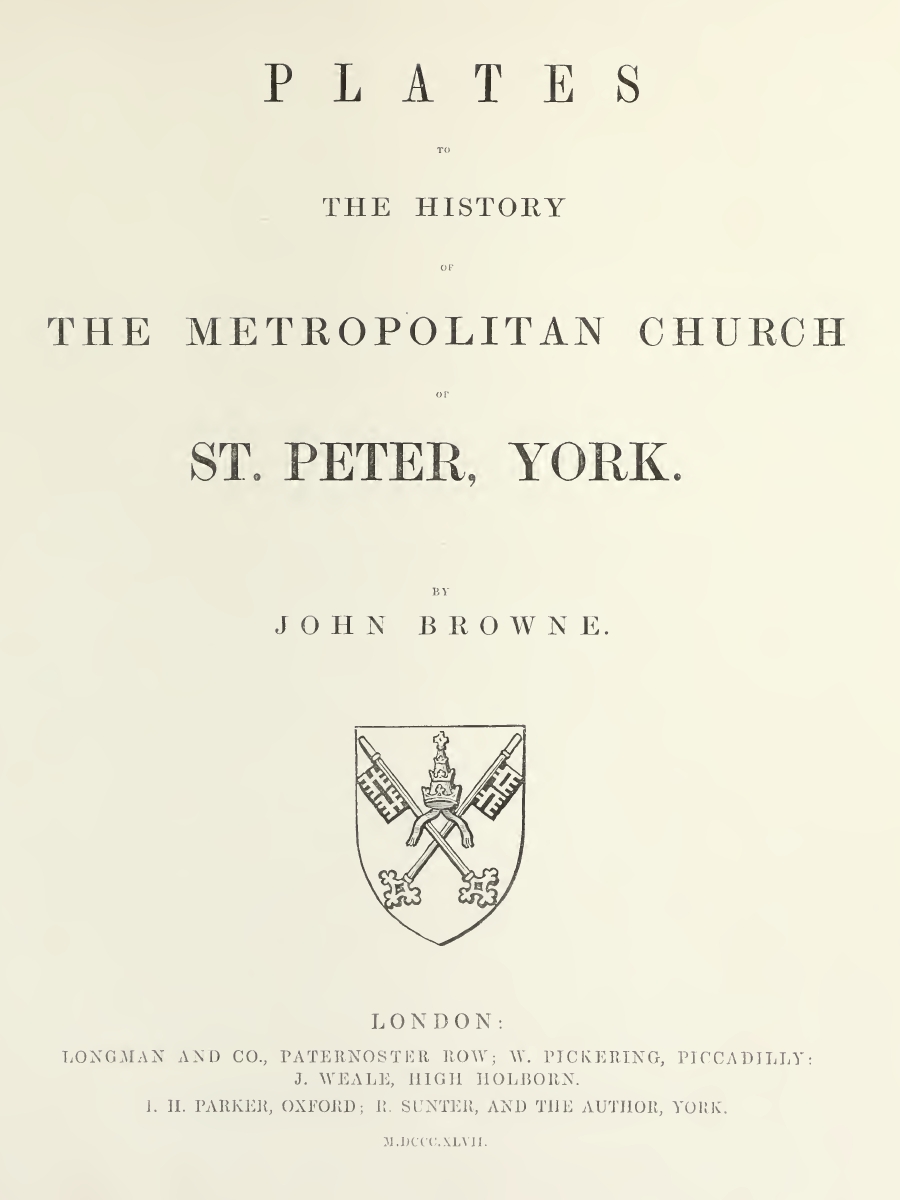
Volume 2 of the two-volume set is especially recommended as it contains the plates (150 illustrations). As can be seen from the examples below (Images 1 to 18), these works of art show a fascinating level of detail.
Image 1

Plate 25: A carved capital from the Norman crypt. Note the incomplete series of 'intersecting circular arches' near the top of the capital. According to Browne, these are "the only instance of such arches to be found in the Cathedral".
Image 2
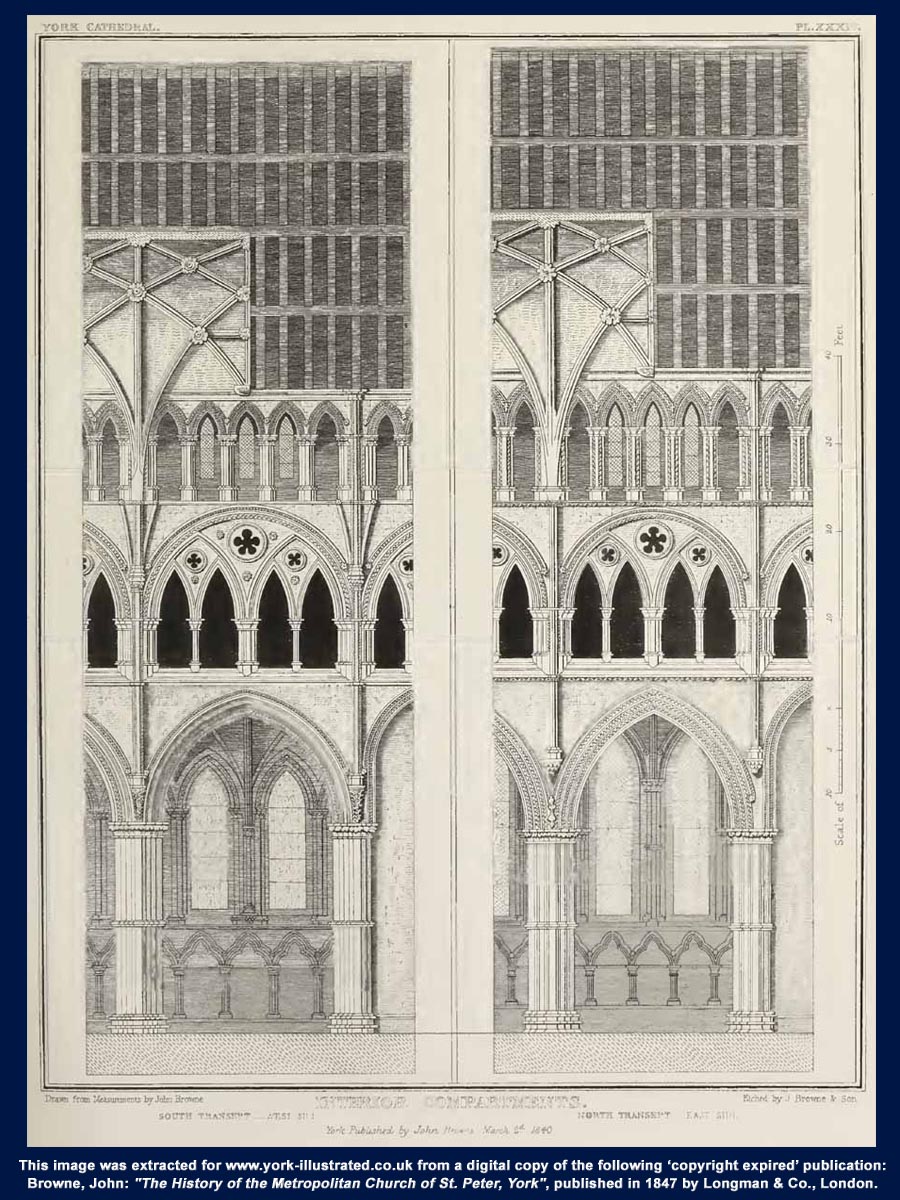
Plate 34: York Minster south transept, two interior compartments. These are the central bays on the west and east sides.
Image 3
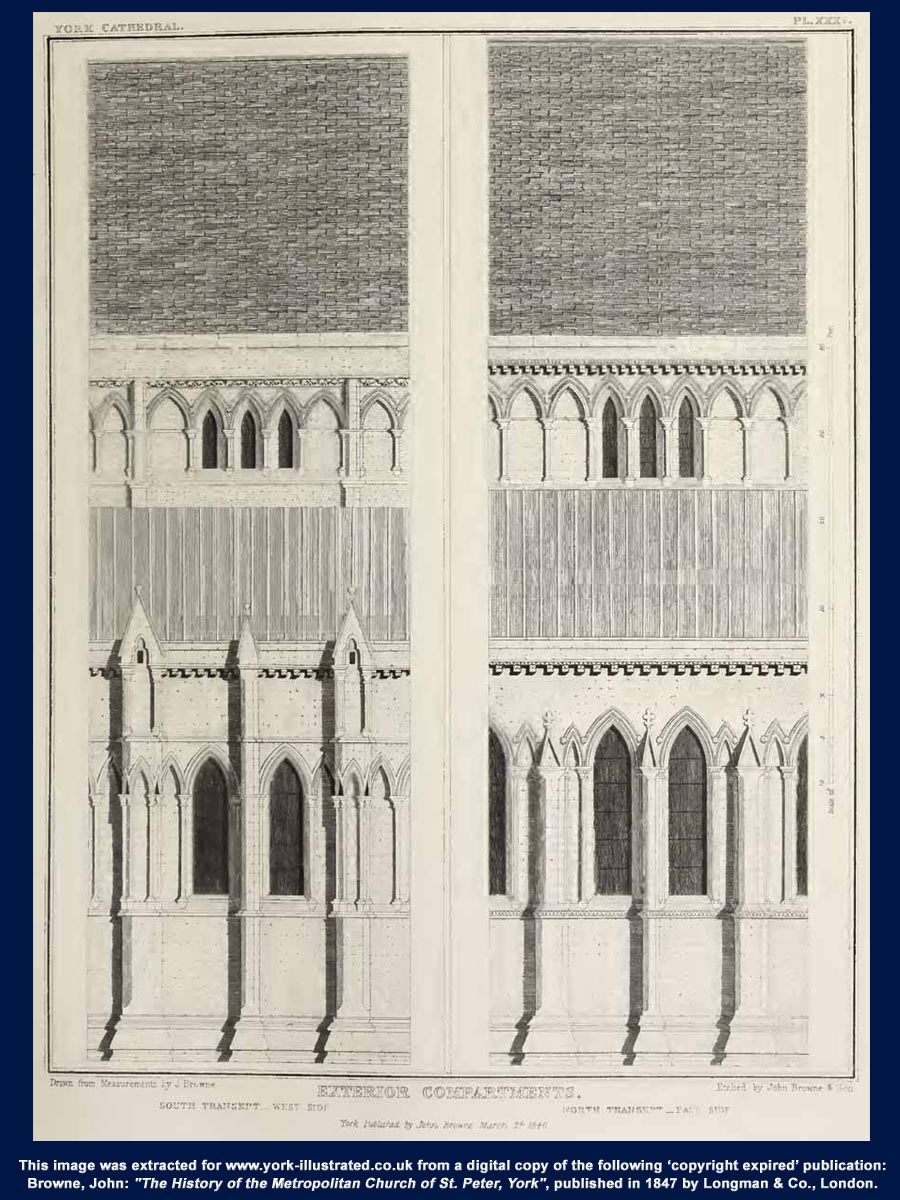
Plate 35: York Minster south transept, two exterior compartments. (The exterior faces of the internal bays depicted in Plate 34.)
Image 4
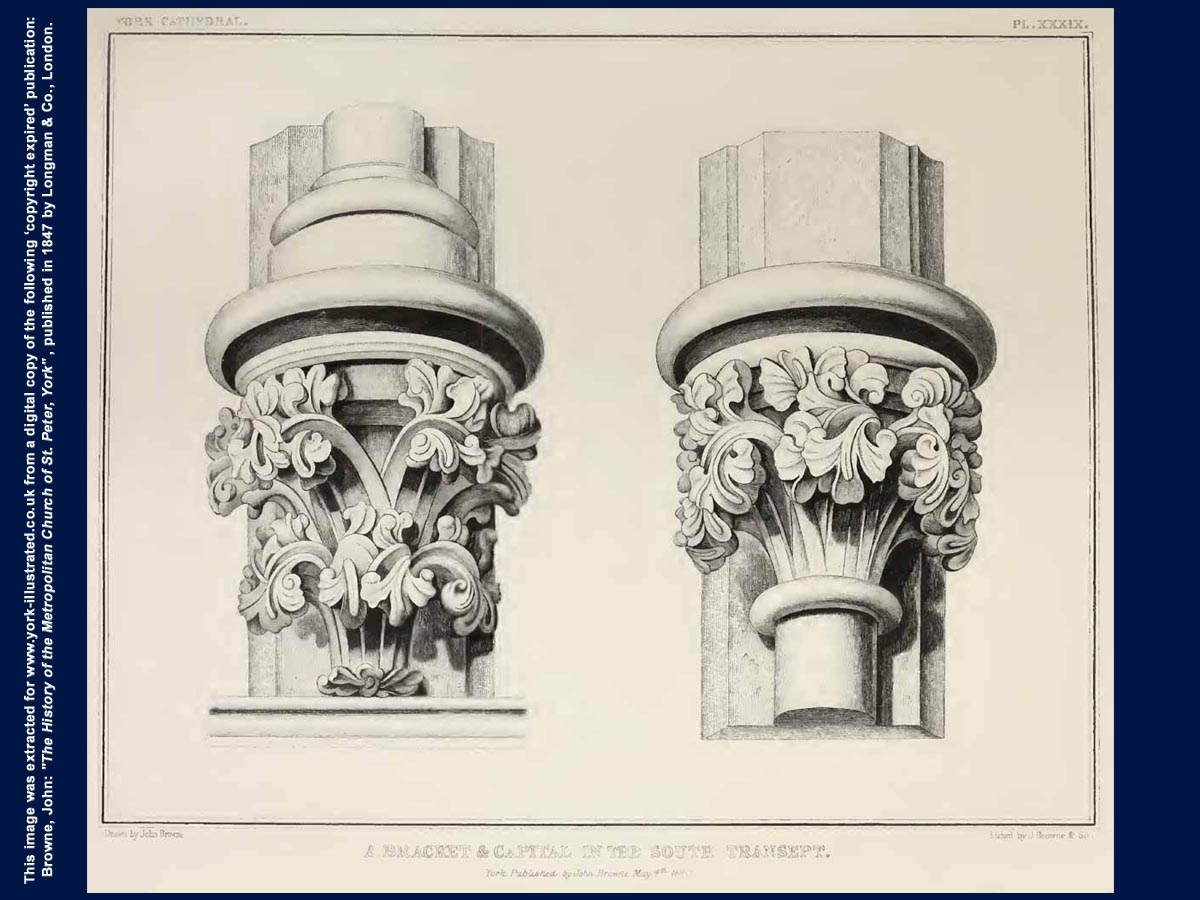
Plate 39: A carved bracket and capital from the south transept. These feature two tiers of the 'Herba Benedicta' (a.k.a. 'the Blessed Herb' or 'Herb Bennet', left) and a single tier of 'conventional foliage' (right).
Image 5
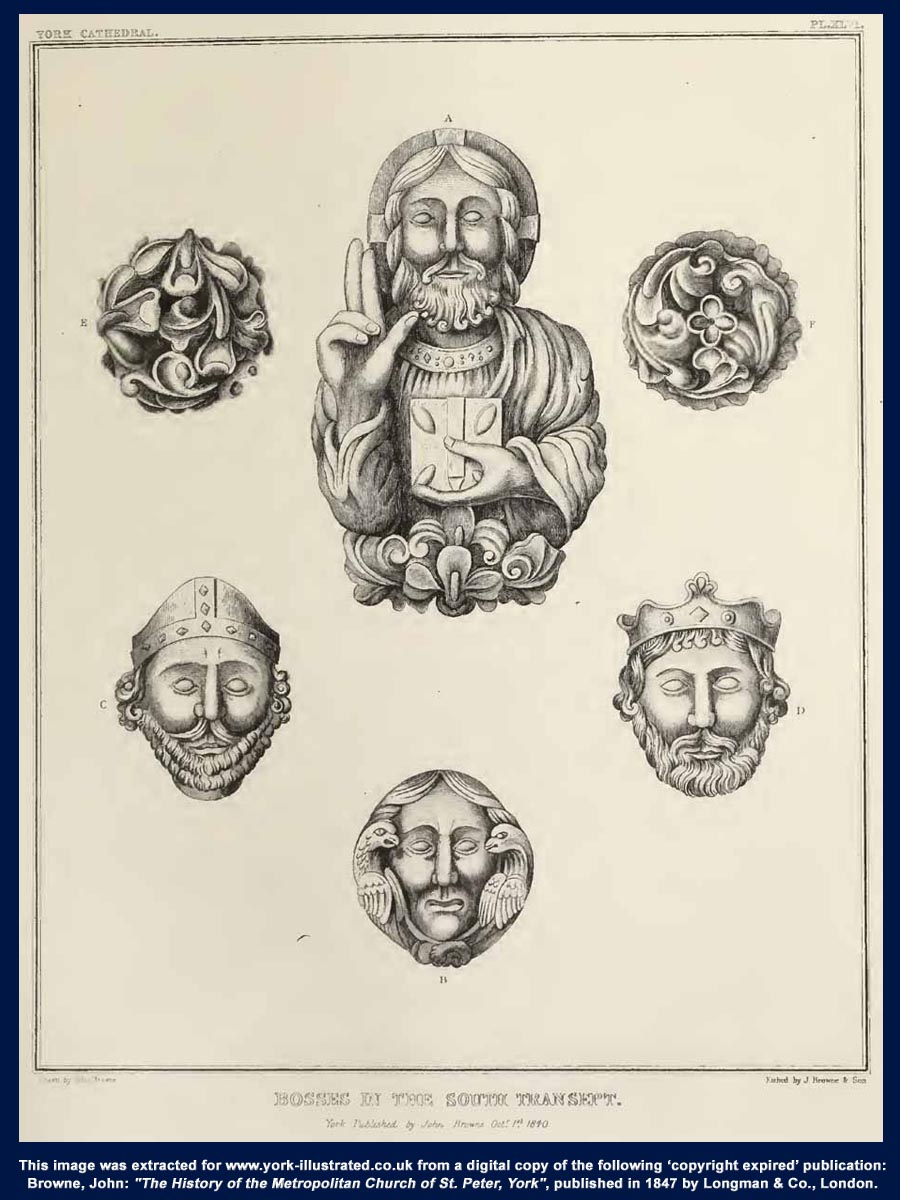
Plate 46: Six bosses from the south transept. "The boss A is a bust representing the Saviour of the World in the act of giving his benediction".
Image 6
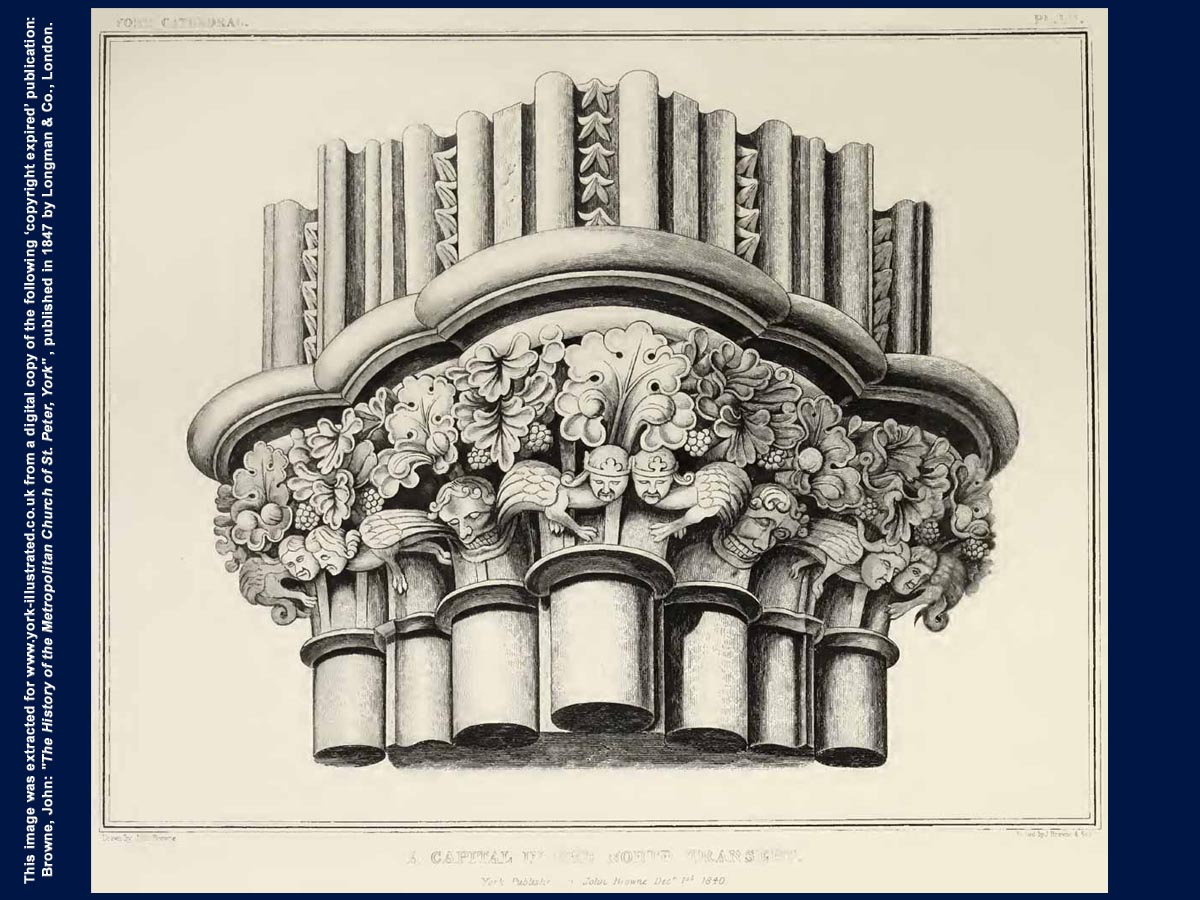
Plate 52: A carved clustered capital from the north transept. Note the 'Herba Benedicta' with fruits, the heads and the male and female 'harpies' (mythical forms: half-human, half-bird).
Image 7
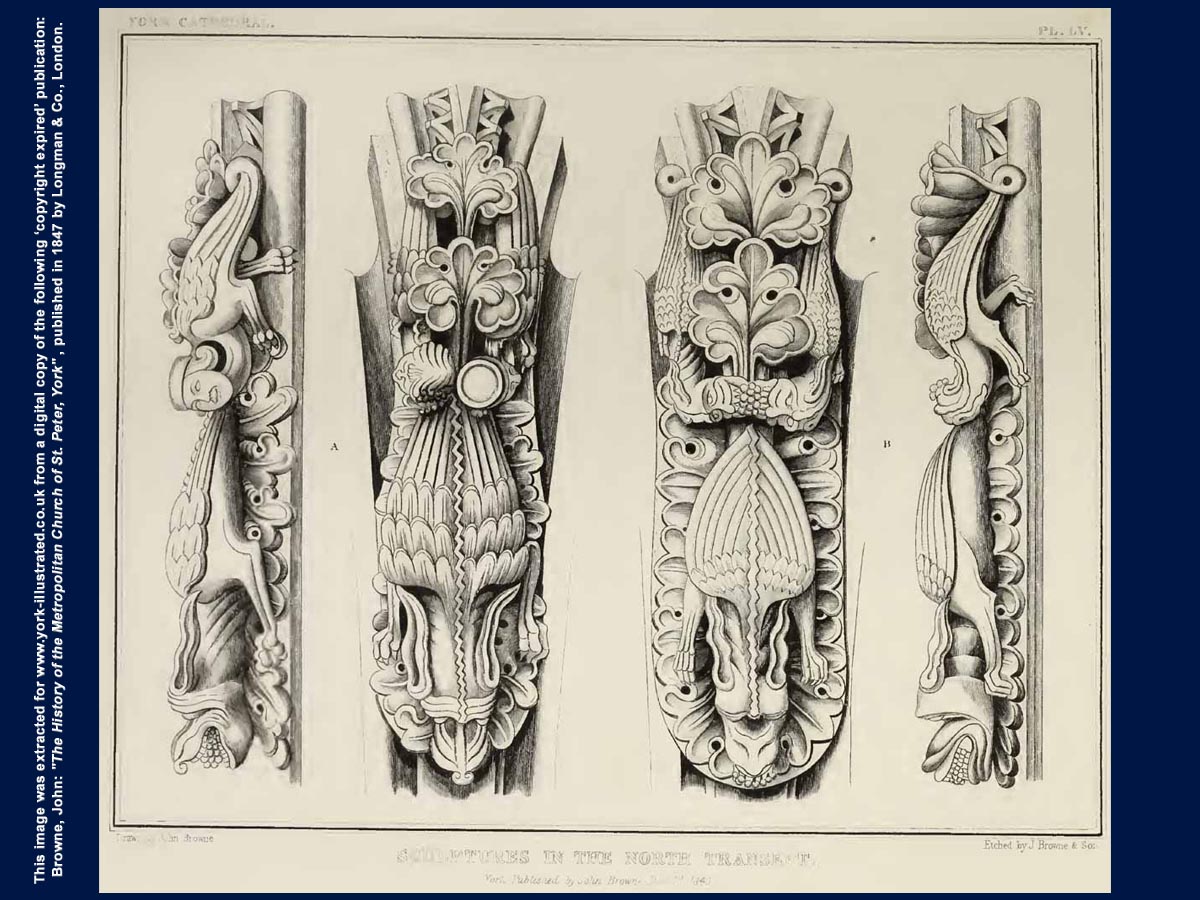
Plate 55: Two sculptures (front and side elevations) from the north transept. Both examples include harpies and reptilian monsters, plus the 'Herba Benedicta' to ward-off evil spirits.
Image 8
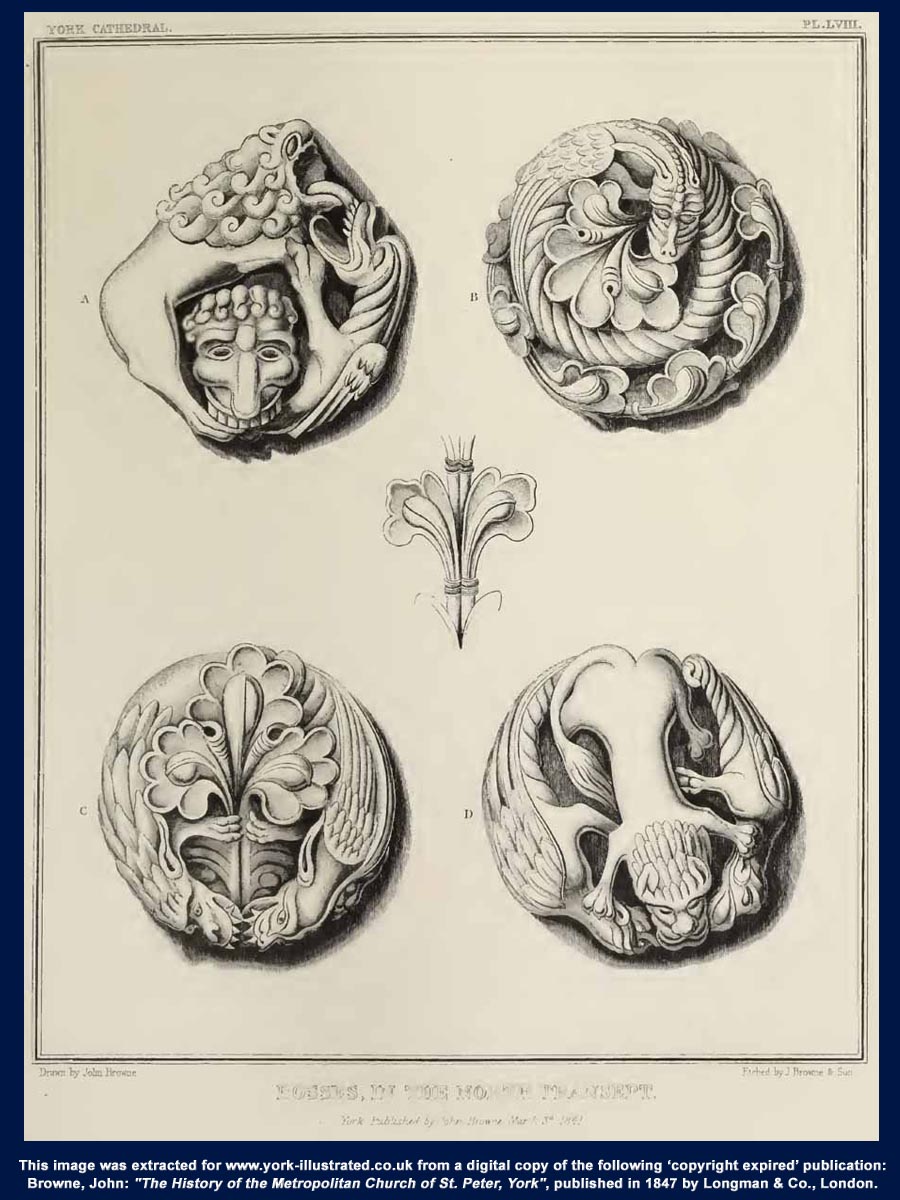
Plate 63: Five bosses from the north transept. These include depictions of a human head, lions, winged lizards and the omnipresent 'Herba Benedicta'.
Image 9
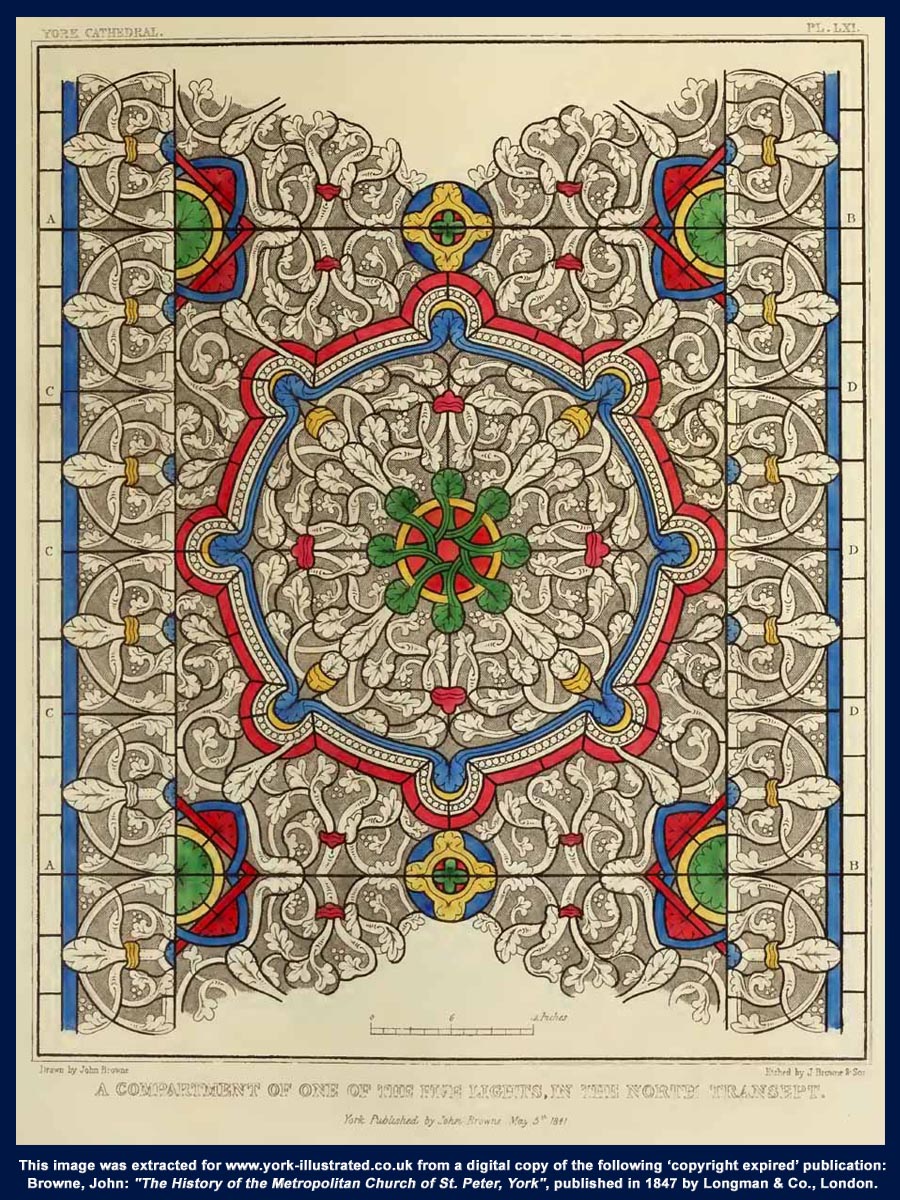
Plate 61: A portion of one of the 'five lights' (stained glass windows) in the north transept that are embellished entirely with foliage and geometrical figures.
Image 10
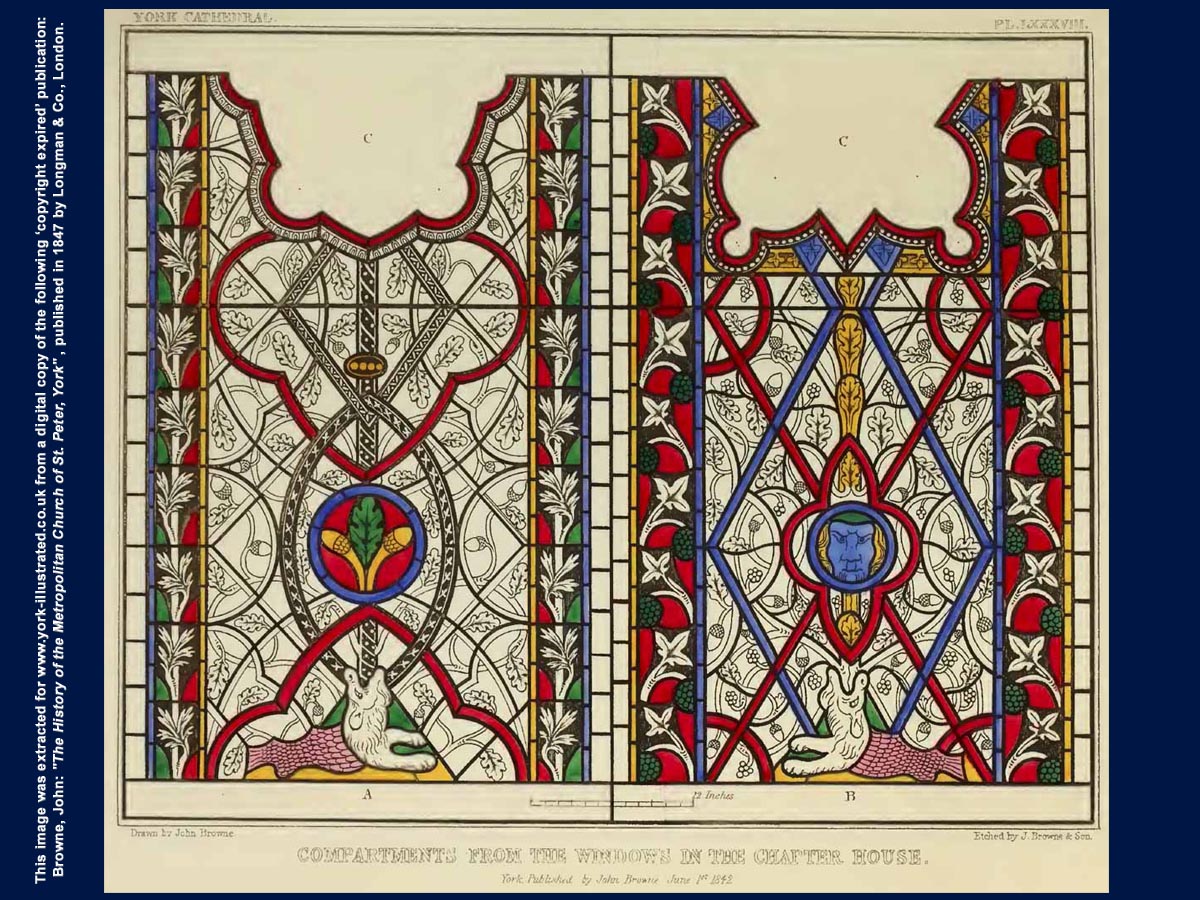
Plate 88: Part of one of the lights (stained glass windows) from the chapter house. Both of these examples include foliage and fruit from the oak tree. Note the lion (blue face with yellow and green mane) at the centre of 'B'.
Image 11
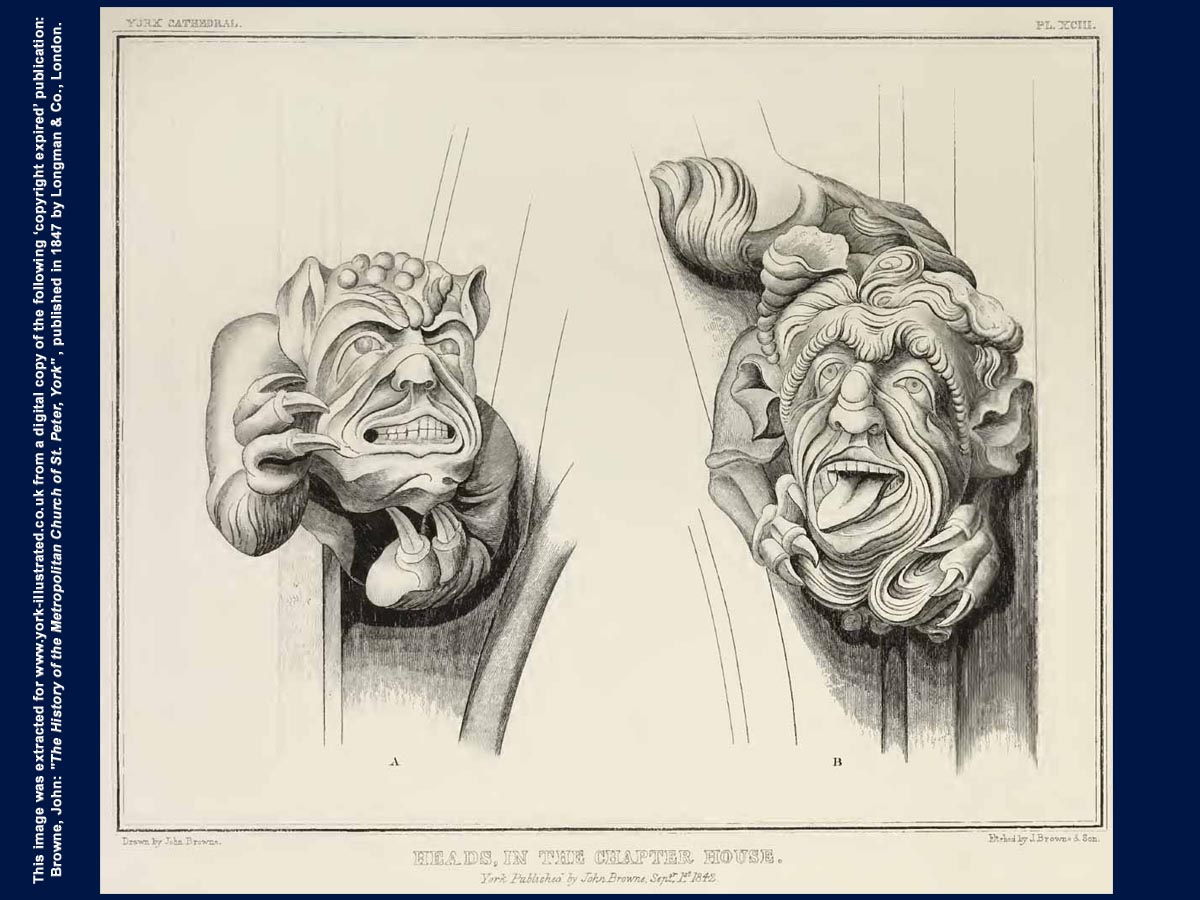
Plate 93: A pair of carved heads from the chapter house. Browne suggests that 'A' represents "a female demon, tearing her face and grinning at the assembled multitude", while 'B' probably represents "the great male demon".
Image 12

Plate 99: Two carved bracket bosses from the nave. 'A' includes a heron and a spoonbill, while 'B' is "a production of the carver's or designer's imagination".
Image 13
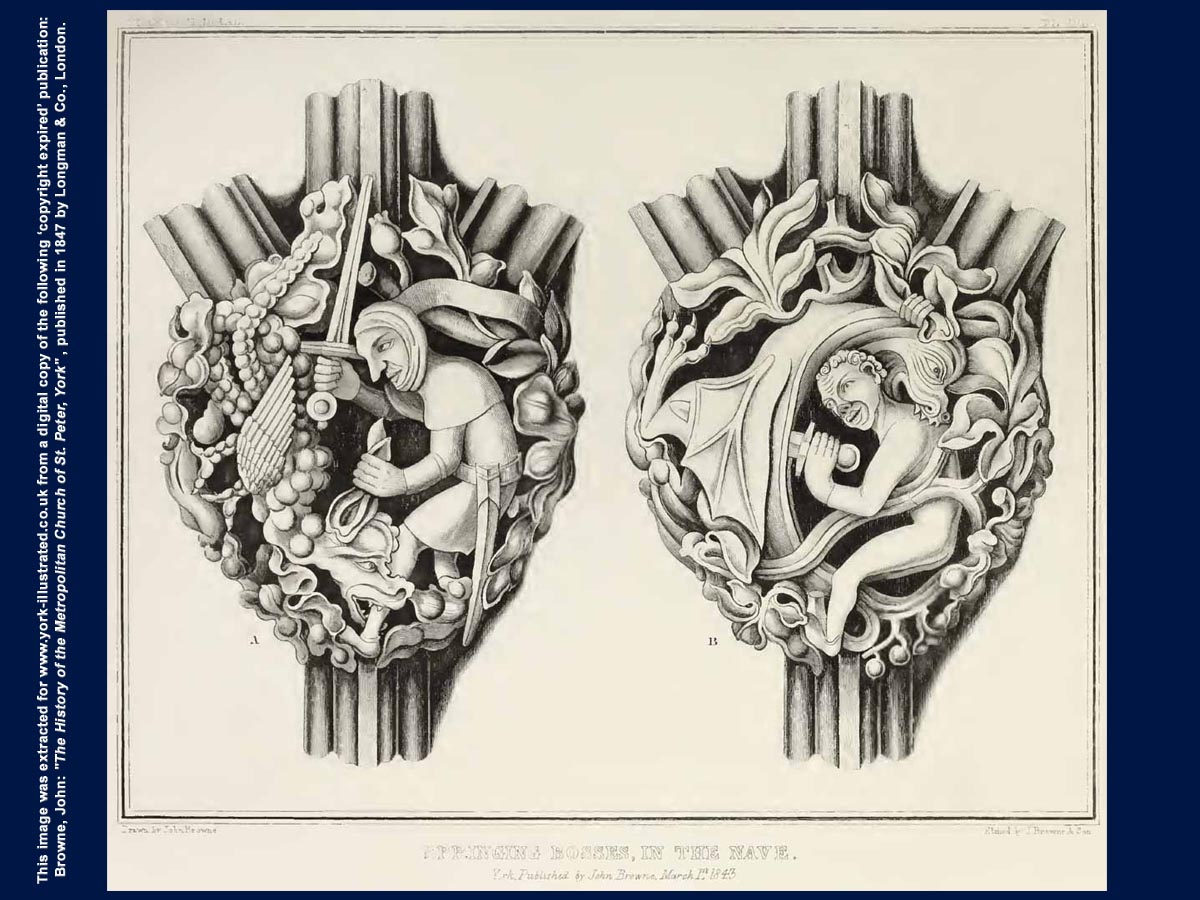
Plate 103: A pair of carved springing bosses from the nave. Both include representations of a man fighting a dragon.
Image 14
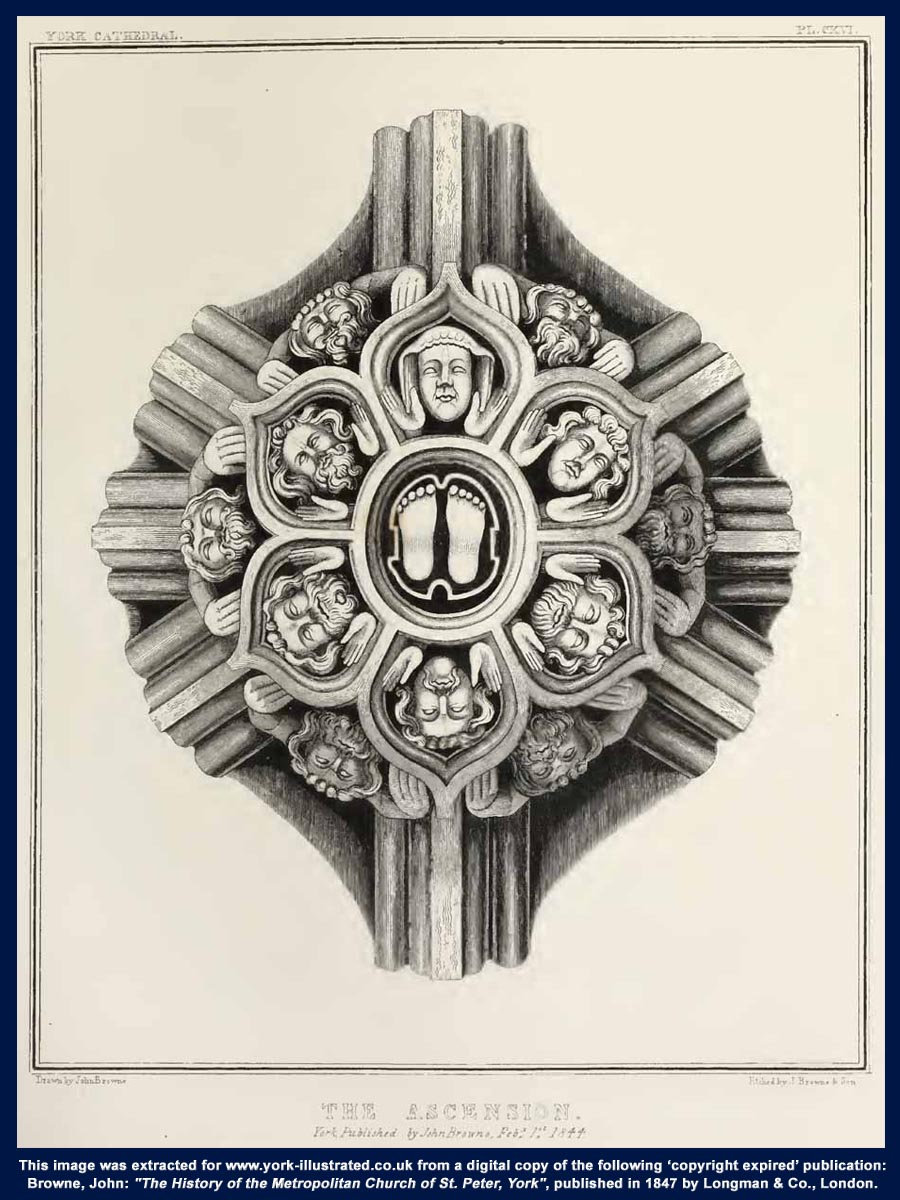
Plate 116: The carved 'ascension' boss in the nave depicts the feet of Jesus as he ascends into Heaven, surrounded by the Blessed Virgin and the eleven Apostles.
Image 15
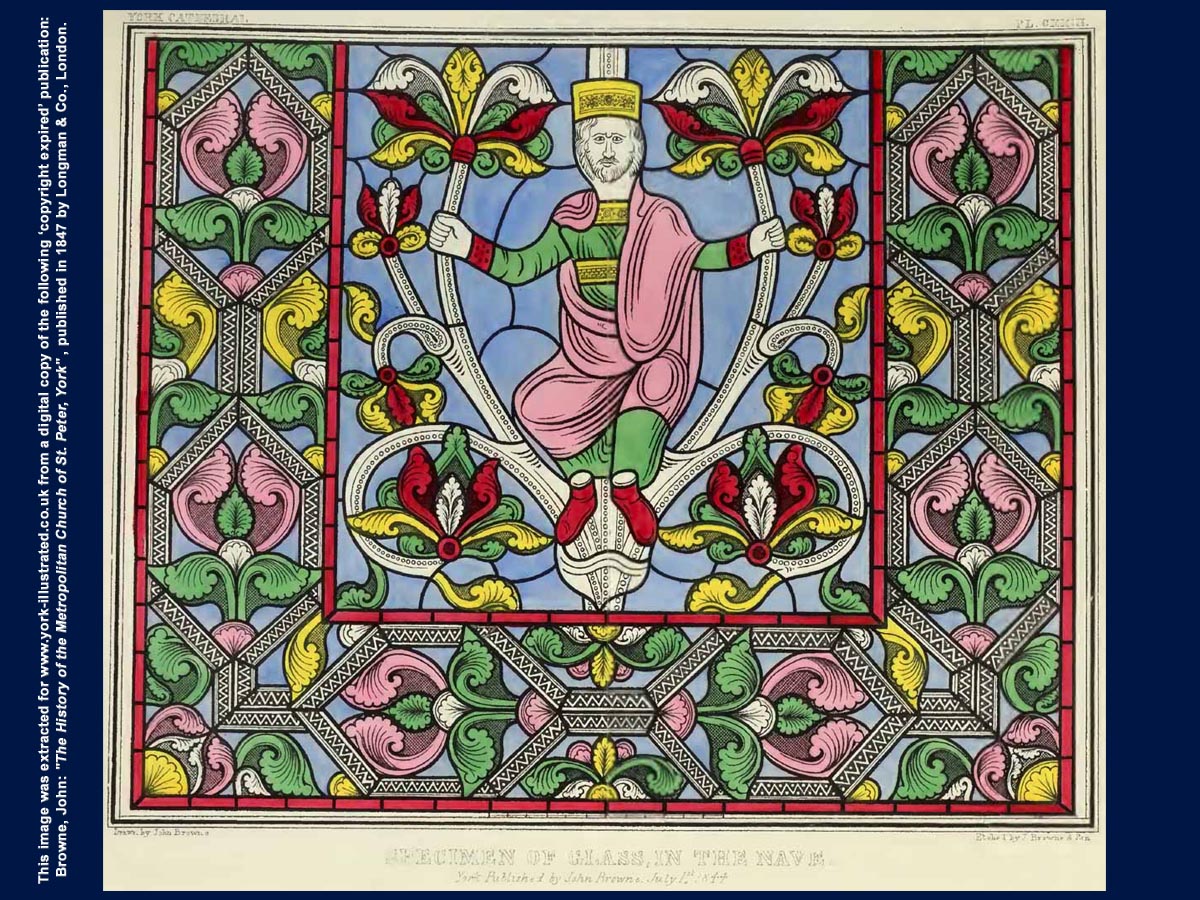
Plate 123: Part of one of the lights (stained glass windows) from the nave. The central portion features a single crowned human figure, perched on a 'throne' formed from the fronds of a plant.
Image 16
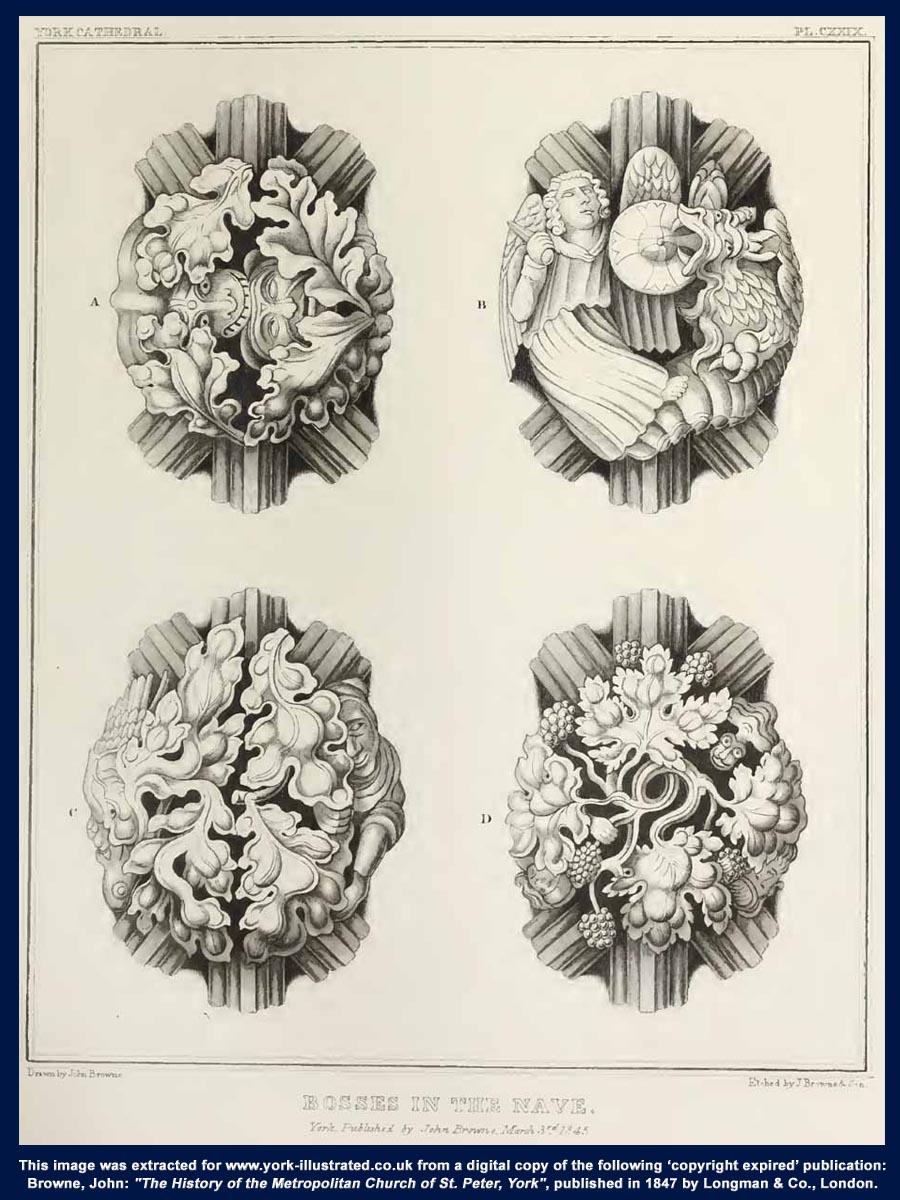
Plate 129: Four intricately carved bosses from the nave. 'B' shows St. Michael fighting the dragon, while 'D' includes 'grape-gatherers and hideous monsters'.
Image 17
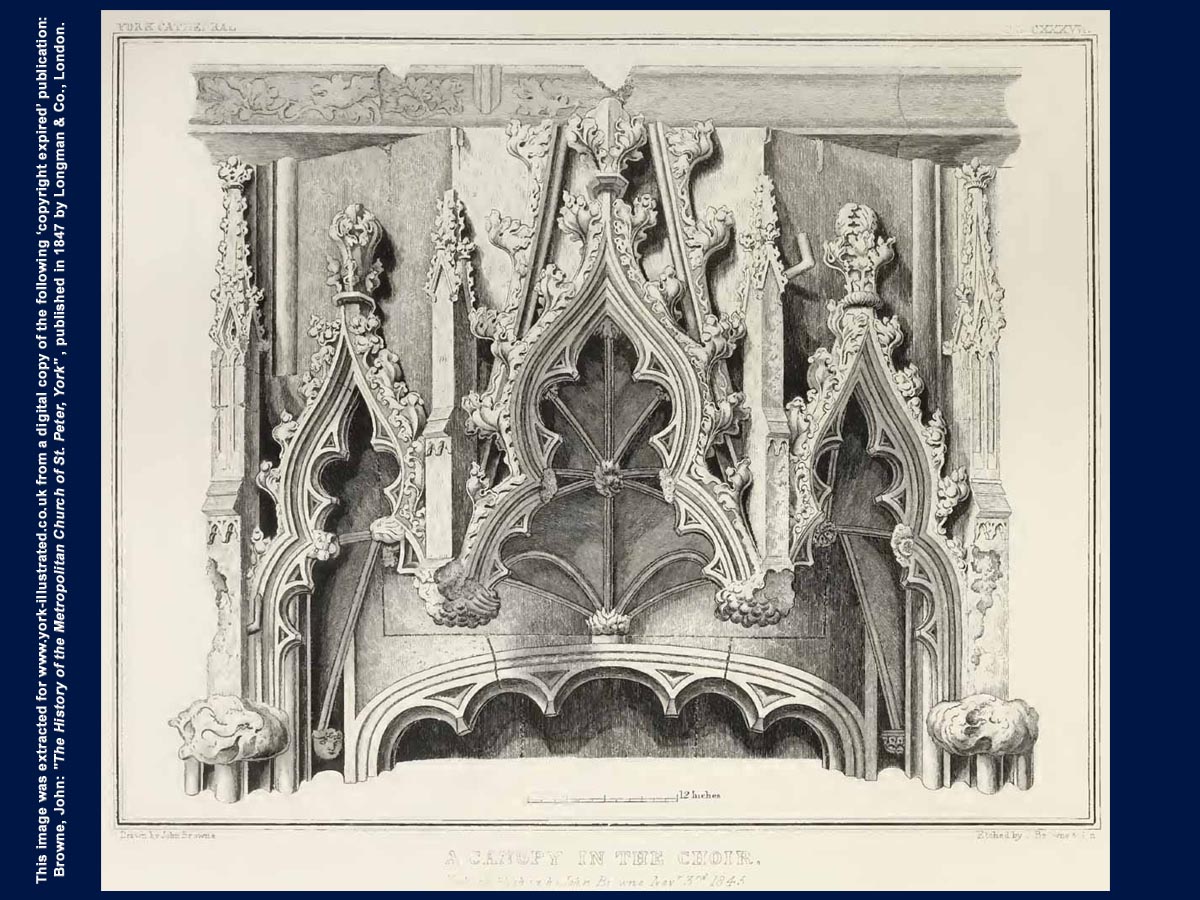
Plate 137: A carved canopy from the choir. It features "rich foliage, formed of the leaves of the Vine, of the Oak, and the Herba Benedicta." The latter was a common motif in churches until about the end of the thirteenth century.
Image 18
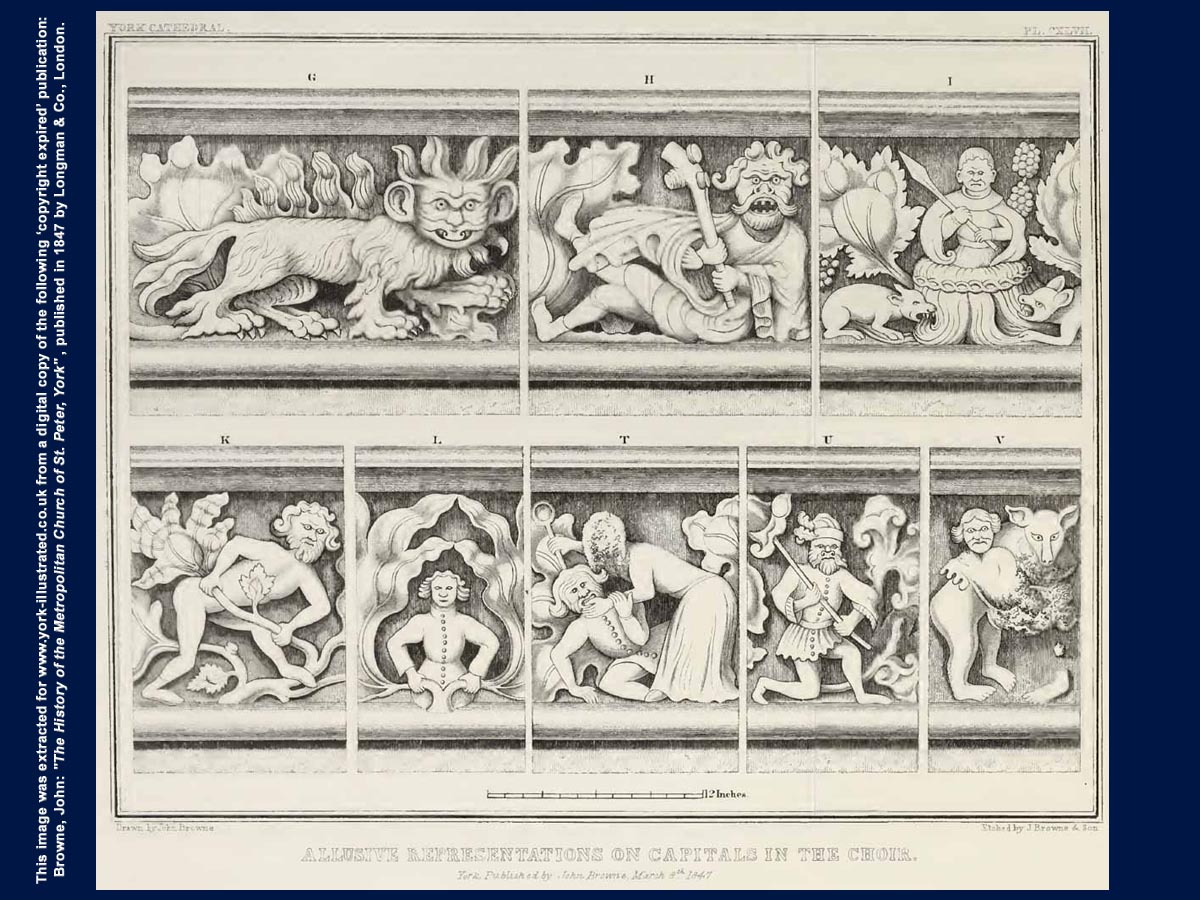
Plate 147: Some of the 'allusive representations' from capitals in the choir. Each of these carved panels was probably intended to convey a moral message, depict a historical event or otherwise 'tell a story'.
The publication is now 'copyright expired' and digital versions of the two-volume set can be downloaded free of charge from the Internet Archive website (see External Links below).
Browne had unprecedented access to York Minster and he was able to get close to some of the high-level details by climbing scaffolding that had been erected to facilitate cleaning and maintenance work following the fire of 1829. When drawing the ceiling bosses, he had to lie on his back, holding his sketchbook and pencil aloft for hours at a time. Some of these sketches became invaluable after part of the Minster’s nave was destroyed by another fire in 1840. To assist with the rebuilding works, John Browne created enlargements of his sketches and these were subsequently used by the woodcarvers to recreate some of the original roof details. He describes this process in his description to accompany Plate 129 (see Image 16 above):
With this plate the author closes a series of representations selected from the drawings he made with much anxiety and attention from all the bosses and brackets in the nave of the Church during the month of December 1834, and the early part of the year 1835, when a scaffold was erected for the cleansing of the nave. The object then was to take representations of all those ancient sculptures, and, at leisure, to select the most curious for illustrating the history of the Church; but the lamentable destruction of the vault, and its admirable carvings, on the 20th of May 1840, proved that the drawings had been made, undesignedly, for a more extensive undertaking than it had entered into the author's mind to conceive, and gave to them a far higher value than he had ever thought they could possess; for they now exist as unique drawings, and have been the gratuitous means of producing a tolerable restoration of the ornaments of the vault of the nave. *
*: The bosses attached to the new vault were sculptured by our fellow-citizen and ingenious artist, Mr. Wolstenholme, from these drawings, gratuitously supplied by the author; but as the bosses are now only attached to the ribs, several of the graceful terminations, which lay on portions of the ribs worked in the key-blocks of the original vault, could by no means be restored; thus compelling stiffness and abruptness to exist, where ease and freedom were formerly displayed.
External Links
A digital copy of the two-volume version of John Browne’s book "The History of the Metropolitan Church of St. Peter, York" (published in 1847 by Longman & Co., London) can be downloaded from the Internet Archive website via the following links:
Image 19
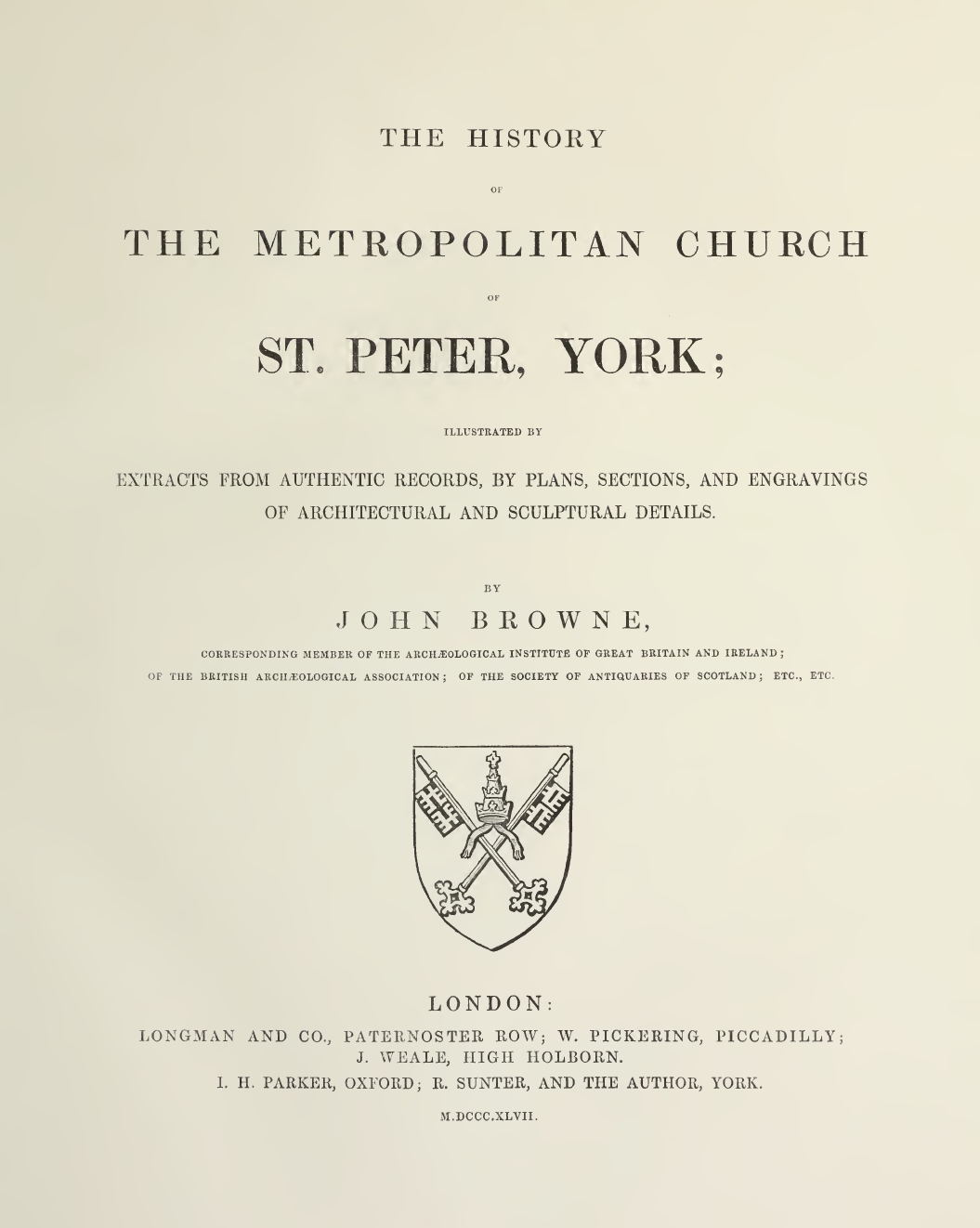
Image 20
York Art Gallery has a number of artworks by John Browne in its collection, including downloadable photographs of some of his lithographs. The relevant extract from the gallery’s catalogue can be viewed online via the following link:
https://www.yorkmuseumstrust.org.uk/collections/search/?search_text=john+browne