 York Illustrated
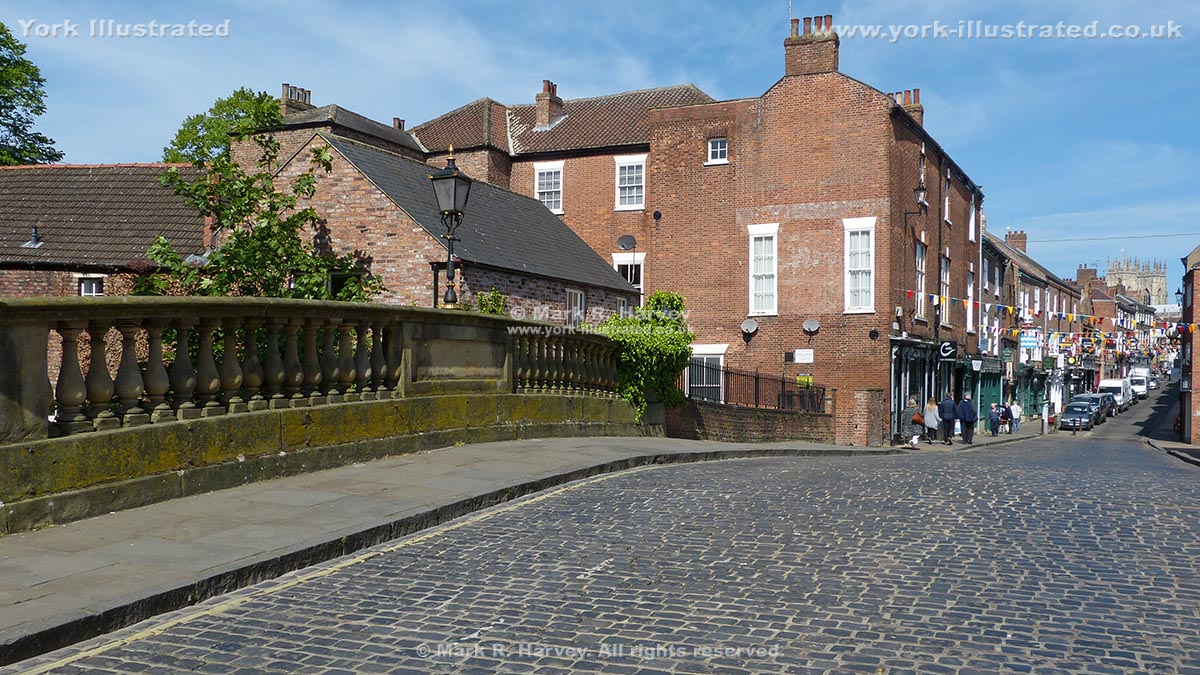
This attractive single arch (Grade II listed) structure was built in 1811-1812. The 'heritage style' lamp standards were installed in 1975.
During the medieval period, the city's fish market was on or near the bridge and the Archbishop of York could legally collect tolls, hang men and drown women in this area.
Image 1
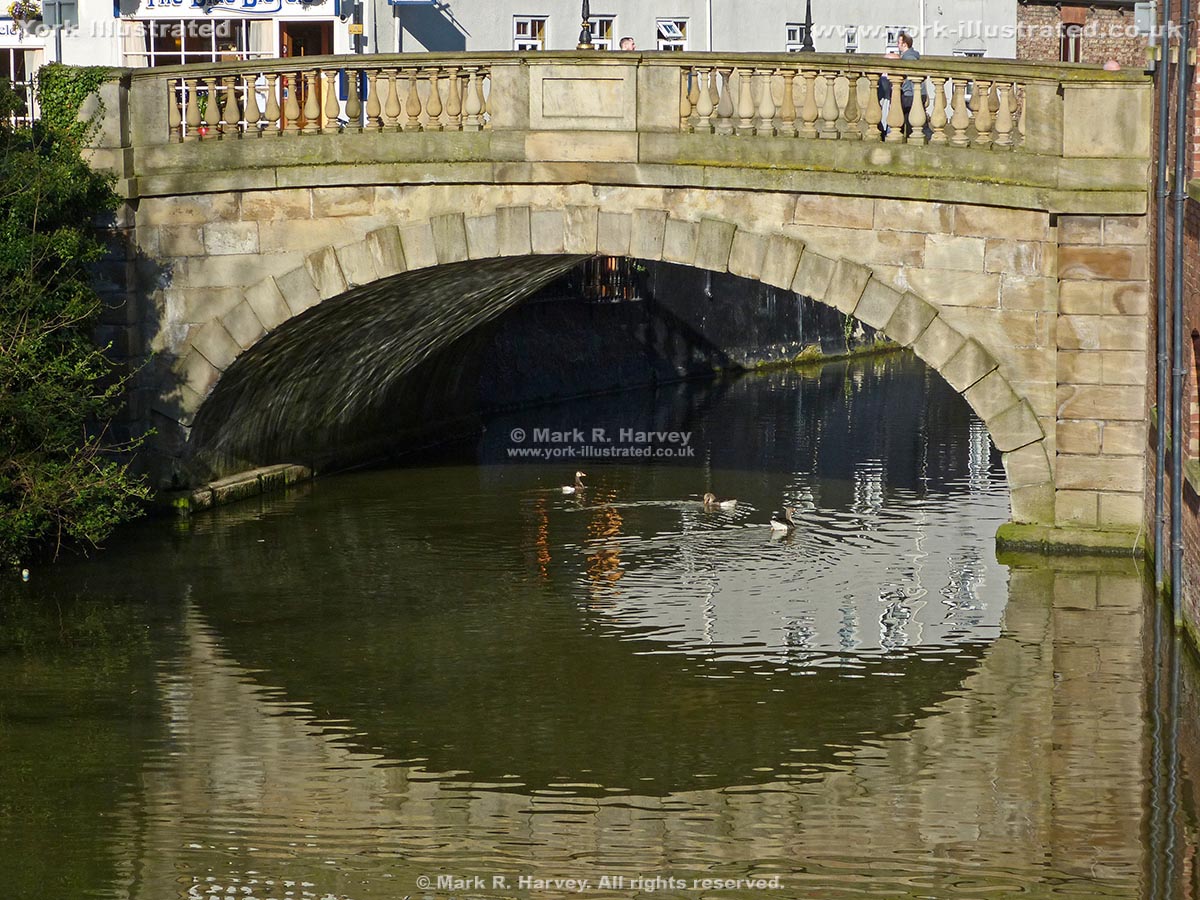
Image 2
The current bridge replaced at least two earlier versions. The first bridge on the site (believed to have been a timber structure) was standing by the early 12th century. By the beginning of the 15th century, this had been replaced by a more substantial stone structure with two arches. Contemporary records show that both of these bridges needed frequent repairs (and possibly complete rebuilds).
Like the old Ouse Bridge, the early versions of Foss Bridge were lined on both sides with buildings. Records from 1376 indicate that the bridge supported 3 shops and 23 tenements. By the mid 15th century, the bridge was groaning under the weight of a Chapel dedicated to Saint Anne, 42 tenements (23 on the northeast side and 19 on the southwest side) and a fish shambles with a further 10 tenements. The rents from these buildings would have helped to pay for the bridge's maintenance. The condition of these buildings appears to have deteriorated over time and they were gradually altered or demolished. By the late 17th century, the northeast side of the bridge was devoid of buildings. Those on the southwest side appear to have been removed by the late 18th century. Refuse and sewage from these buildings posed a significant health and practical hazard - so much so that the occupants were "forbidden to keep holes through which filth was thrown into the river". [1 - see 'External Links' section below]
The current bridge was designed by Peter Atkinson the younger and it is a much simpler (but no less attractive) structure. Modern-day visitors will be pleased to note that the River Foss below is significantly less smelly than it used to be.
External Links
1: The 'Foss Bridge' section of the following webpage contains a wealth of fascinating information about the current bridge and its predecessors:
'City walls, bars, posterns and bridges', in
'A History of the County of York: the City of York', ed. P M Tillott (London, 1961), pp. 510-520
which is accessible via the British History Online website at:
http://www.british-history.ac.uk/vch/yorks/city-of-york/pp510-520