 York Illustrated
The South African War Memorial was installed in Duncombe Place in 1905 to commemorate the citizens of York who lost their lives during the Boer War (1899–1902).
It was designed in the 'gothic-revival' style by George Frederick Bodley (a pupil of Sir George Gilbert Scott) and is by far the most 'exuberant' (ornate) war memorial in the city. Its carved stone decorations include statue forms of soldiers, soaring pinnacles, flying buttresses, a stone 'lantern' and a set of gargoyles (see Image 1).
Image 1
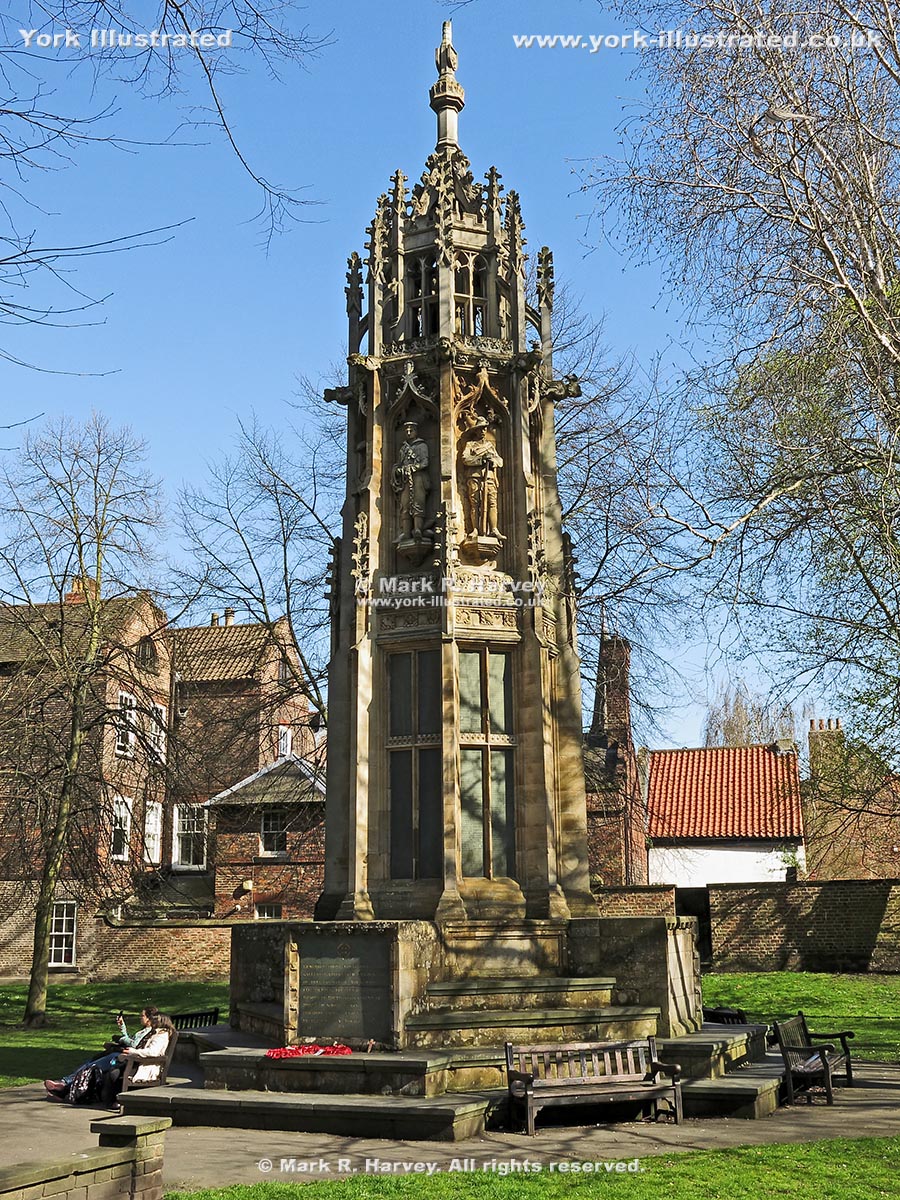
Image 2
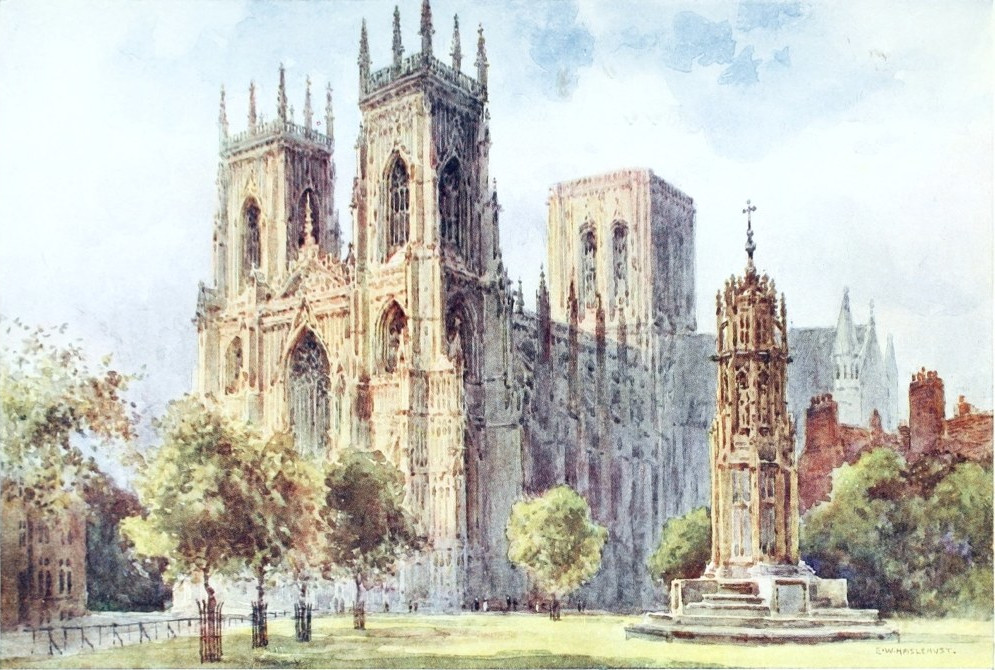
Source: "York" by George Benson and Ernest William Haslehust (illustrator), published by Dana Estes & Co, Boston, England (1911).
A carved slate commemorative panel set into the base includes the following inscription (picked-out in gold):
REMEMBER THOSE LOYAL AND
GALLANT SOLDIERS AND SAILORS
OF THIS COUNTY OF YORK WHO
FELL FIGHTING FOR THEIR COUNTRY'S
HONOUR IN SOUTH AFRICA 1899 TO
1902 AND WHOSE NAMES ARE
INSCRIBED ON THIS CROSS ERECTED
BY THEIR FELLOW YORKSHIREMEN
A.D. 1905.
The memorial is listed Grade II* (List Entry Number 1257874).
When the memorial and garden were first created, the memorial provided a dominant focal point within a light and airy garden featuring lawns and a few small trees (see Image 2). The garden and Duncombe Place formed a relatively large open space with expansive views of the Minster. Over the intervening decades, trees have been allowed to dominate the entire space and the views of the Minster have become have severely restricted. The trees also create a rather damp and gloomy atmosphere in the garden for much of the year (especially when they are in full leaf). However, during periods of hot weather, the shade provided by the trees becomes a significant asset and the garden becomes a welcome refuge from the heat of the city's streets.