 York Illustrated
The Priory of St Leonard had one of the largest hospitals in medieval England. The 13th century remains include the water gate and part of the infirmary.
The priory occupied a large area, extending from the current standing remains (located just inside the entrance to Museum Gardens - see Images 1 to 4) all the way across the sites now occupied by York City Library and St Leonard's Place to the site now occupied by the Theatre Royal.
Image 1

Image 2
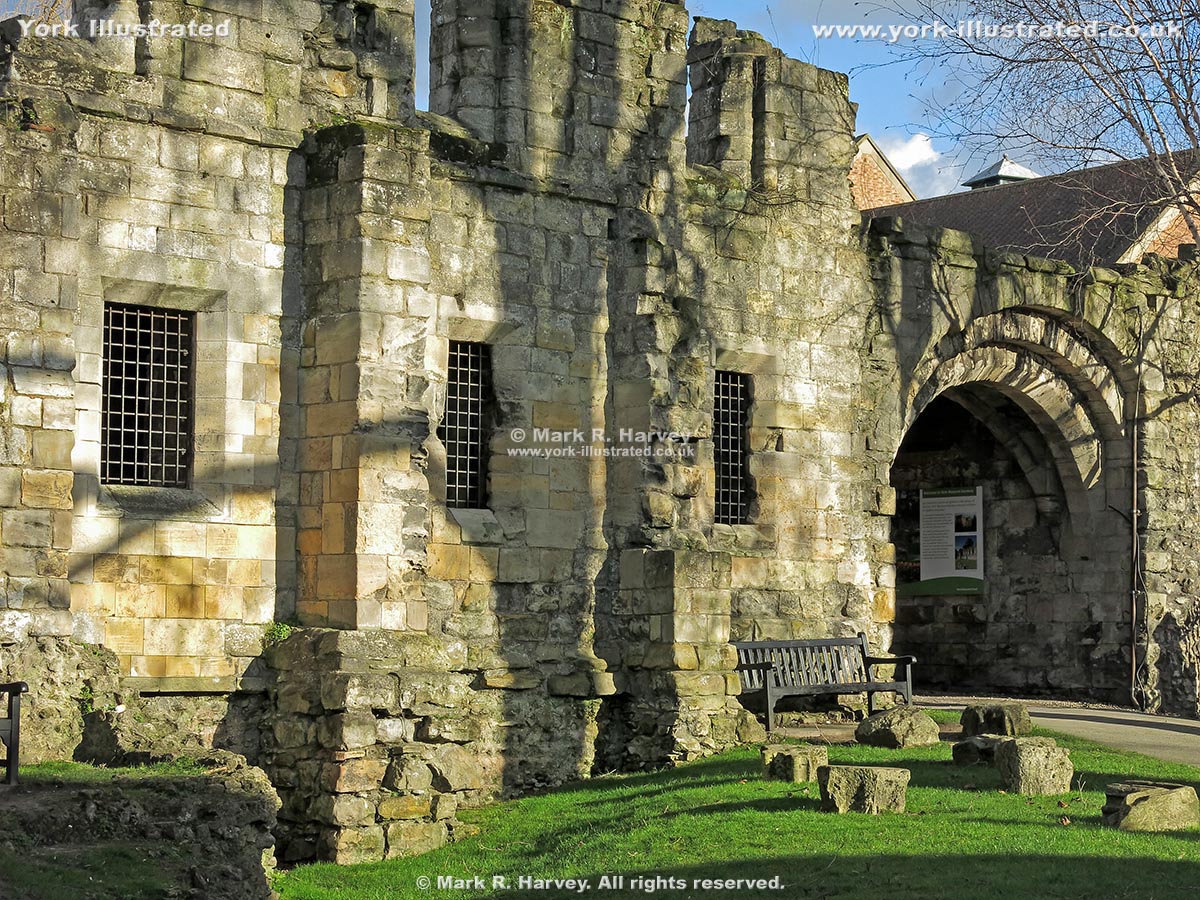
Image 3
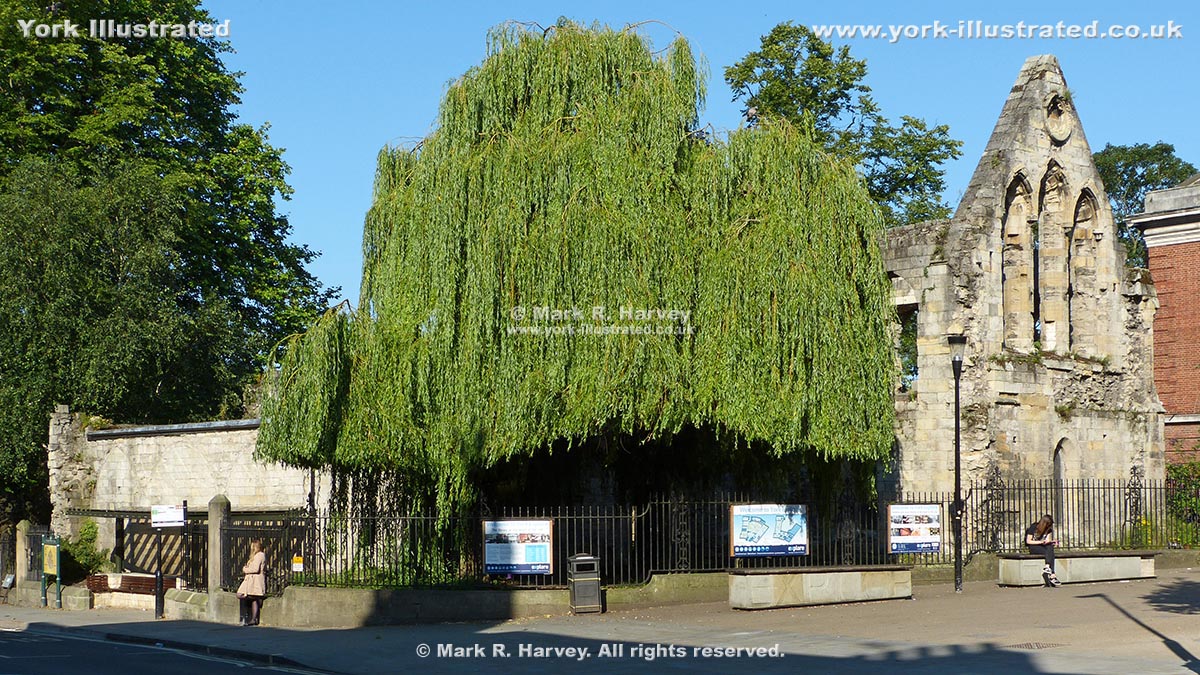
Image 4
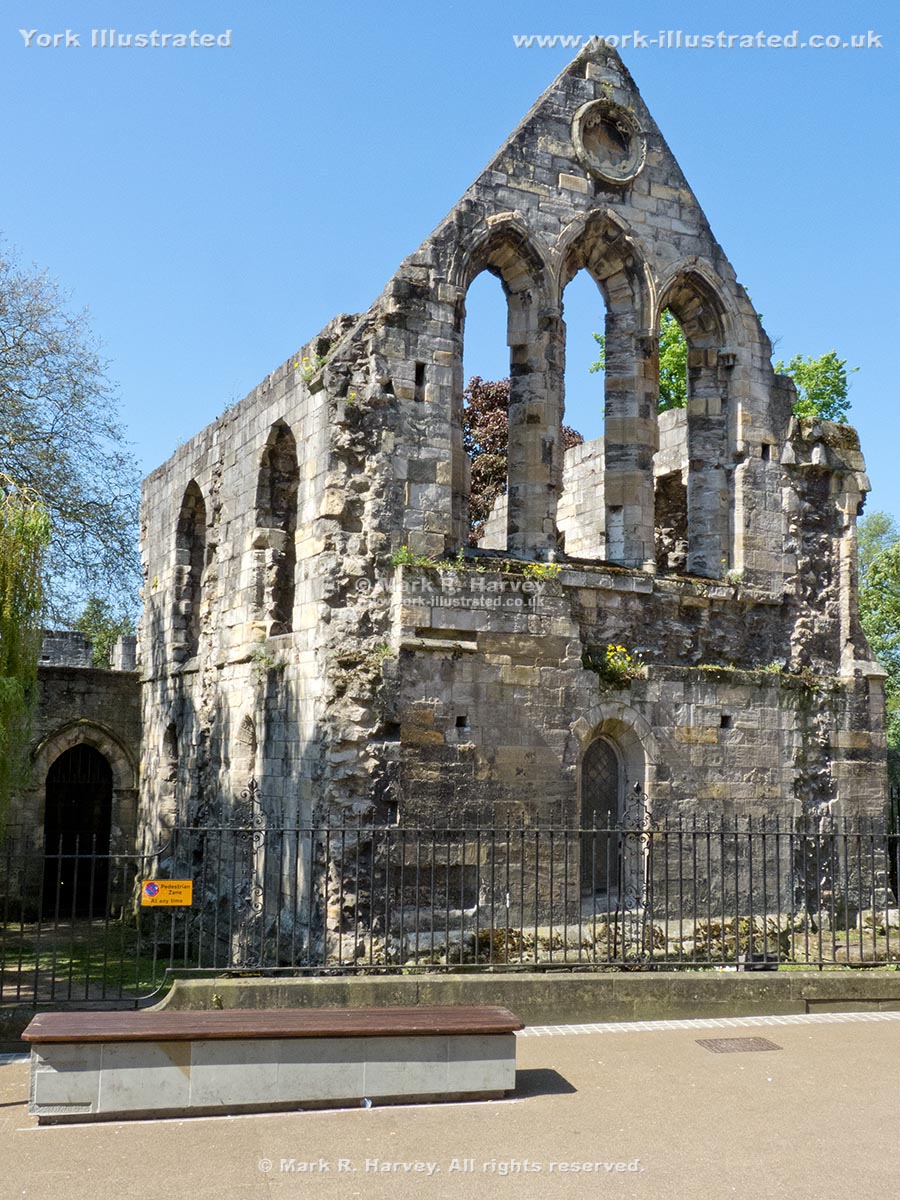
Image 5
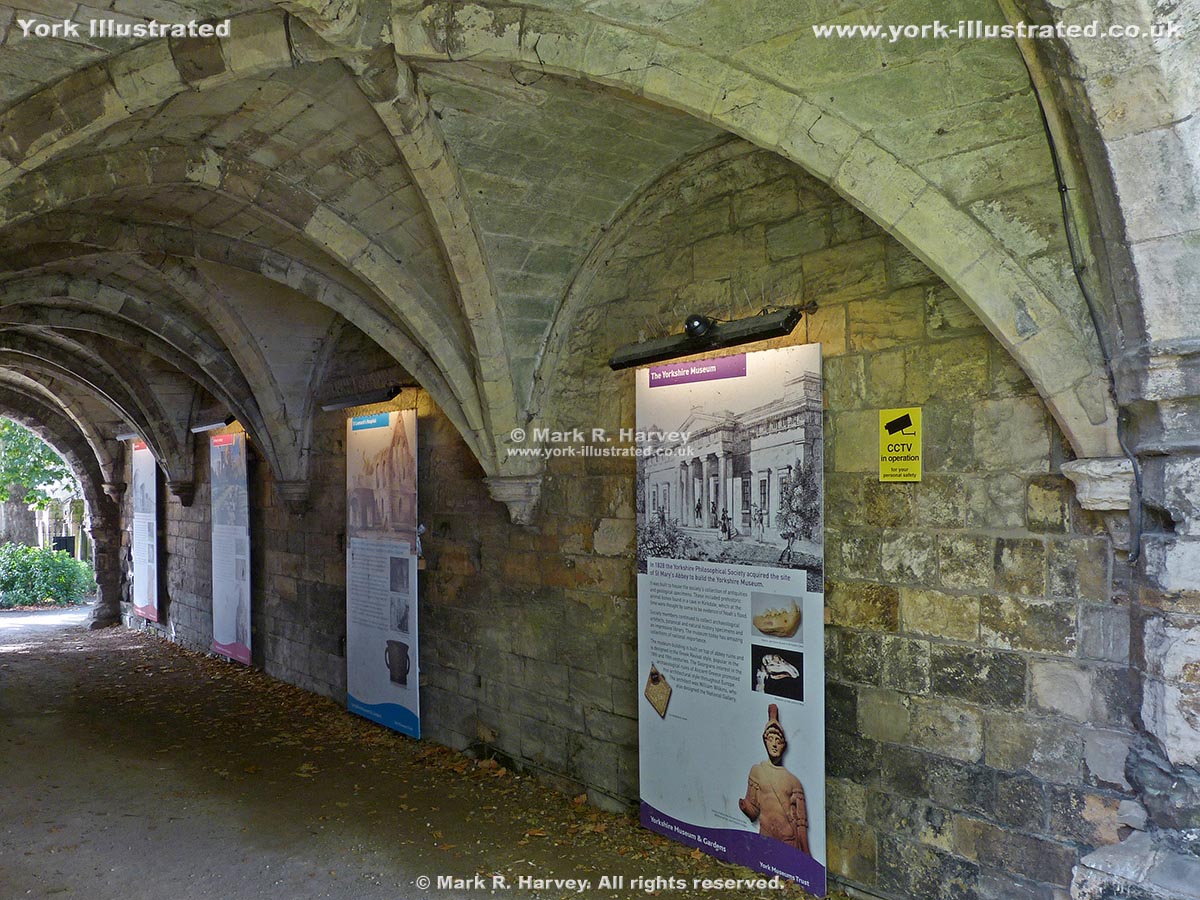
Image 6
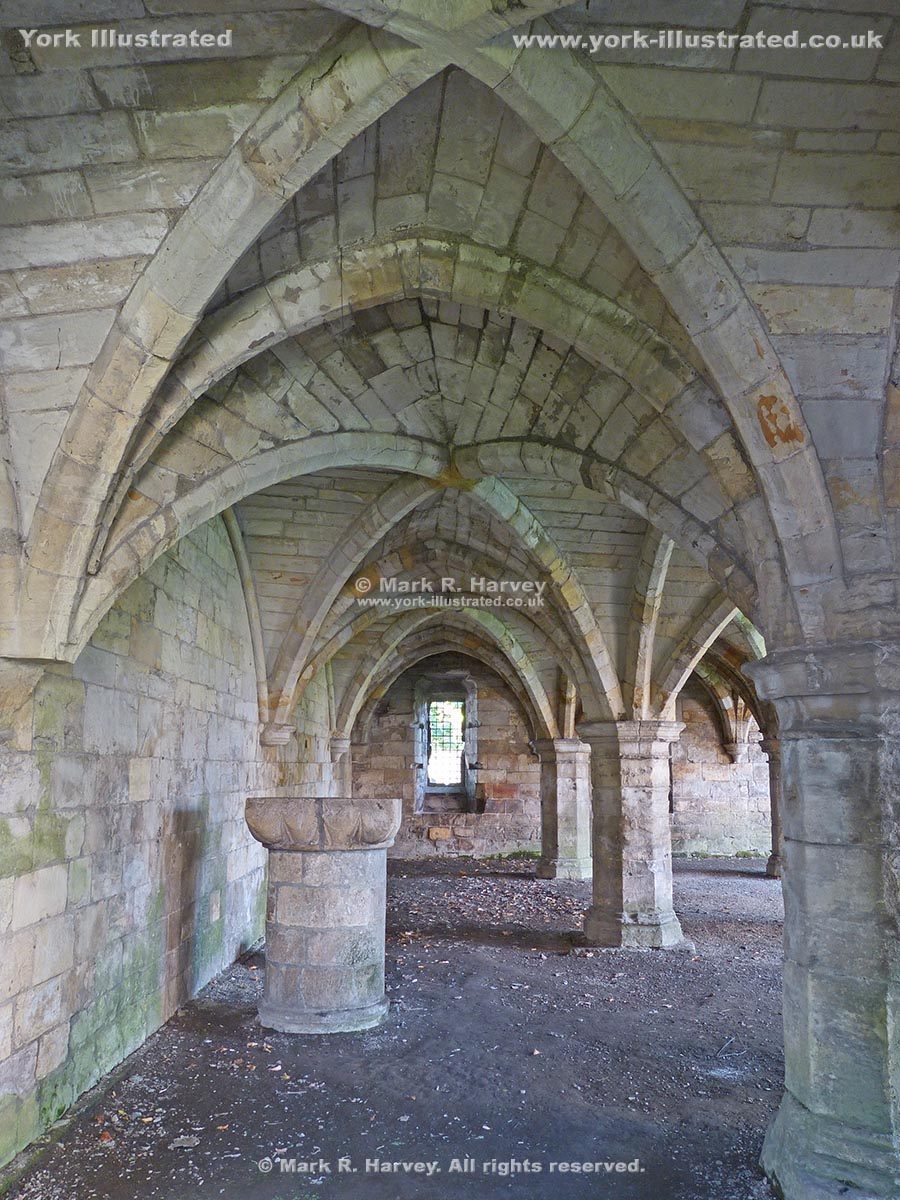
The priory's buildings are known to have included the water gate, an east gate (opposite the junction of Duncombe Place and Blake Street) the infirmary (which was capable of taking care of between 200 and 300 people), at least one infirmary chapel, at least one church with attached cloister, a treasury, a chapter house, a refectory, stabling for at least eight horses and a communal dormitory. In addition:
"By 1280 there was a grammar school with provision for a grammar, singing master and 19 boys. There was also a guest hall; a cellar; a tannery; a malthouse; a watermill; a workshop for a carpenter, wright and mason; a smithy; several stables; a gatehouse; and 3 ships. There were two kitchens, a bakehouse and brewery, and a cemetery."
Source: "Mint Yard, York: Conservation Management Plan." by Simpson & Brown Architects with Addyman Archaeology. Final Draft, August 2012.
During the 16th century, at least part of the St Leonard's Priory site was used as a Royal Mint, when this function was transferred from Clifford's Tower.
Practical Information
Please note that medical / health care is no longer available at this location.
The main archway currently houses an interesting set of interpretation panels relating to Roman York, St Mary's Abbey, St Leonard's Hospital, the Yorkshire Museum and Museum Gardens.