 York Illustrated
The Treasurer's House is a mostly 17th century building (now a National Trust property), but its story extends from Roman times to the 21st century.
The building we see today
In simplified summary:
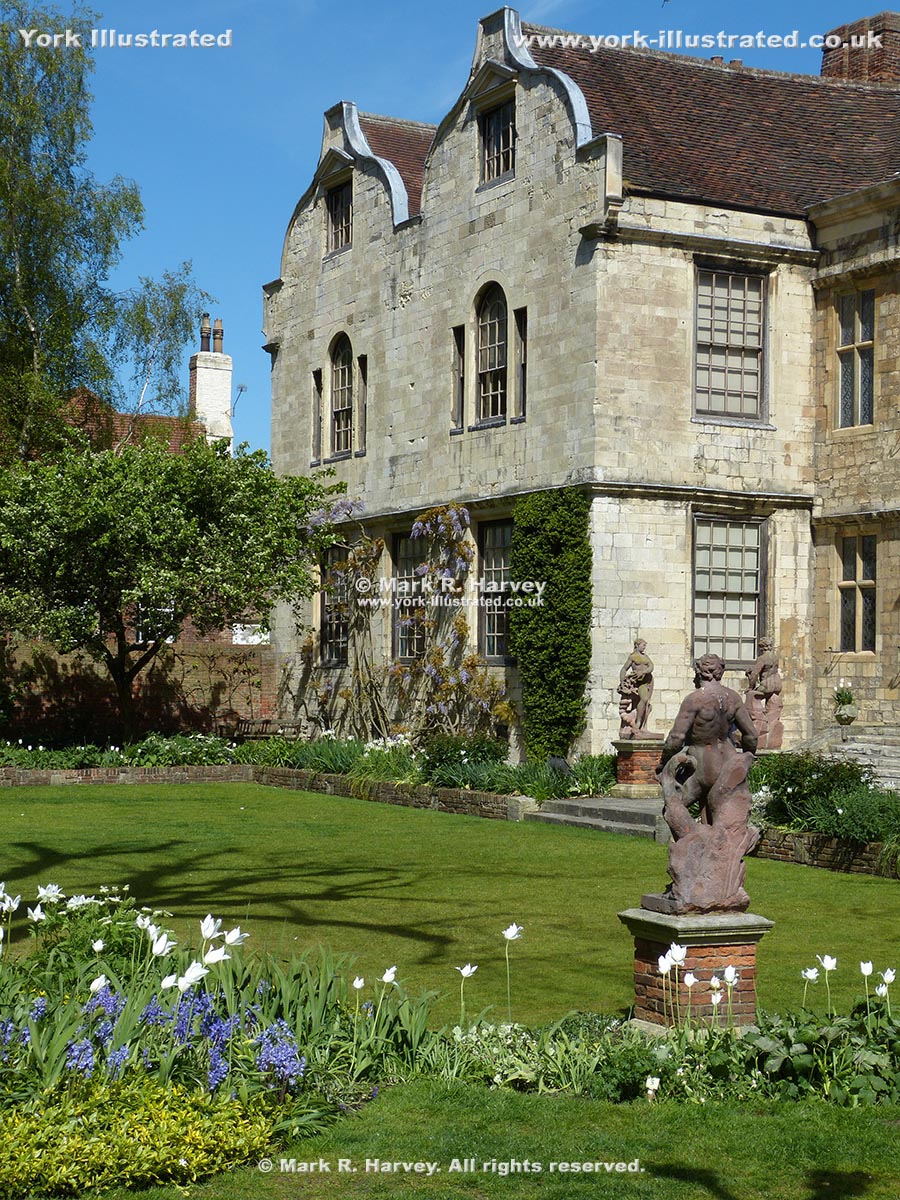
- The northwest wing (left in Image A1) was constructed during the early 17th century, although the basement is believed to date from the 14th century.
- The Great Hall (centre) has an early 17th century facade (facing Minster Yard), with a 16th century fireplace and rear wall (facing the courtyard, partly visible from Chapter House Street).
- The southeast wing (right in Image A1) is also mainly 17th century, although the single-storey brick-built side extension (Image A4 and extreme right in Image A1) dates from circa 1898. The side extension is now used as both the main entrance to the house (from Chapter House Street) and the main access route between the house and the garden (see Images D2 & A4.)
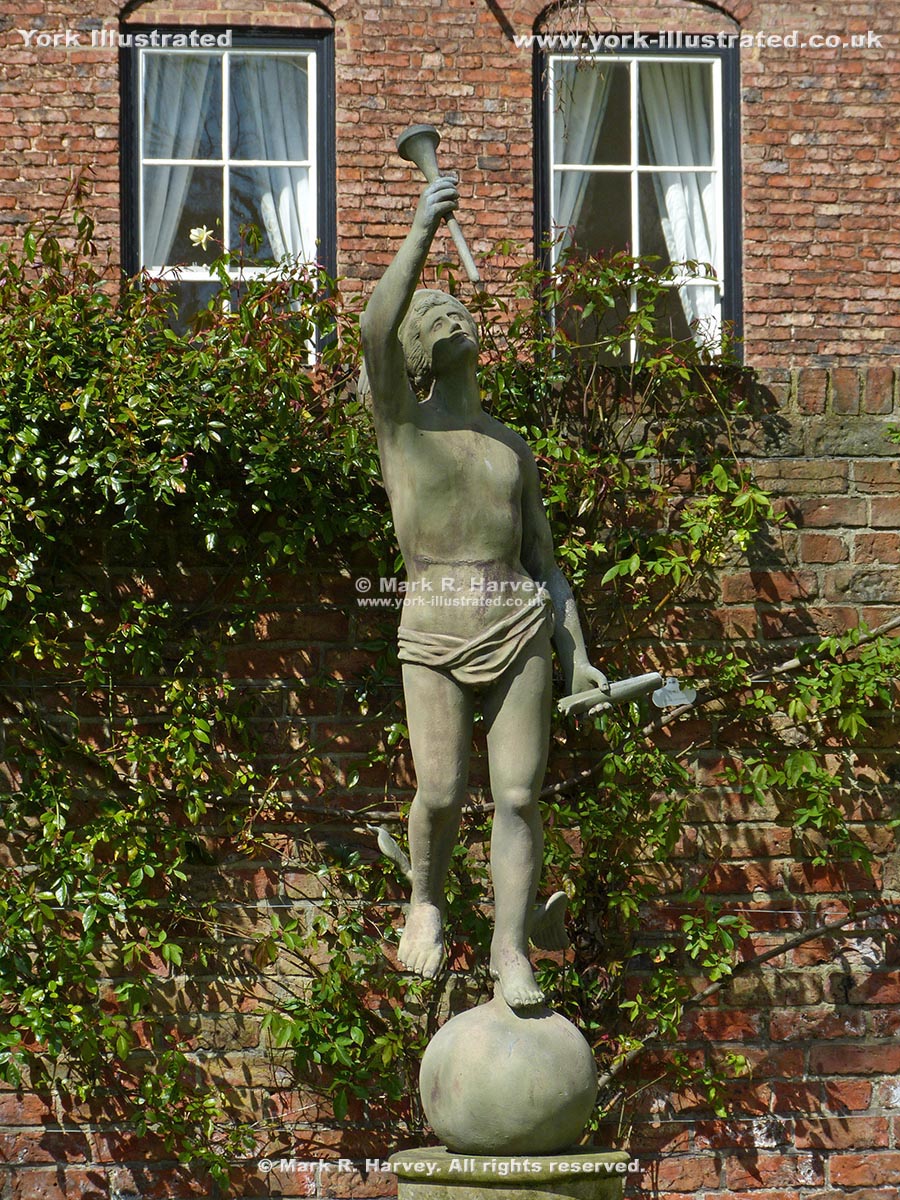
- The delightful walled garden was created by Frank Green as part of his remodelling project. It includes an interesting collection of statues (see Image Gallery C). The statue of Mercury is a replica of a lost original that was cast in lead. The replacement was adapted to create a fountain and it now forms the centrepiece of the ornamental pond. The other three statues (Mercury, Neptune and Ceres) are originals and they were all carved from pink sandstone.
Image galleries
A: The house
Image A1
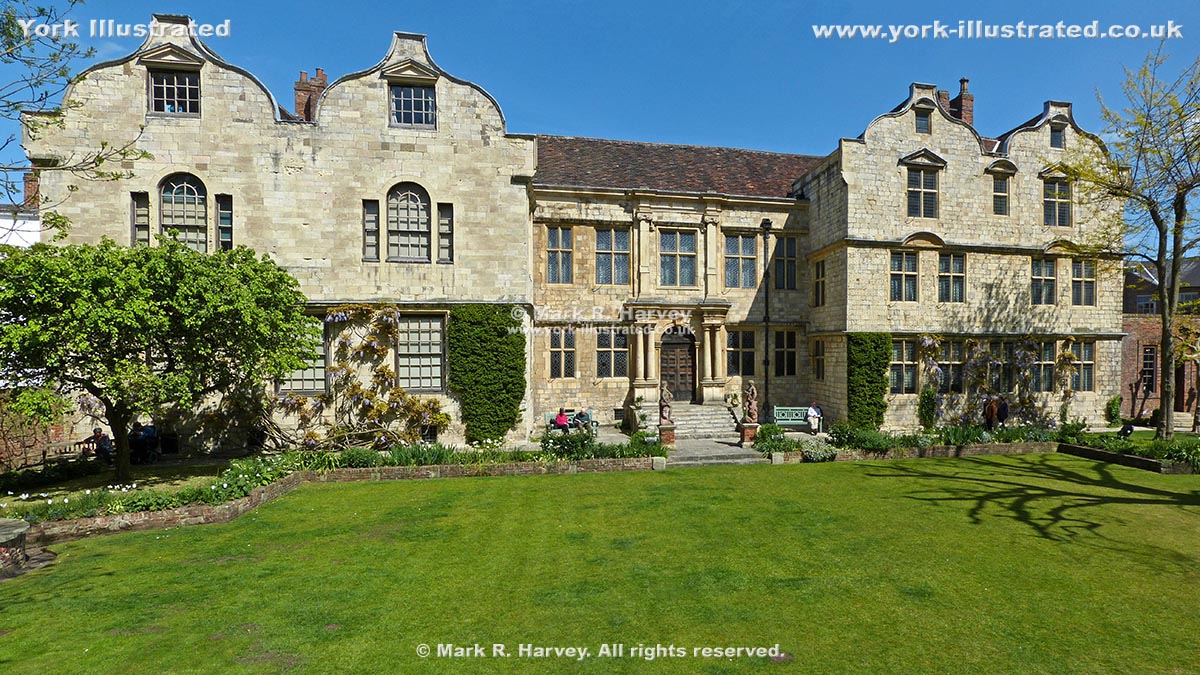
Image A2
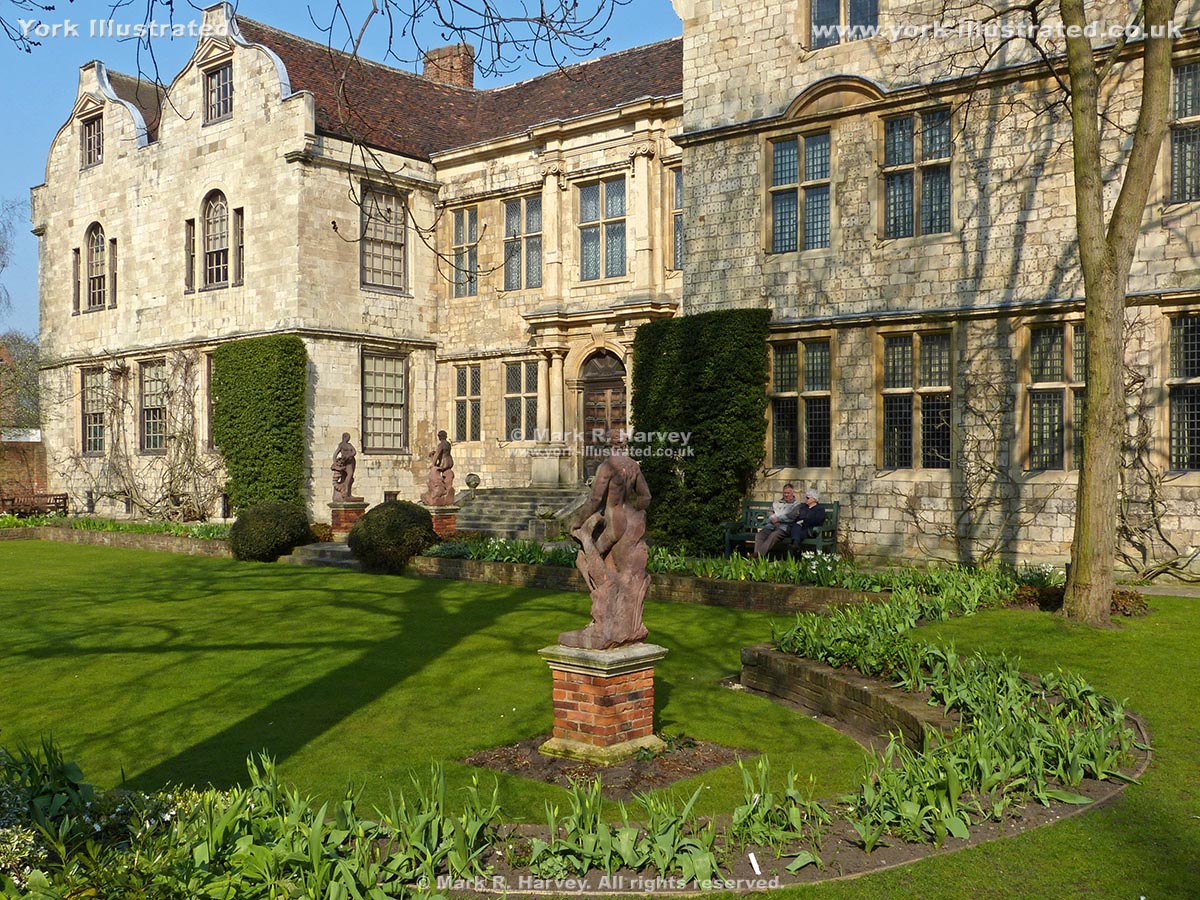
Image A3
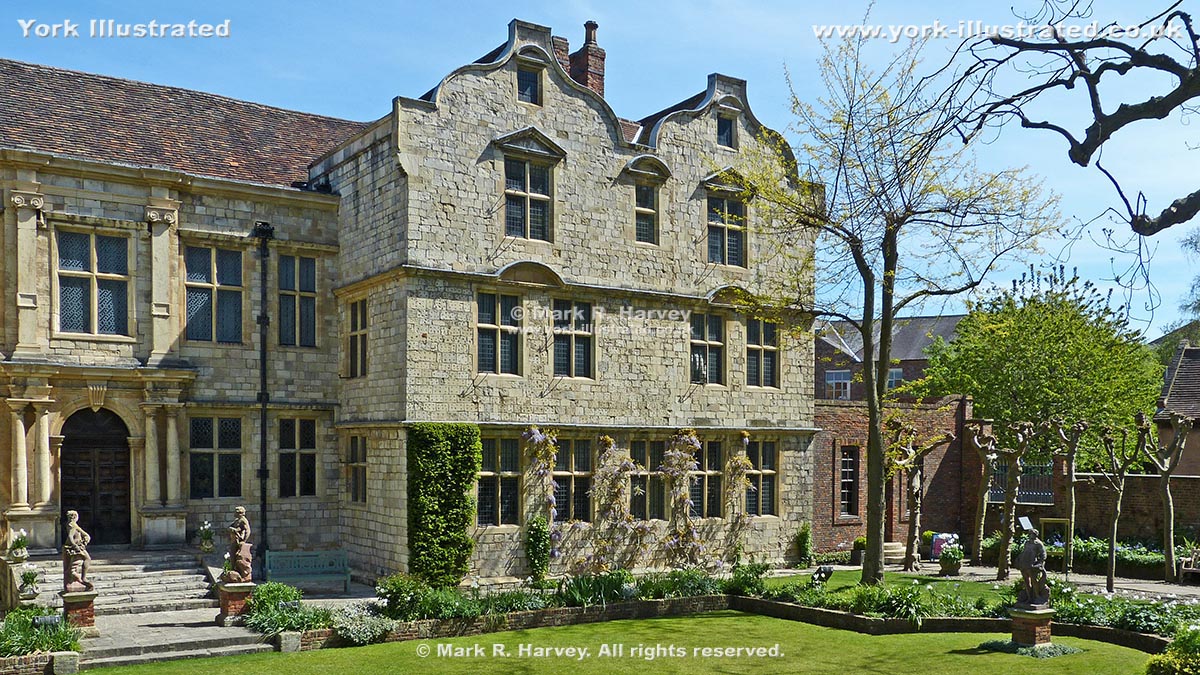
Image A4

Image 5
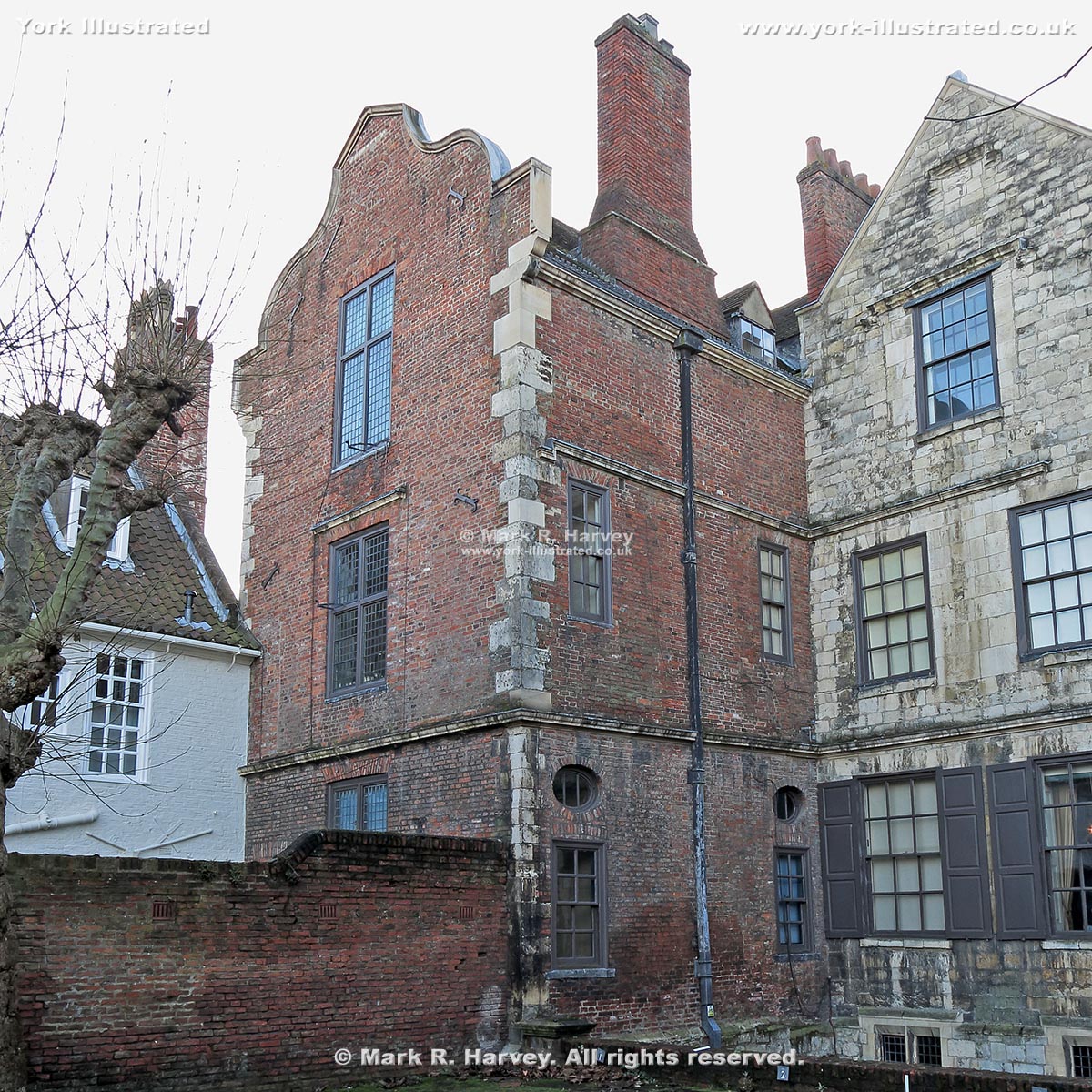
Image 6
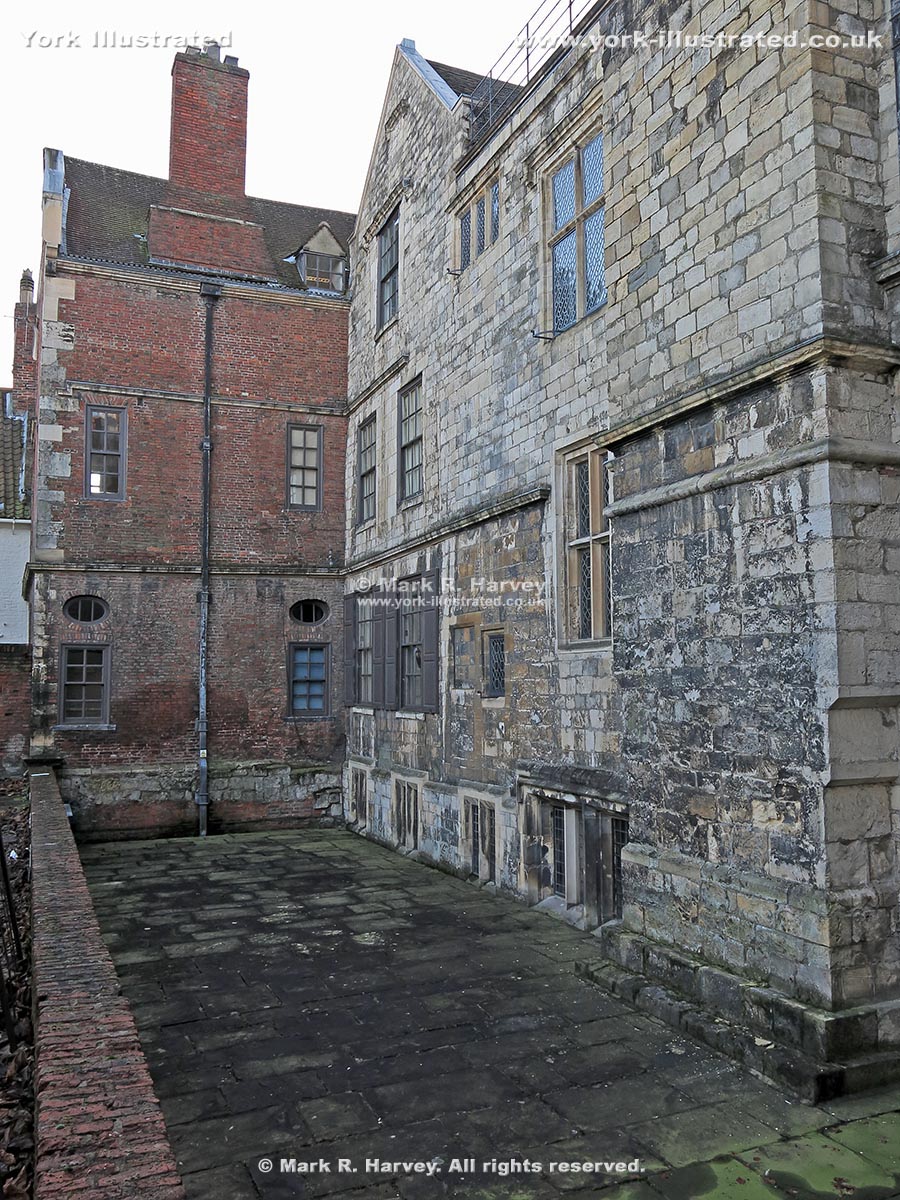
Image 7
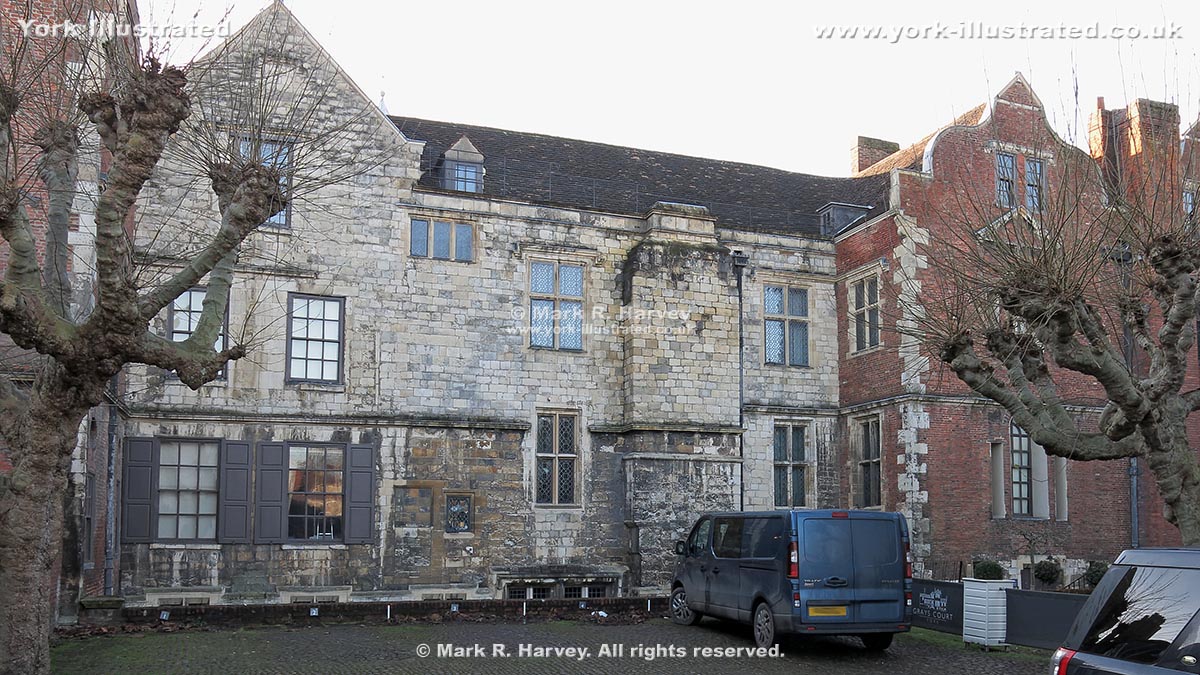
Image 8
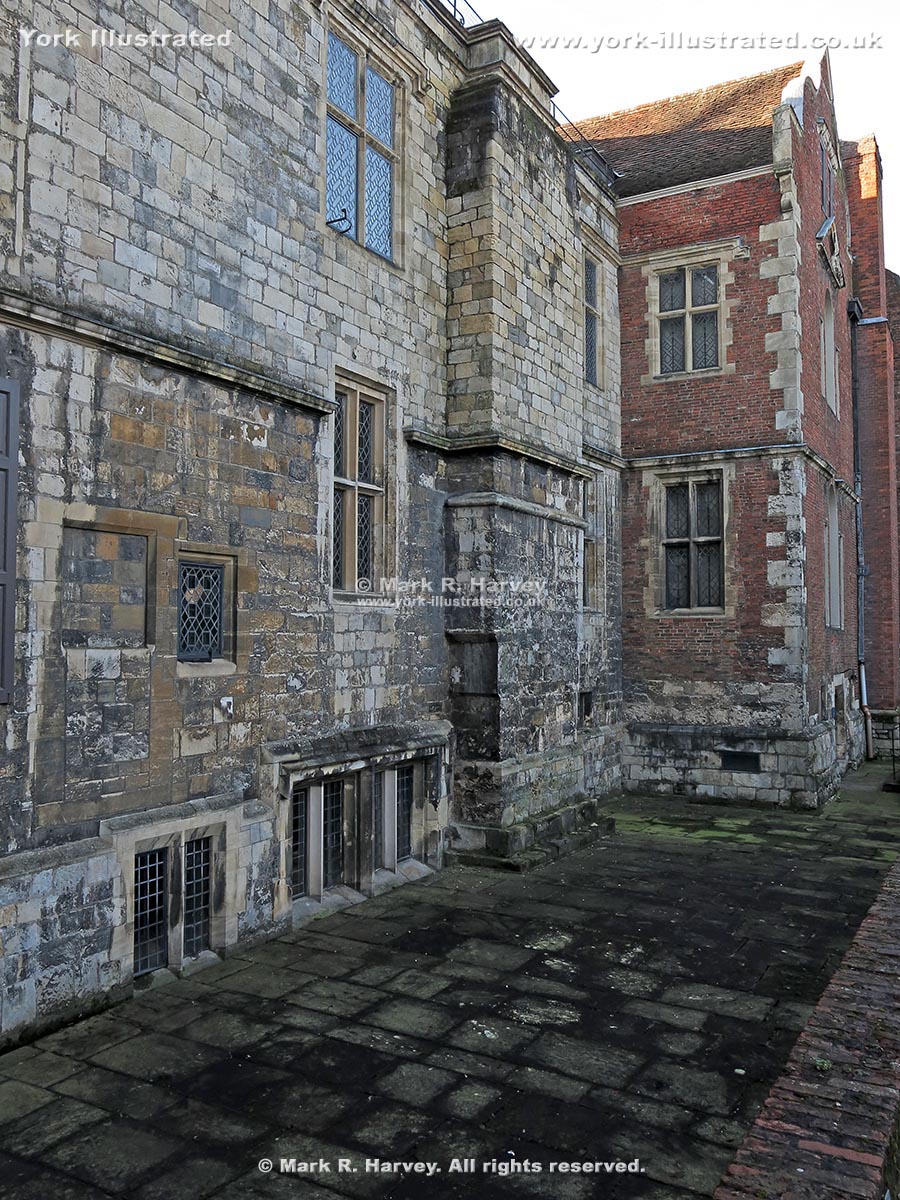
B: The garden
Image B1
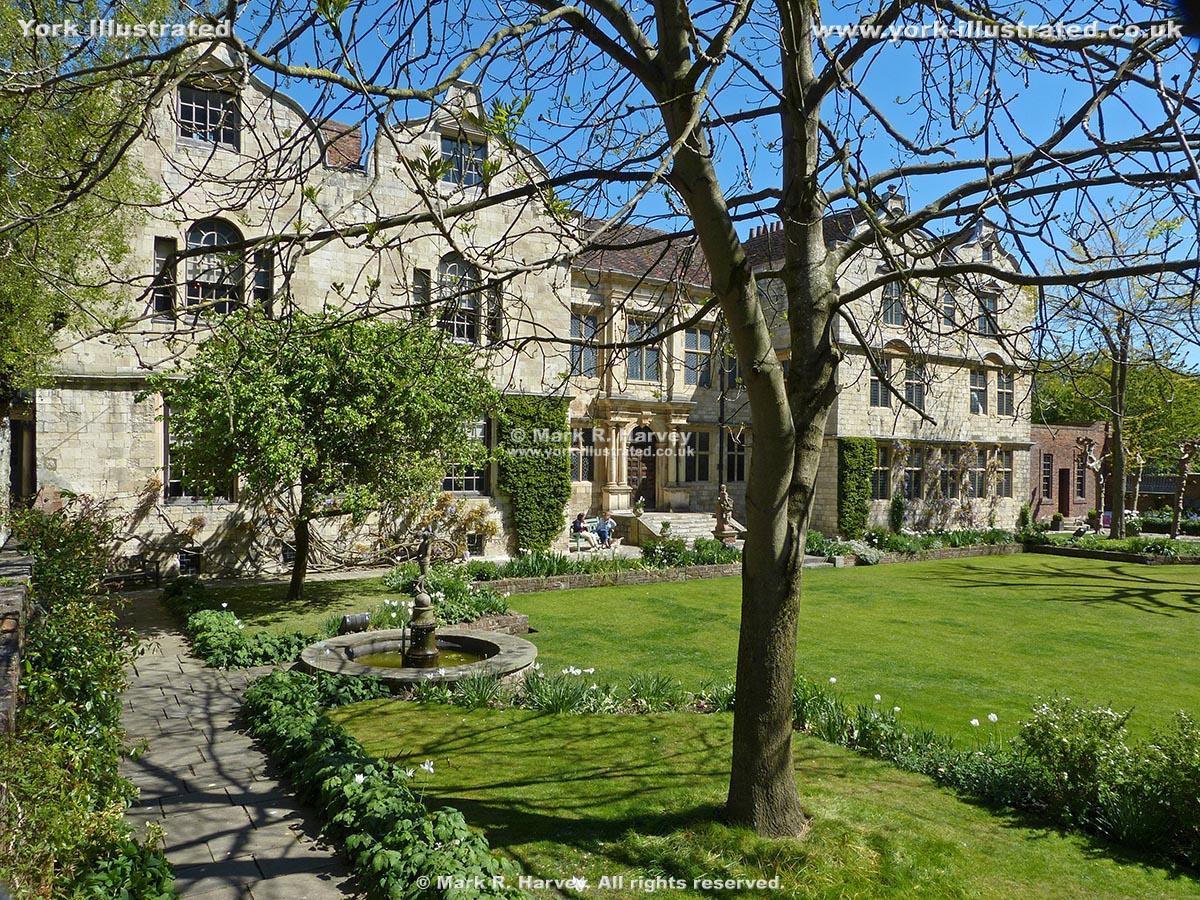
Image B2

Image B3
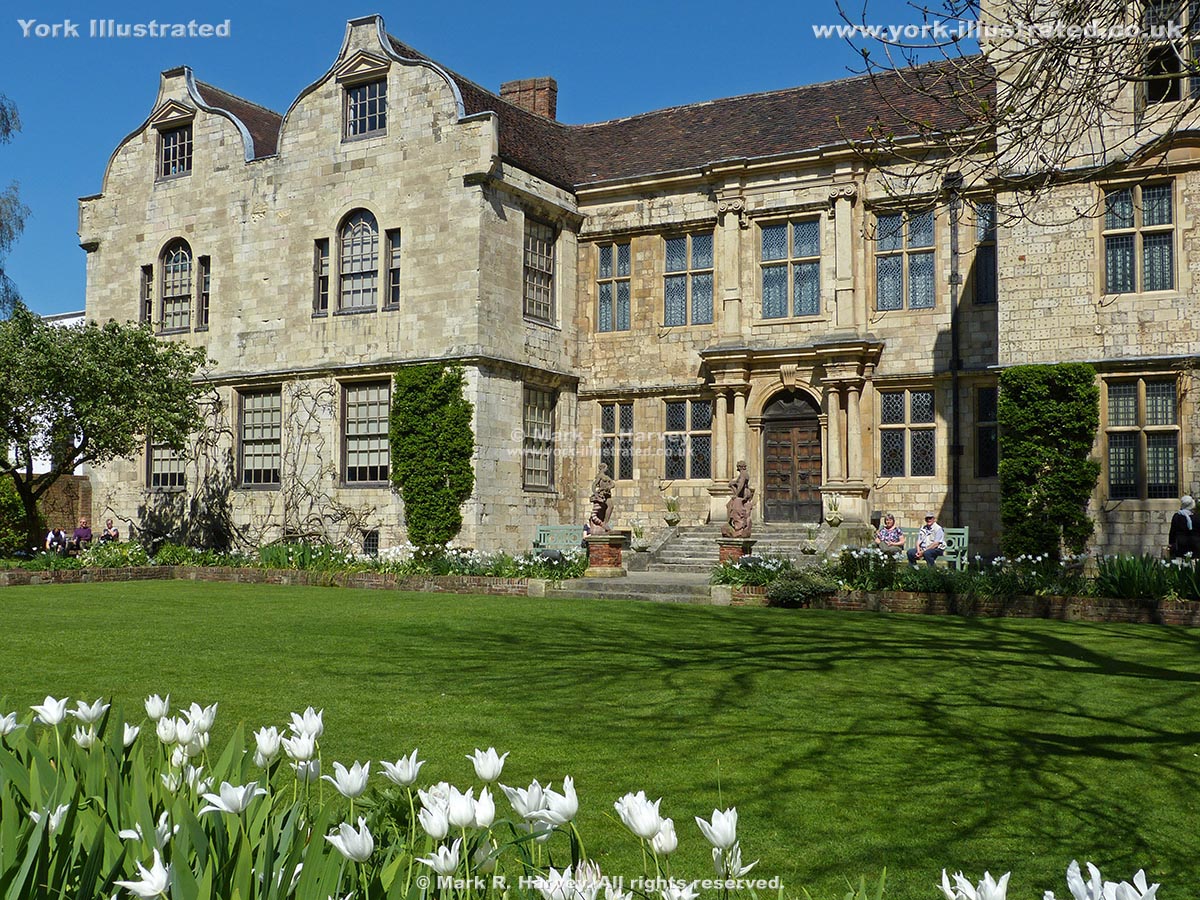
Image B4
C: The statues
Image C1
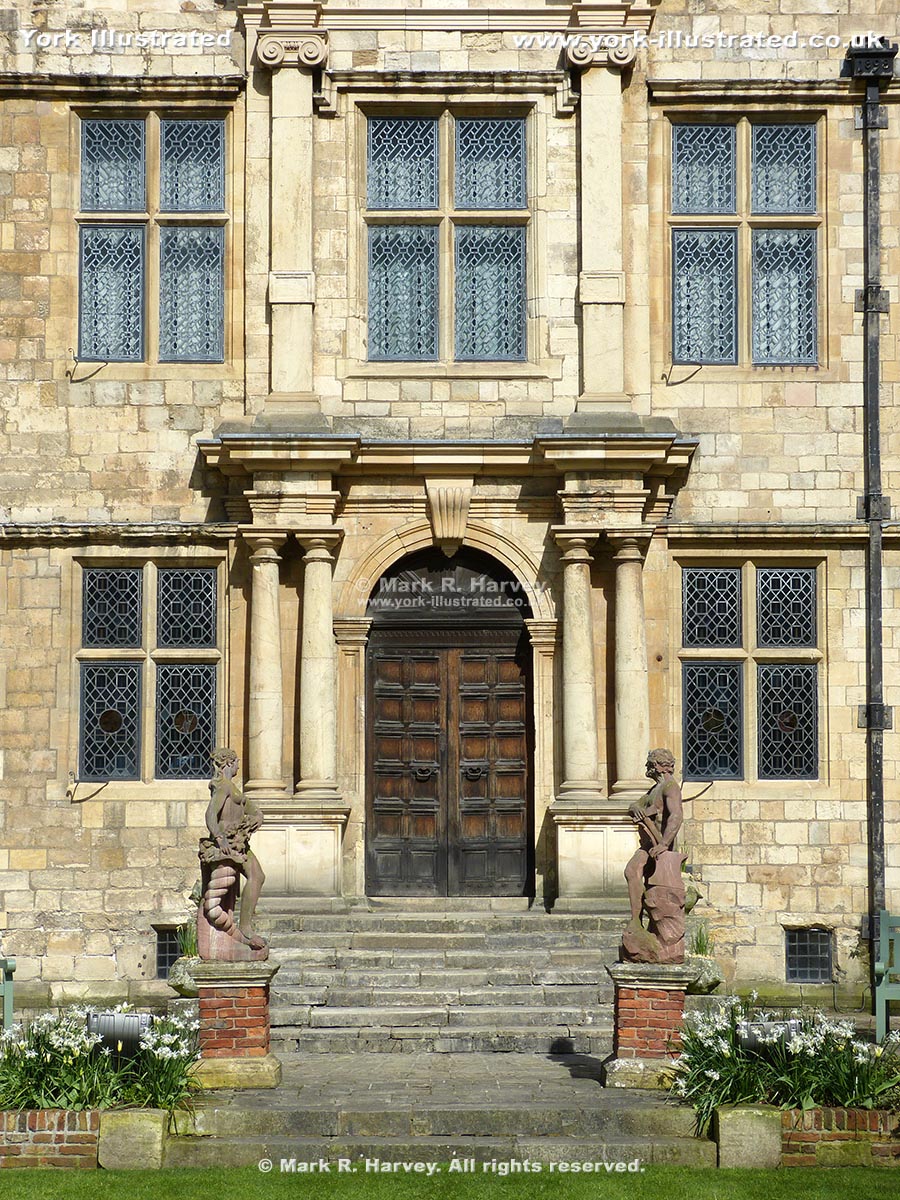
Image C2

Image C3
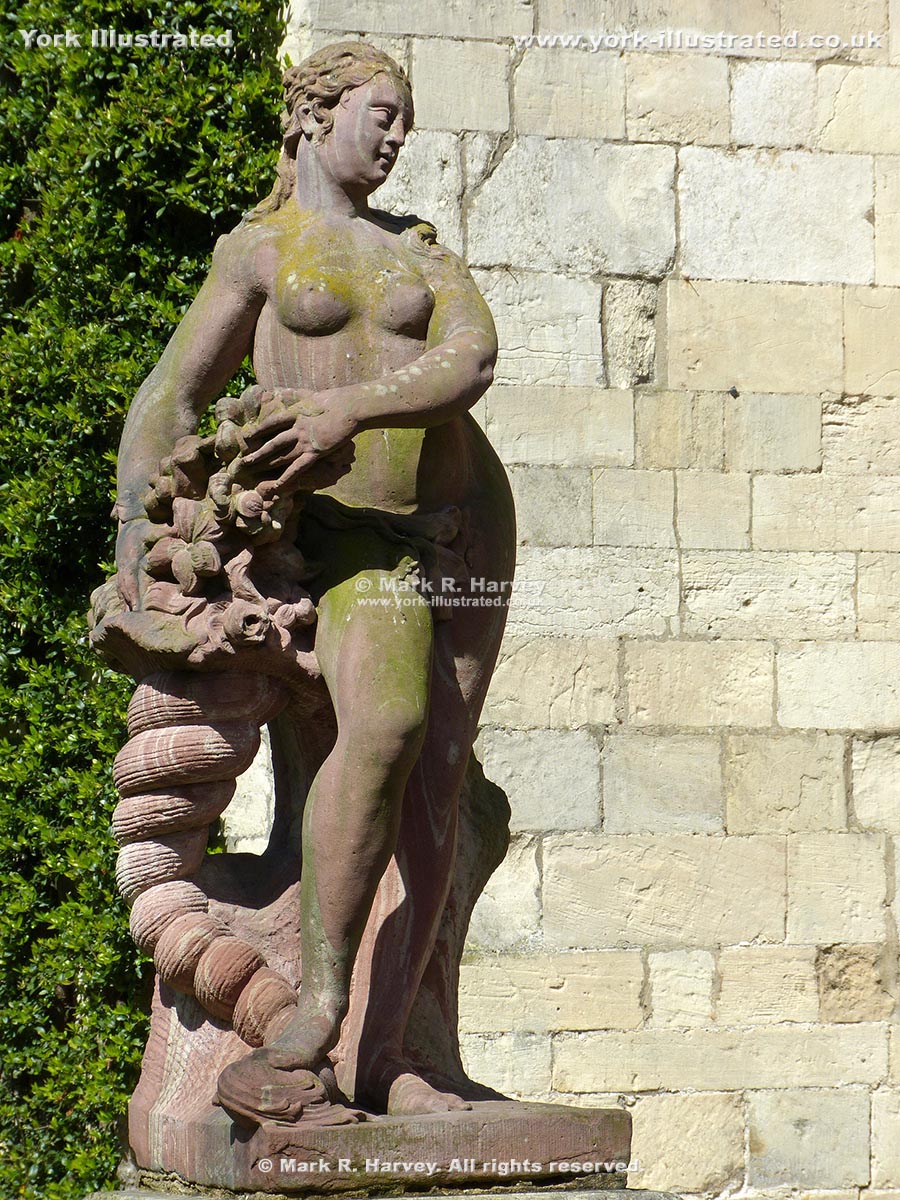
Image C4
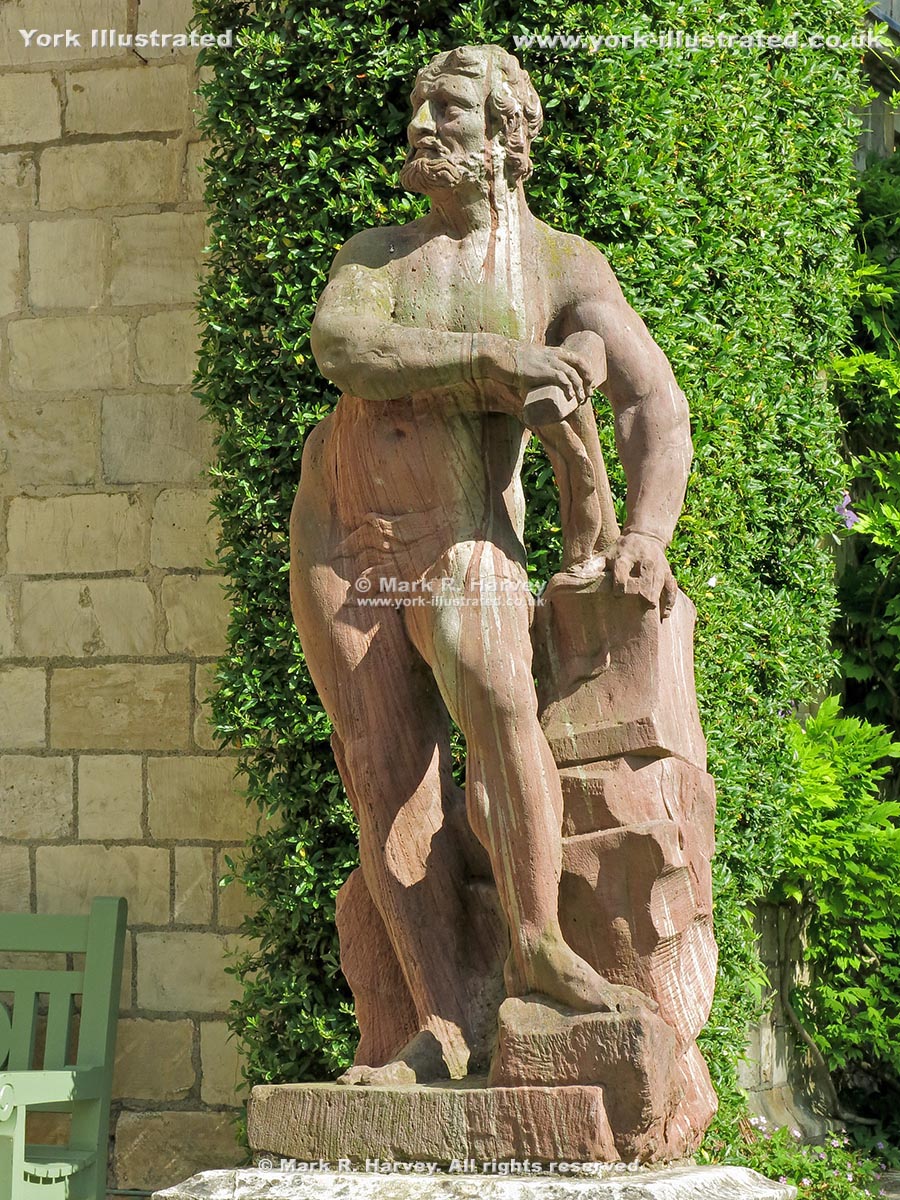
Image C5
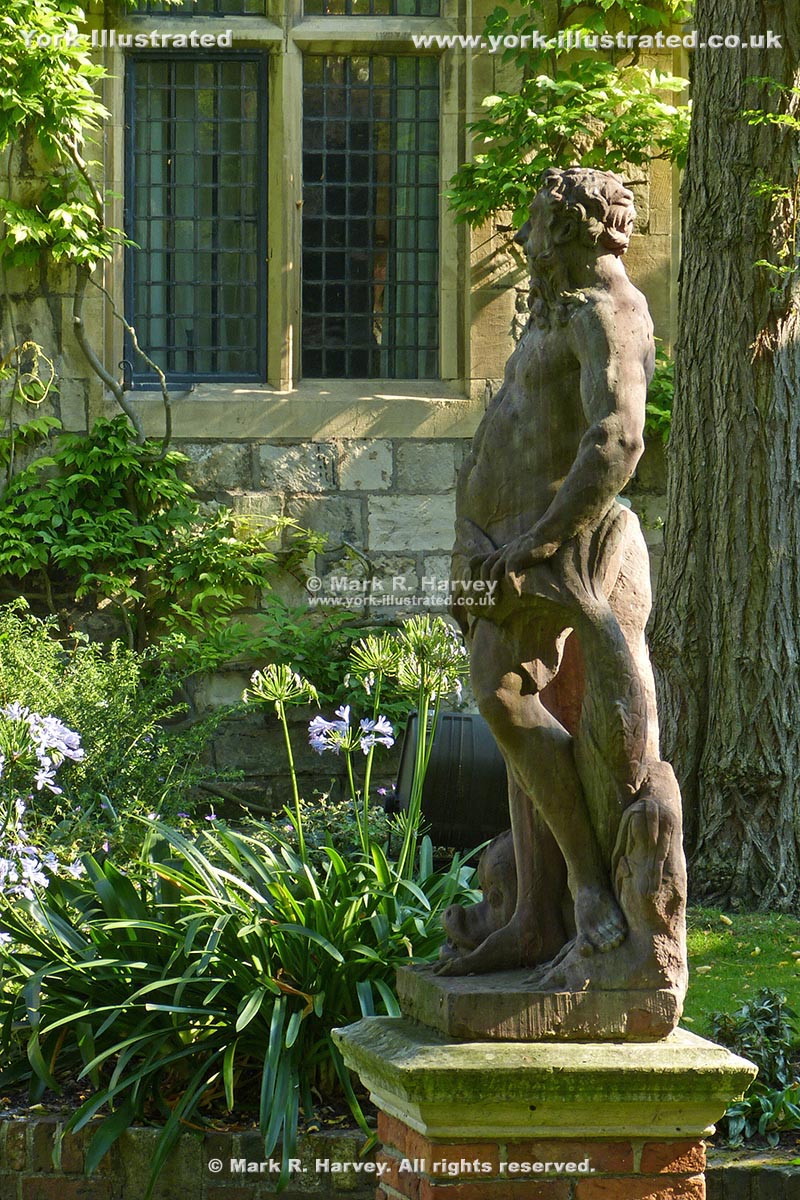
Image C6
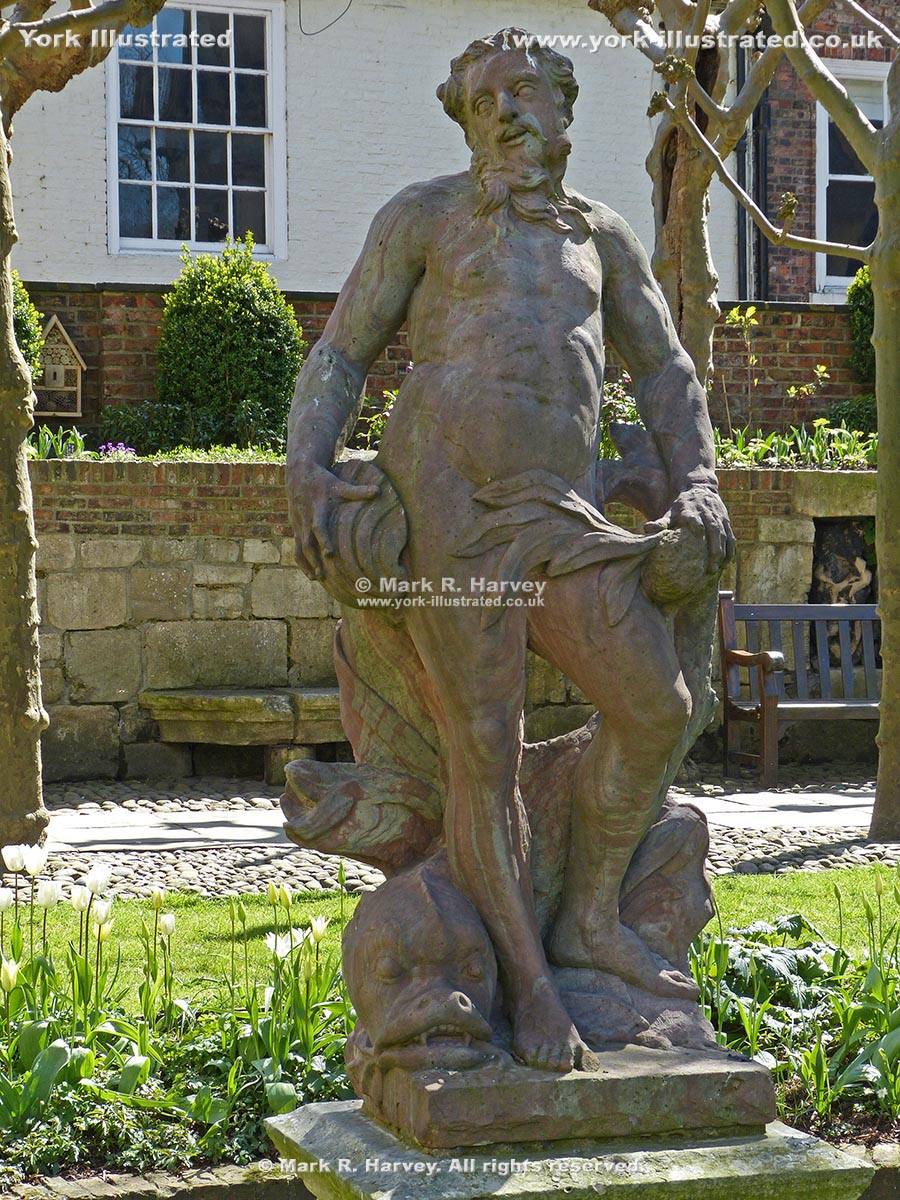
Image C7
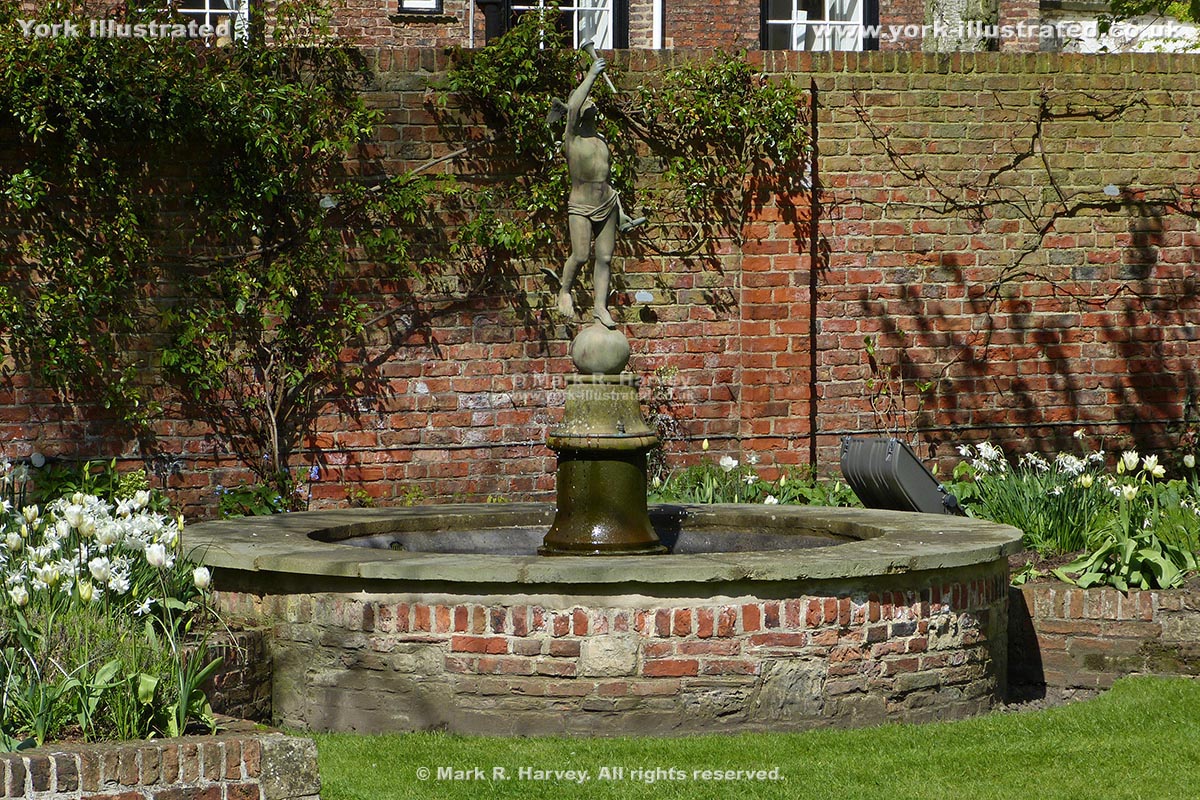
Image C8
D: Views from the street
Image D1
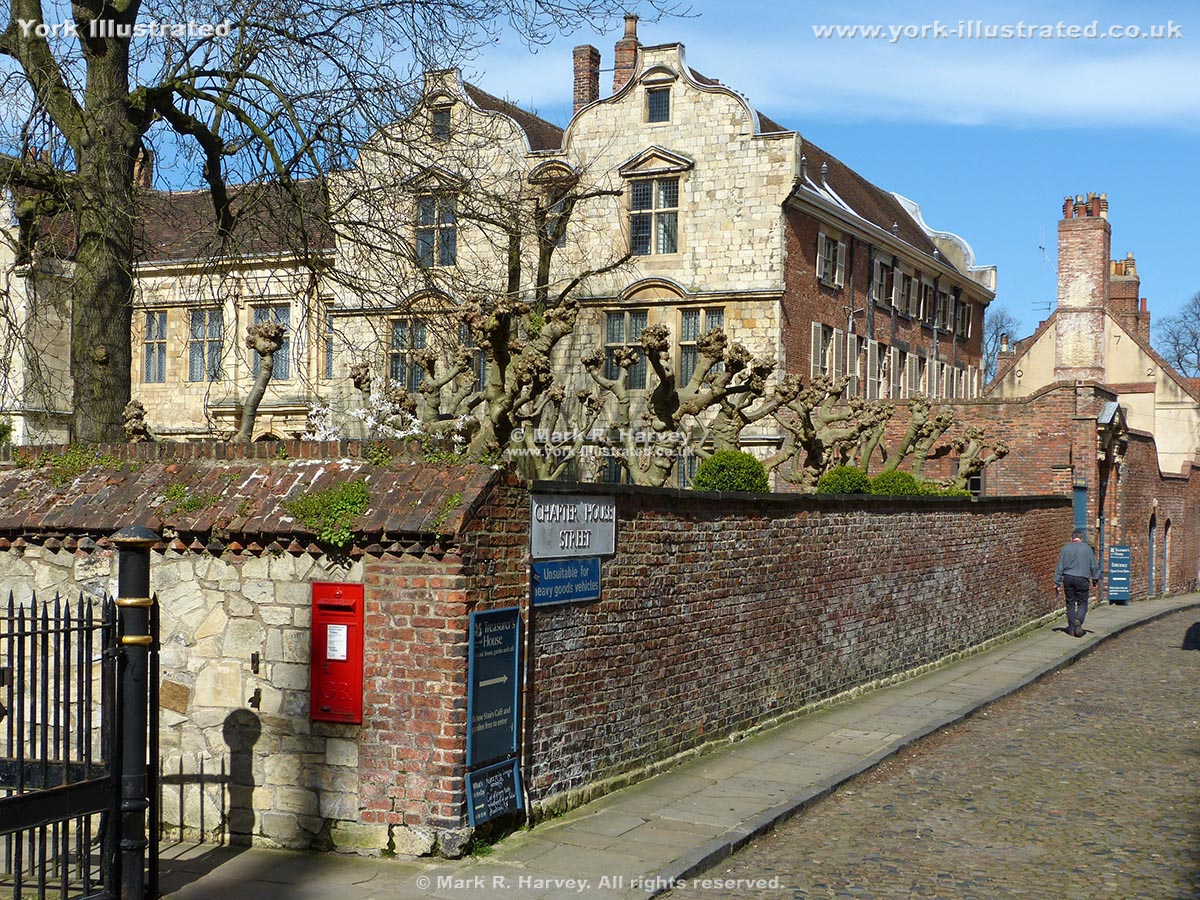
Image D3
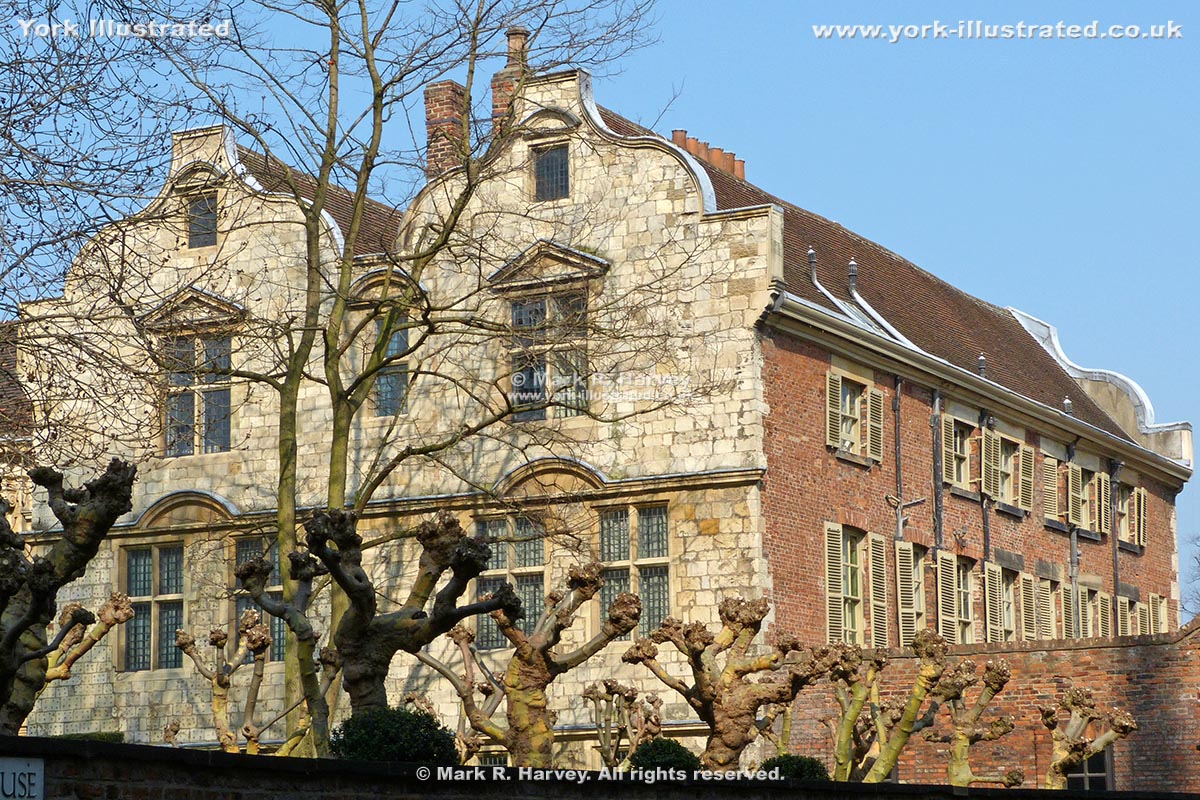
Image D2

A brief history of the site
The site now occupied by the Treasurer's House and Gray's Court has a long and varied history.
During Roman times, it lay entirely within the walled enclosure of the Roman fortress of Eboracum. In the basement of the southeast wing of the Treasurer's House (twelve feet below the level of the current ground surface), the base of an in-situ Roman column and a section of Roman era cobbled pavement have been found. The pavement is believed to be associated with the Via Decumana, i.e. the main road from the Roman Principia (central headquarters building) to the northeast via the Porta Decumana (the north-eastern gateway through the fortress wall).
From the late 11th century until 1547, the site formed part of the official residence of the Treasurers of York Minster. (During this period, the Treasurer was responsible for the Minster's finances and for entertaining important guests, so the incumbent held a great deal of power and prestige.)
On May 26th, 1547 the site was surrendered to the Crown as part of the Reformation of the English Church. Edward VI granted the site to Edward Seymour (Duke of Somerset and Lord Protector of England) who quickly sold it to Robert Holgate (the first Protestant Archbishop of York) for the princely sum of 200 marks.
The site subsequently passed through numerous owners including Lord Fairfax (one of the key participants in the 1644 siege of York).
The Gray family occupied all or part of the site from 1788 until 1945 (hence the name of Gray's Court).
As indicated by a plaque on the boundary wall beside Minster Yard, the young mathematician and astronomer John Goodricke (1764-86) made some of his most important observations from a window on the second floor of the Treasurer's House. In 1783, Goodricke was awarded the Royal Society's Copley Medal for his observations and resulting theories.
In 1897-8, Mr. Frank Green of Nunthorpe Hall purchased three separate dwellings on the site, then undertook a major restoration project with his architect Temple Moore. This project reunified and remodelled the building now known as the Treasurer’s House.
In 1930, Frank Green bequeathed this much-altered building (along with its contents and garden) to the National Trust.
The building is now Grade 1 listed.
Current use
The Treasurer's House is now a popular museum / visitor attraction. The interior spaces are used primarily to tell the story of Frank Green and to house his extensive collection of "antique furniture, ceramics, textiles and paintings".
Practical Information
To explore the interior of the house, a fee is payable (or a valid National Trust membership is required). However, during the property's opening hours, the garden and the basement tea rooms are normally open to the public without payment of an entrance fee. For further details, please refer to the property's own website via the URL in the 'External Links' section below.
External Links
For a comprehensive summary of the history of the site and its buildings, see:
https://www.british-history.ac.uk/rchme/york/vol5/pp69-76
For information relating to the museum and grounds (including prices and opening times), see the relevant page on the National Trust website:
https://www.nationaltrust.org.uk/treasurers-house-york