|
1 |
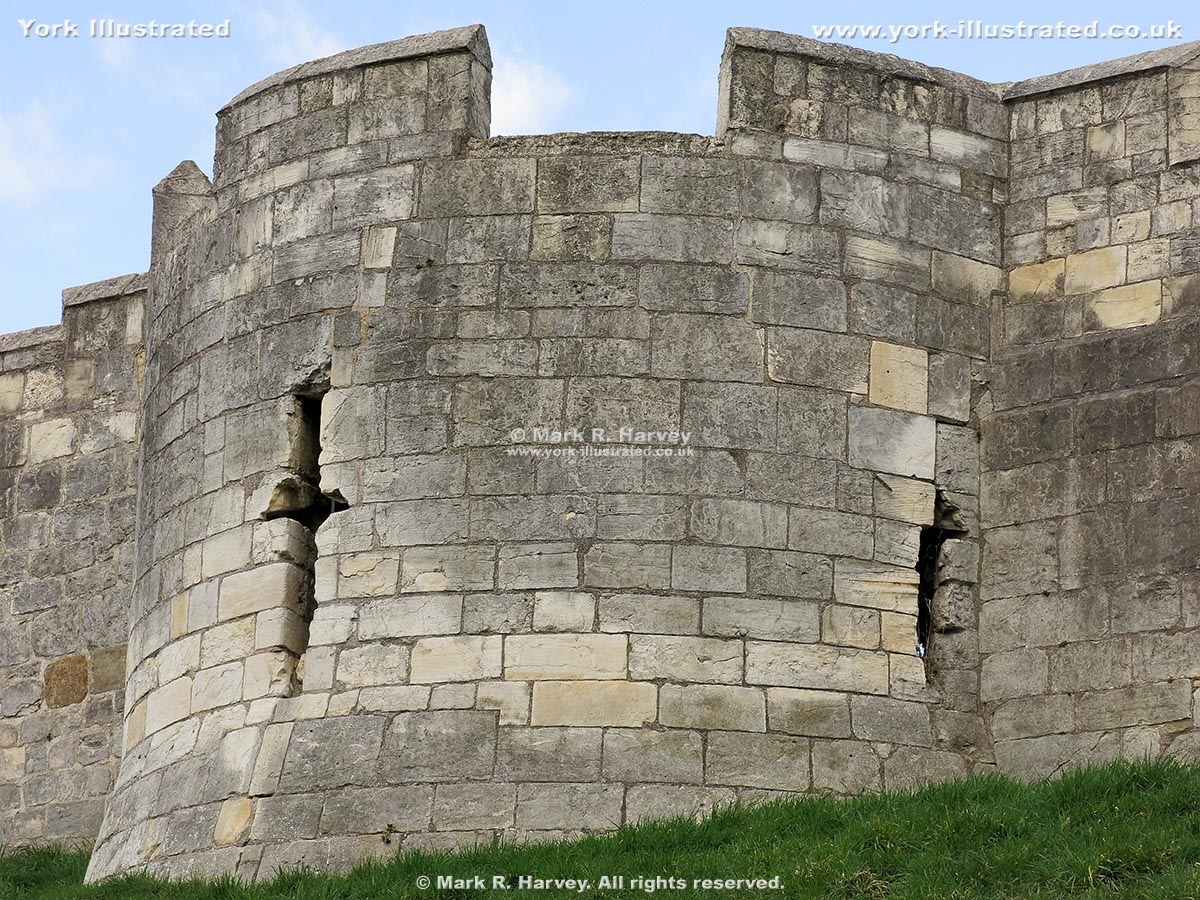
This octagonal stone tower was constructed in 1878 when the adjacent section of York's City Wall was demolished to facilitate construction of Skeldergate Bridge.
|
|
2 |
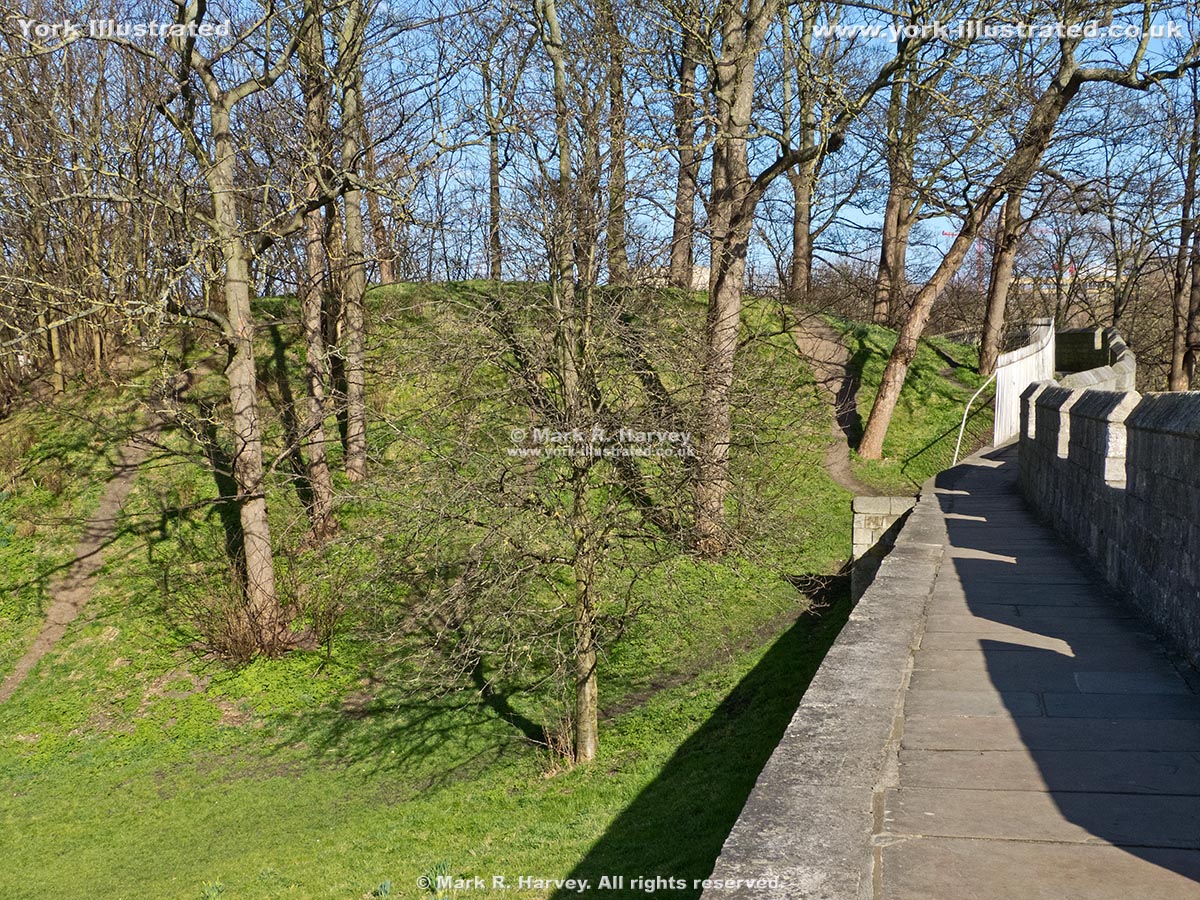
During the 11th century, York boasted two 'motte and bailey' fortifications, one on each side of the River Ouse. Baile Hill is the motte of the western one.
|
|
3 |
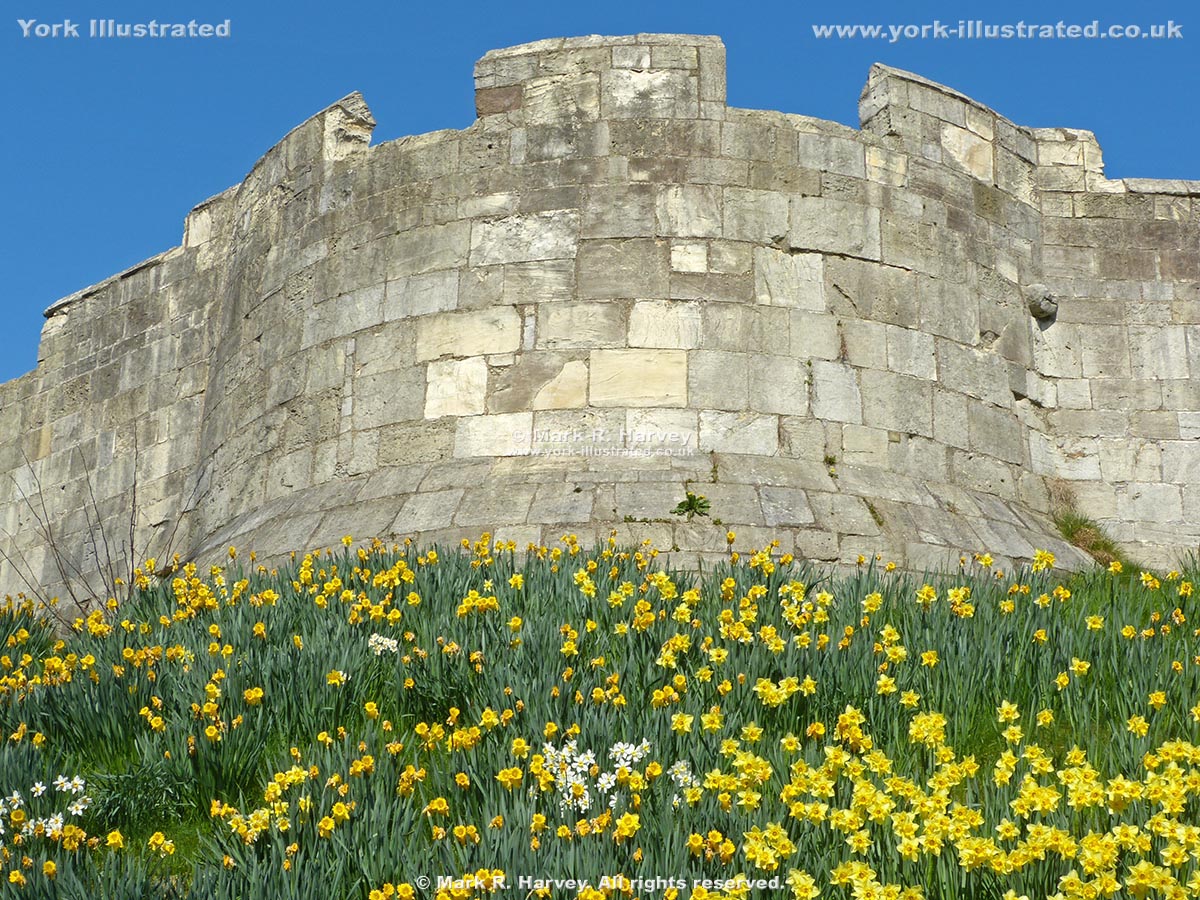
Bitch-daughter Tower on the south corner of York's City Walls has been used as a defensive corner tower, a gaol, a Civil War watch tower and a 'cow house'.
Read more |
|
4 |
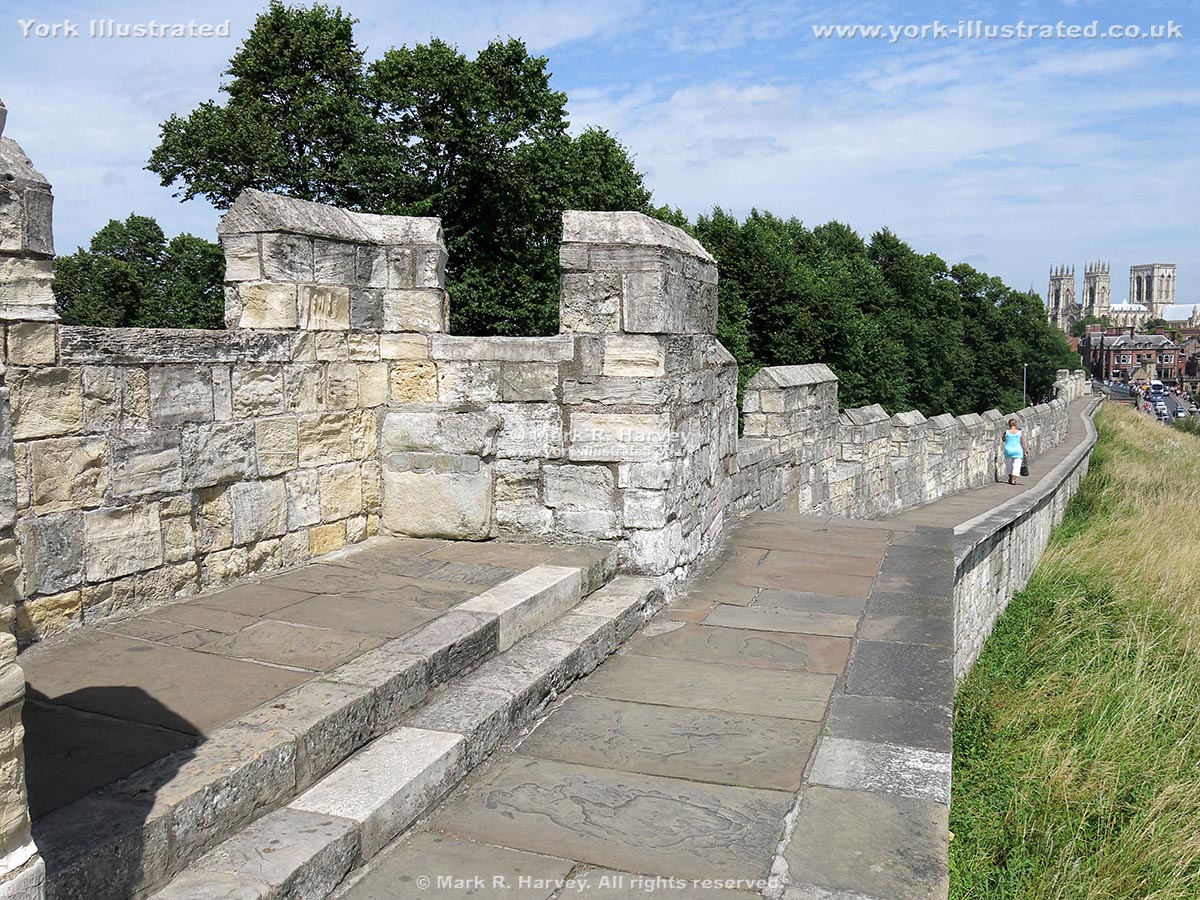
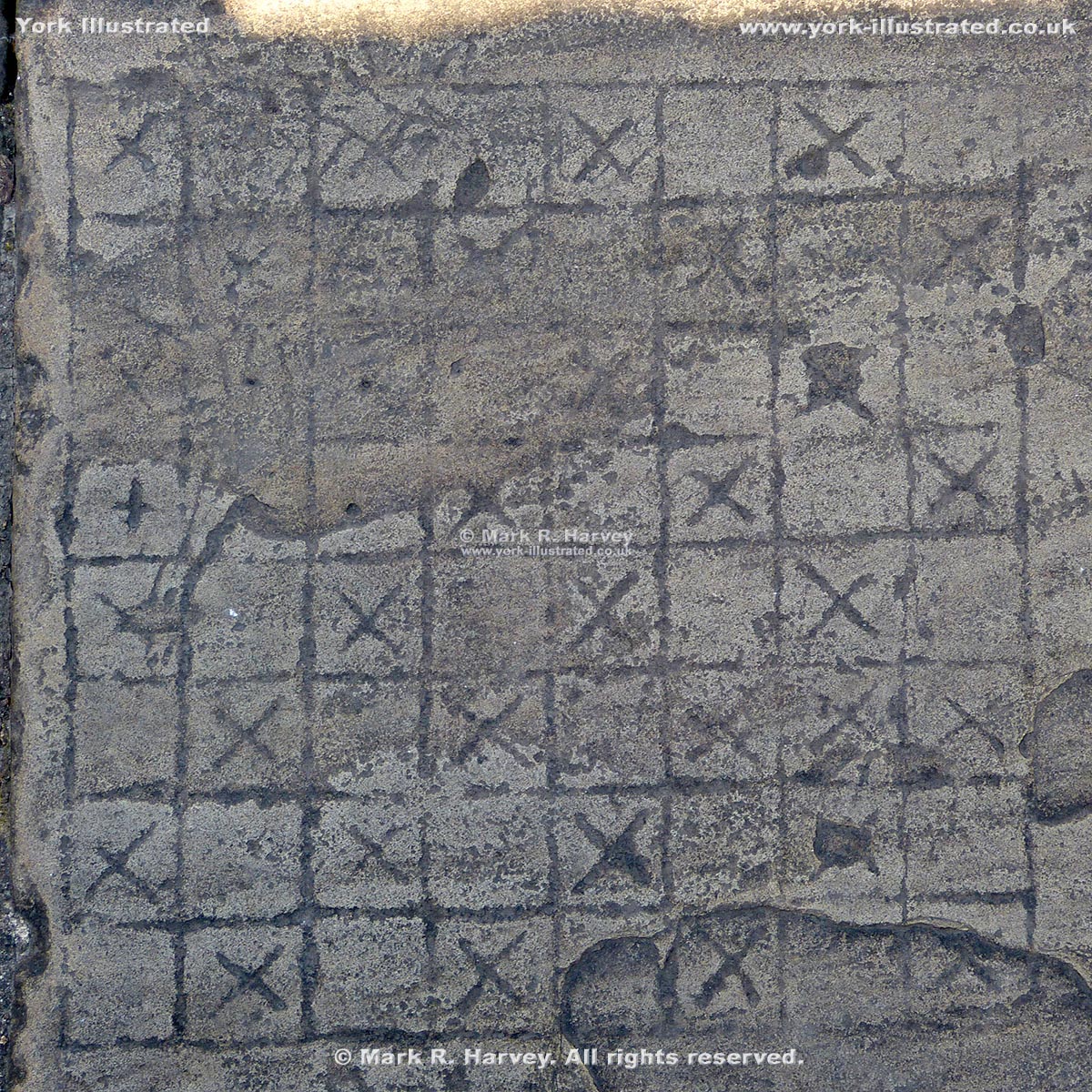
A chess board has been carved onto a paving slab that forms part of the walkway along the top of the southwestern section of York's City Wall (near Tower 5).
|
|
5 |
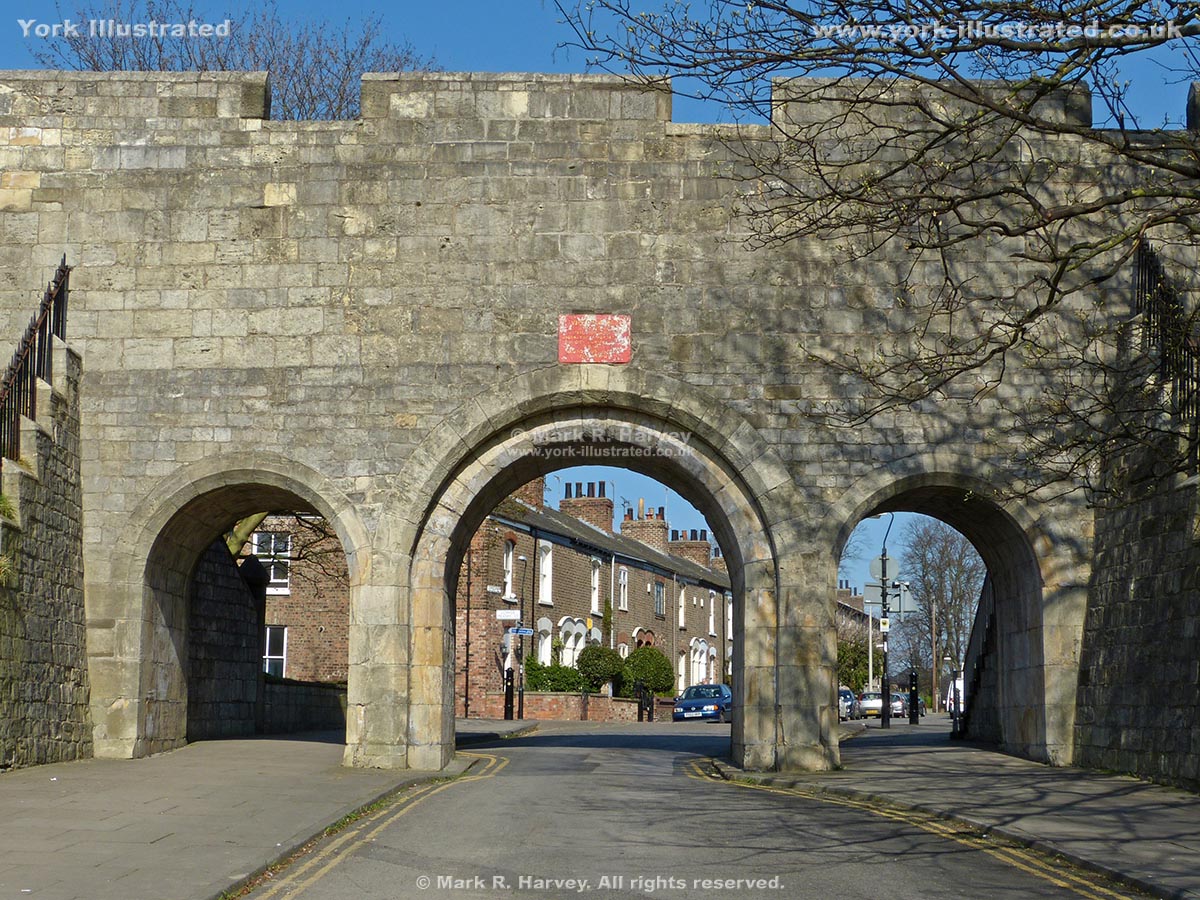
The central arch of Victoria Bar was inserted into a plain section of York's City Wall in 1838. During the work, the remains of an earlier gate were discovered.
Read more |
|
6 |
The base of Tower 7 is believed to have been built circa 1250-60, which would make it one of the oldest surviving interval towers on York's City Walls.
Read more |
|
7 |
Micklegate Bar is the grand ceremonial entrance to the city of York. It has protected and controlled the city's southwestern approaches since the 12th century.
Read more |
|
8 |
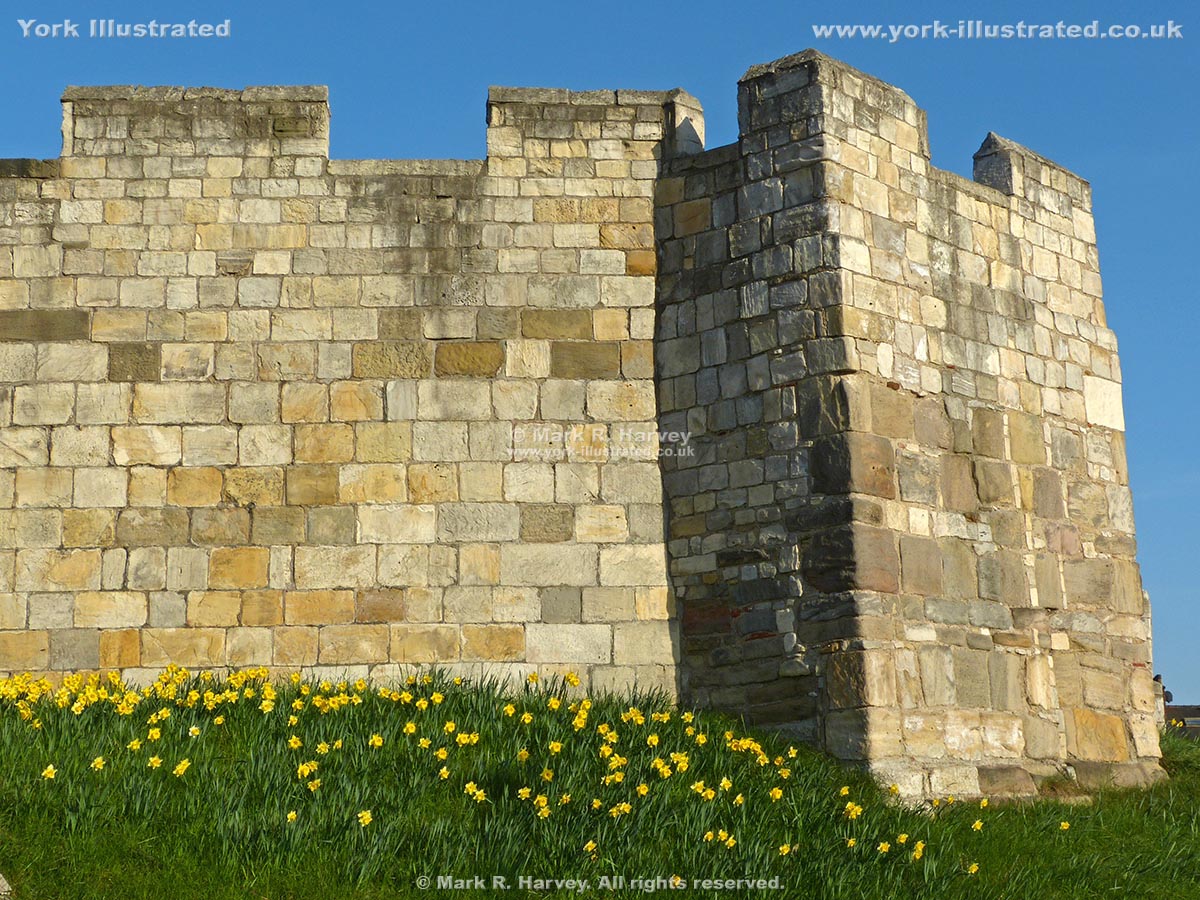
Tower 13 (aka Toft's Tower) protects a right-angled corner in the south western section of York's City Walls.
|
|
9 |
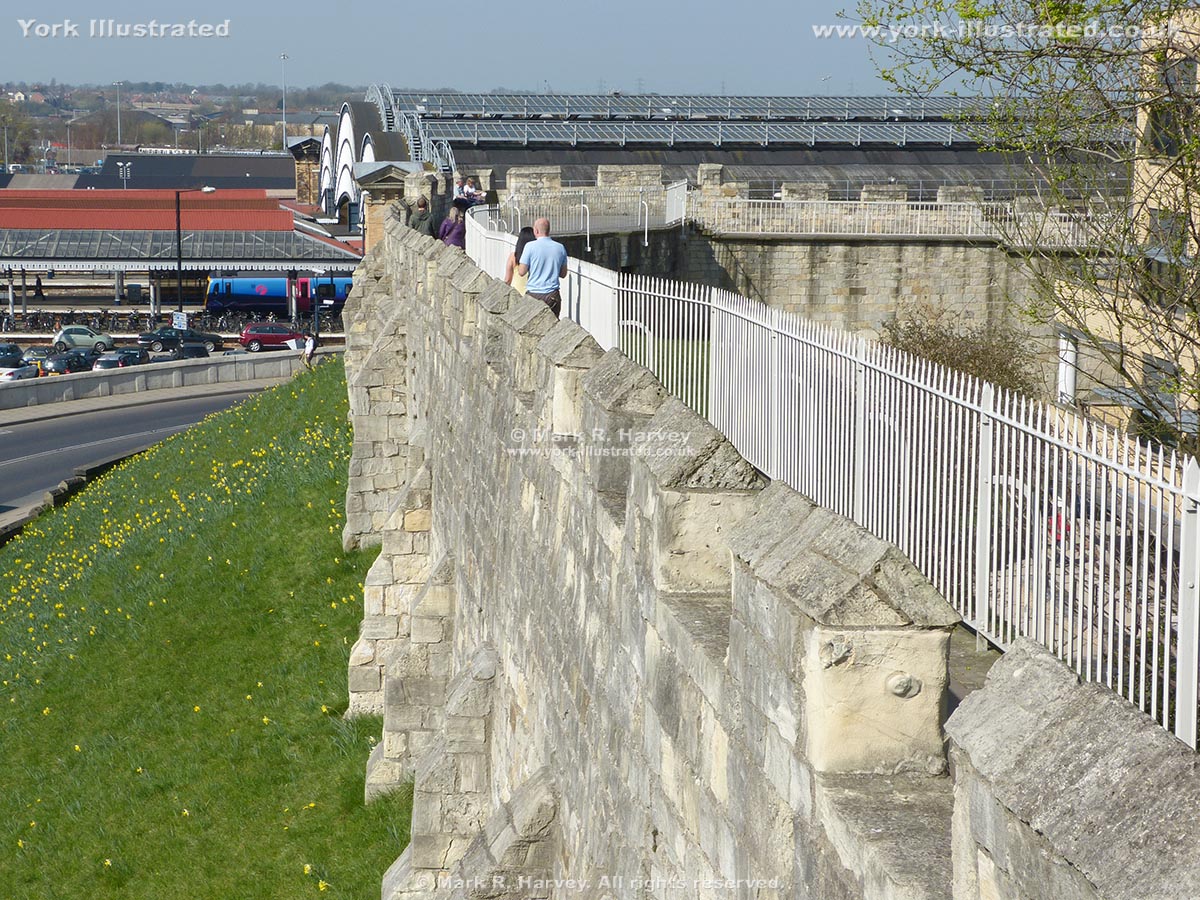
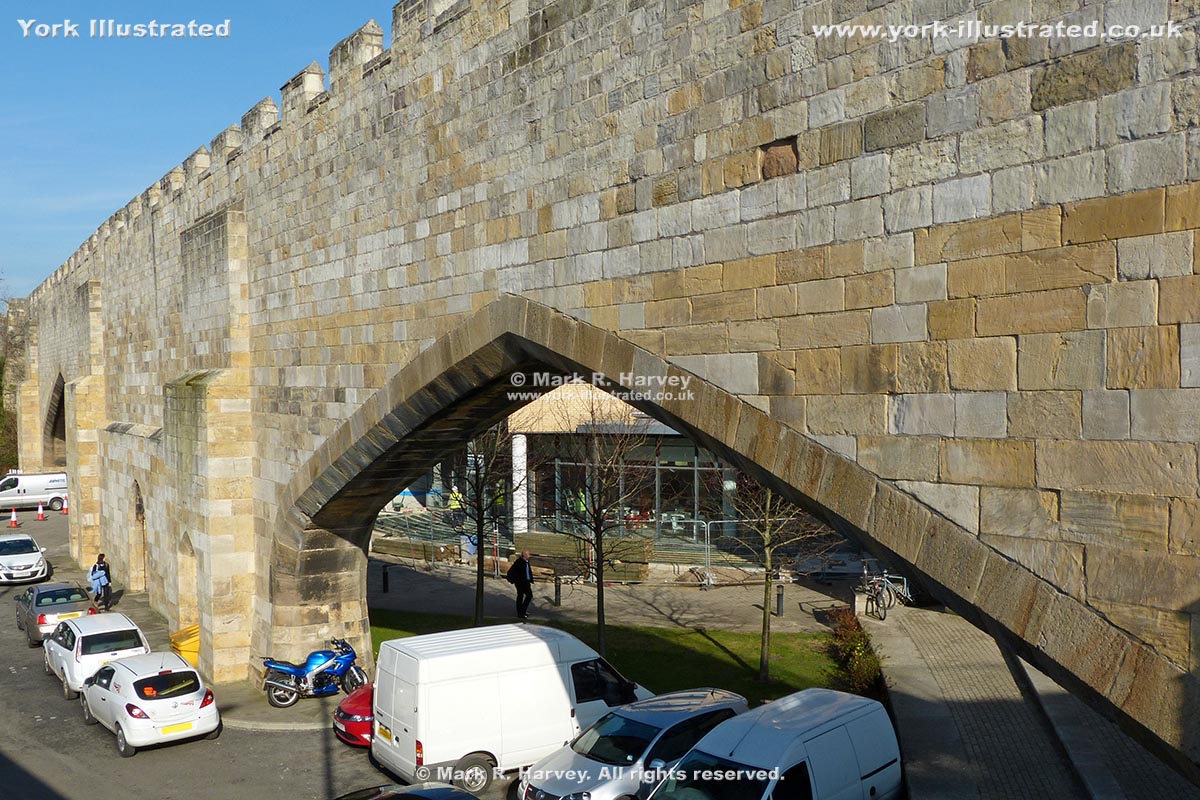
A set of three access arches were inserted into the City Wall by the York and North Midland Railway Company during the second quarter of the 19th century.
Read more |
|
10 |
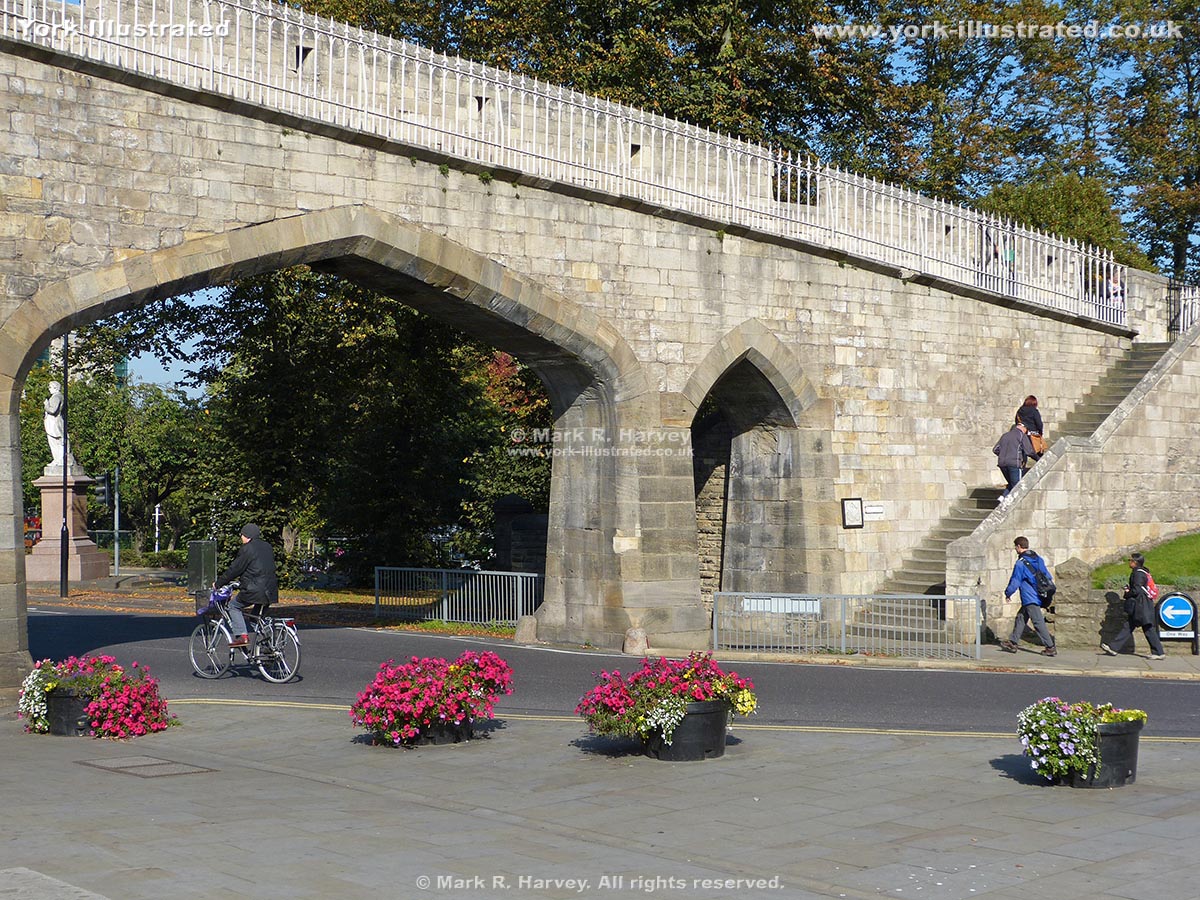
In 1874-6, two sets of archways were inserted into the city wall to provide pedestrian and road access between the city centre and the new railway station.
Read more |
|
11 |
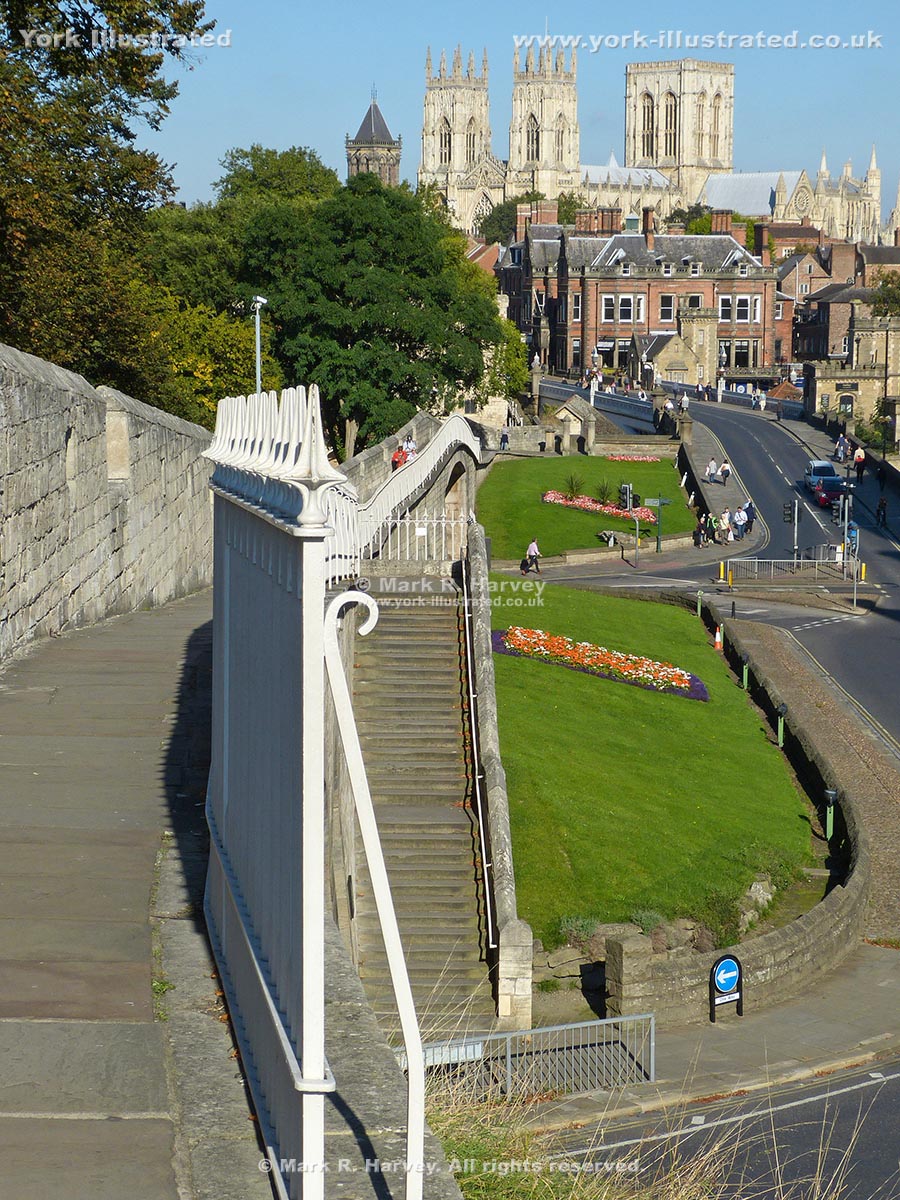
The steps were constructed in 1874, when the three adjacent arches were pierced through York's City Walls to provide access to the new railway station.
|
|
12 |
This access point was constructed circa 1863 as part of the Lendal Bridge construction works. It leads to / from one of the most popular sections of York's world-famous Wall Walk.
|
|
13 |
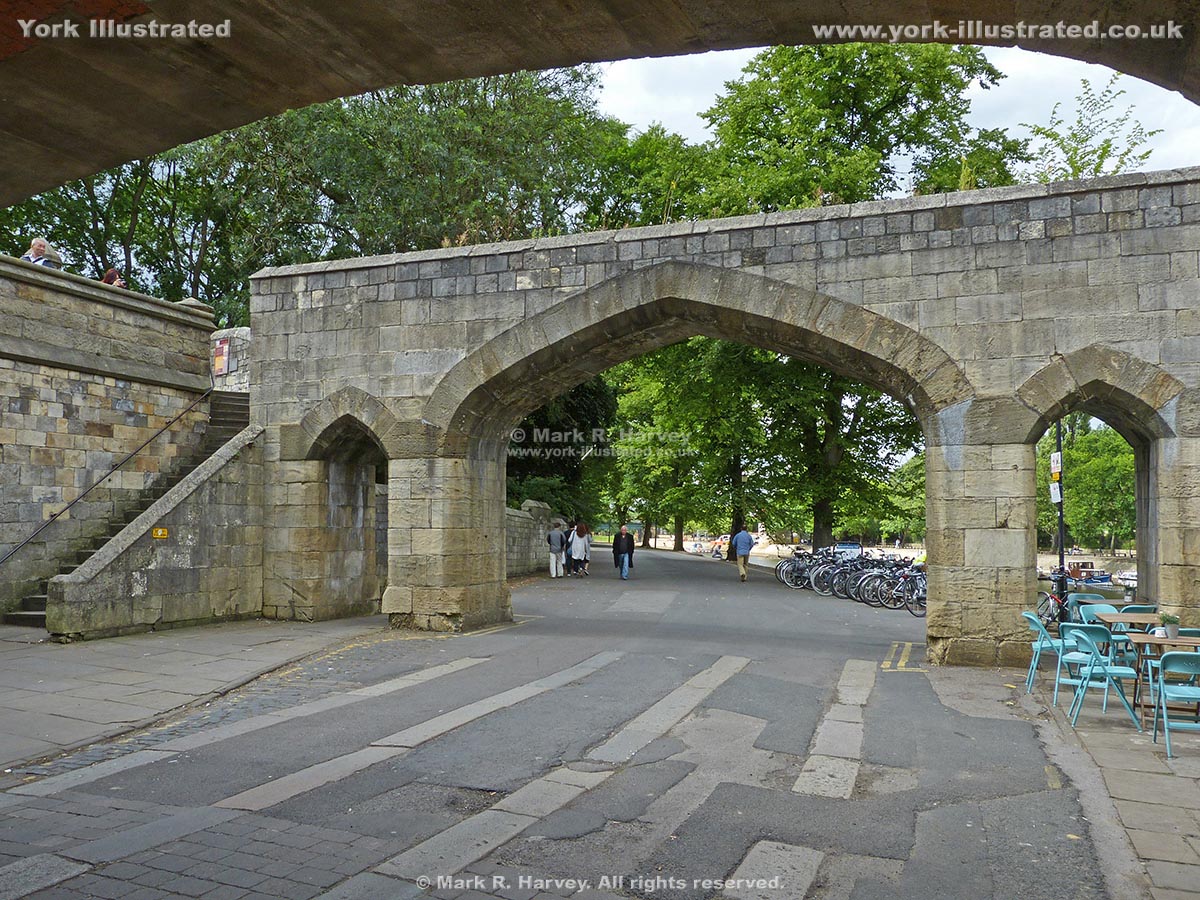
The triple arch beside Barker Tower dates from the Victorian period. It replaced an earlier small defensive gateway known as North Street Postern.
Read more |
|
14 |
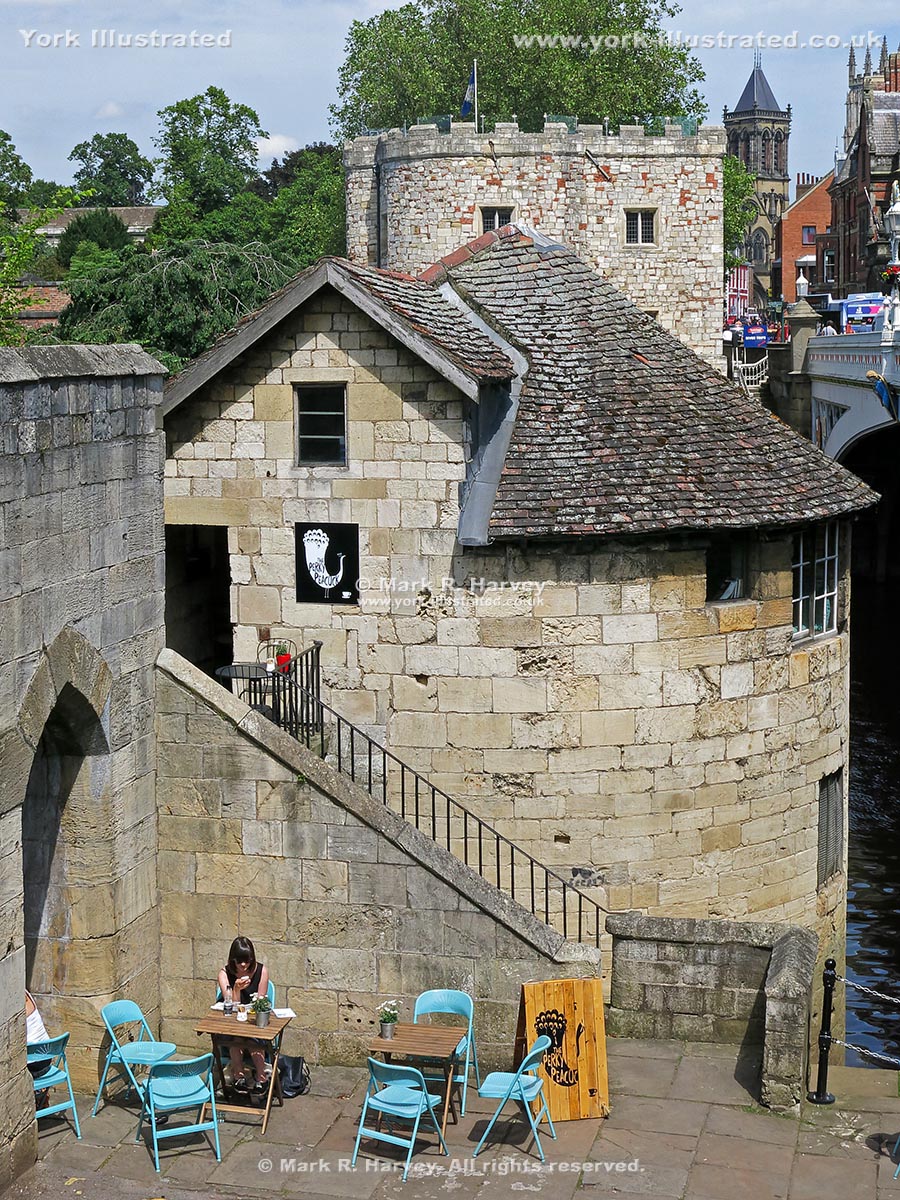
Barker Tower was built during the mid-14th century. The Leonard's Landing ferrymen lived here until 1863. Since then it has been a mortuary, storeroom and cafe (although not all at the same time).
Read more |
 York Illustrated