Minor points of interest for those with an eye for detail. The young (and the 'young at heart') may enjoy seeking-out these smaller details.

Show / hide tips
  • Every item classified with this term is included in this extract.
  • The items have been grouped by content type, then listed in alphabetical order.
  • To speed-up page-loading, a maximum of 24 locations are displayed on each page.
  • If there are more than 24 items, click / tap on the page navigation buttons (located below the list) to display the additional page(s).
  • To view a larger version of an image, click / tap on the image.
  • To view all available information and images for an item of content, click / tap on its title or 'Read More' link. (If a 'Read more' link is provided, a brief article and / or a high quality external link is available.)
  • To view the locations on interactive maps and aerial imagery, use the 'Explore' app.
Gazetteer Entry

Photo as per caption. Opens larger version.

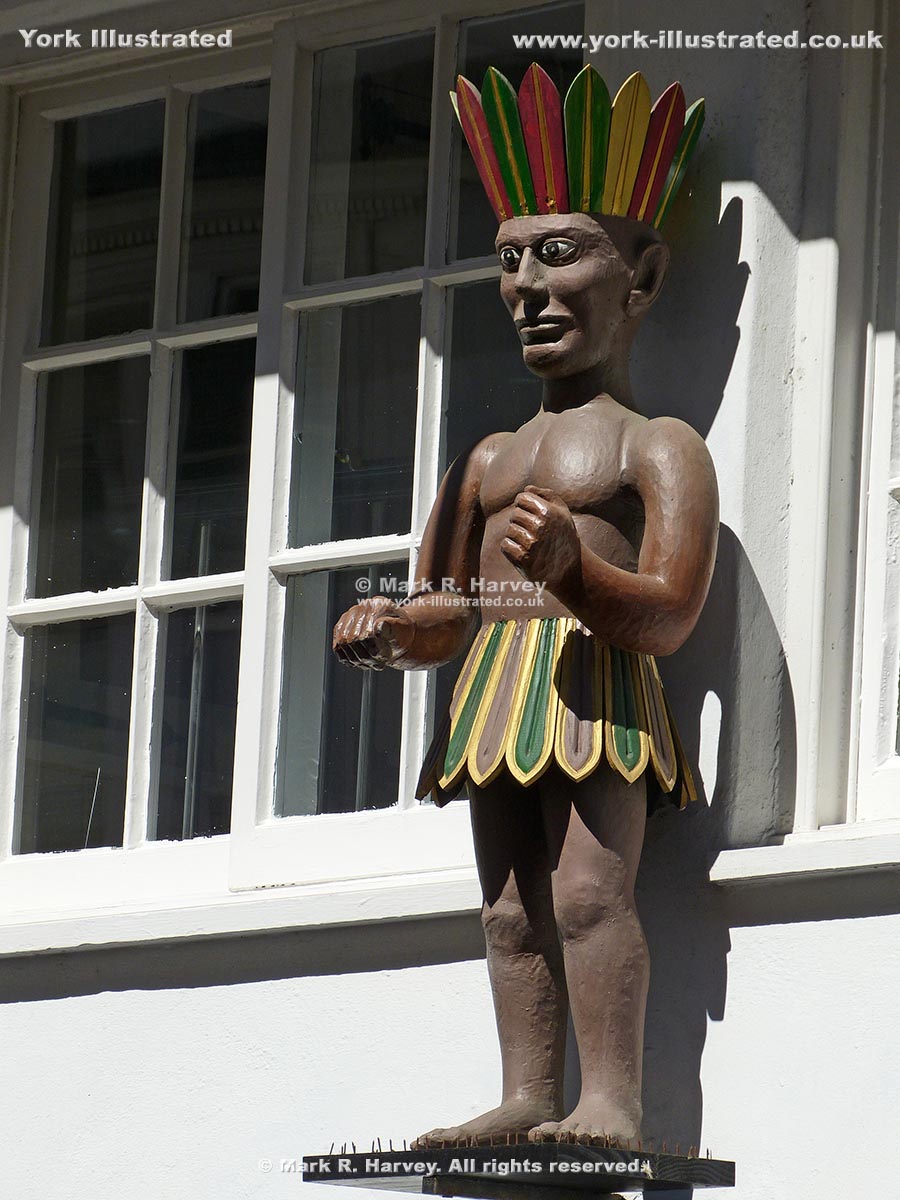
American Indian Carving

The painted wooden carving known locally as 'the American Indian' was originally created to identify and promote a tobacconist's business at 76 Low Petergate.

Read more

Photo as per caption. Opens larger version.

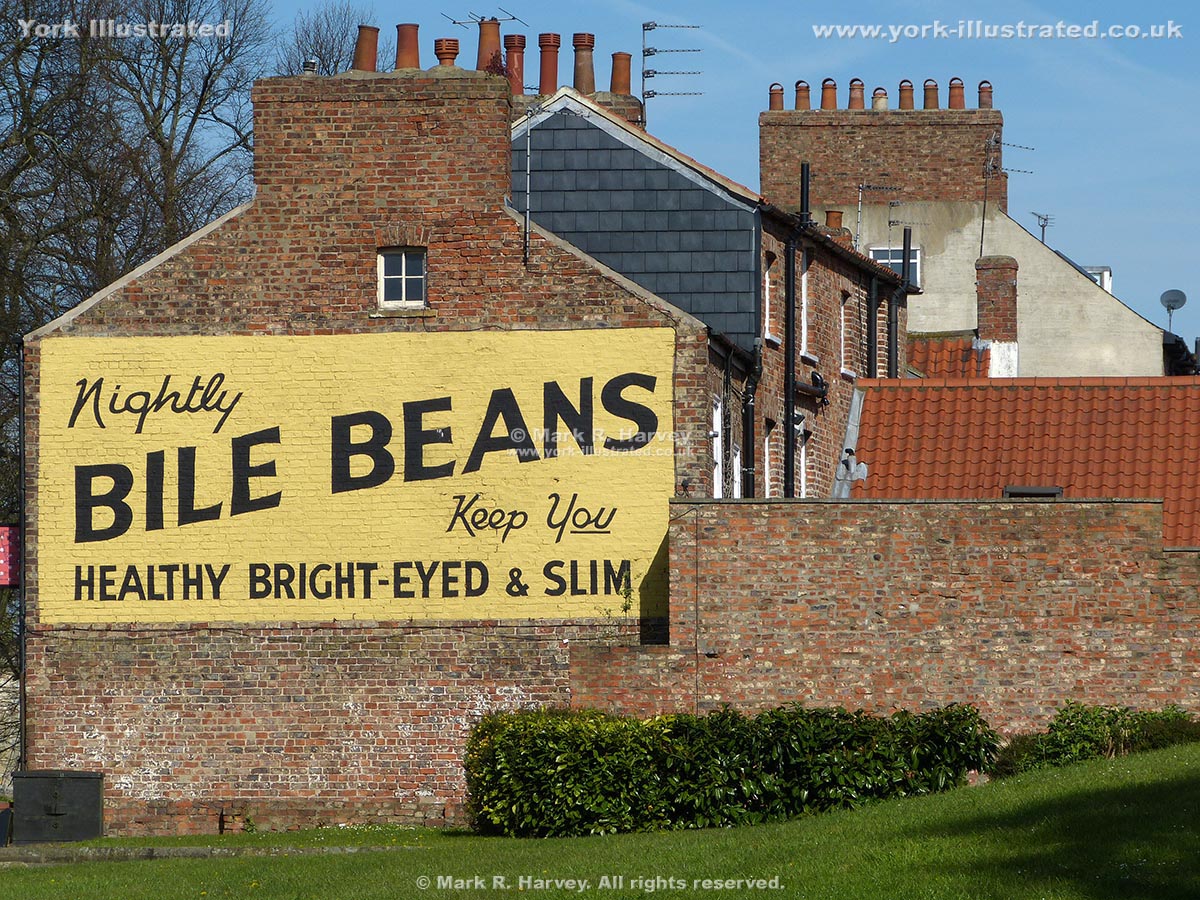
Bile Beans Ghost Sign

The intriguing advertisement for "Bile Beans" is a 'ghost sign' on the side wall of a house at the junction of Lord Mayor's Walk and Monkgate, near Monk Bar.

Read more

Photo as per caption. Opens larger version.

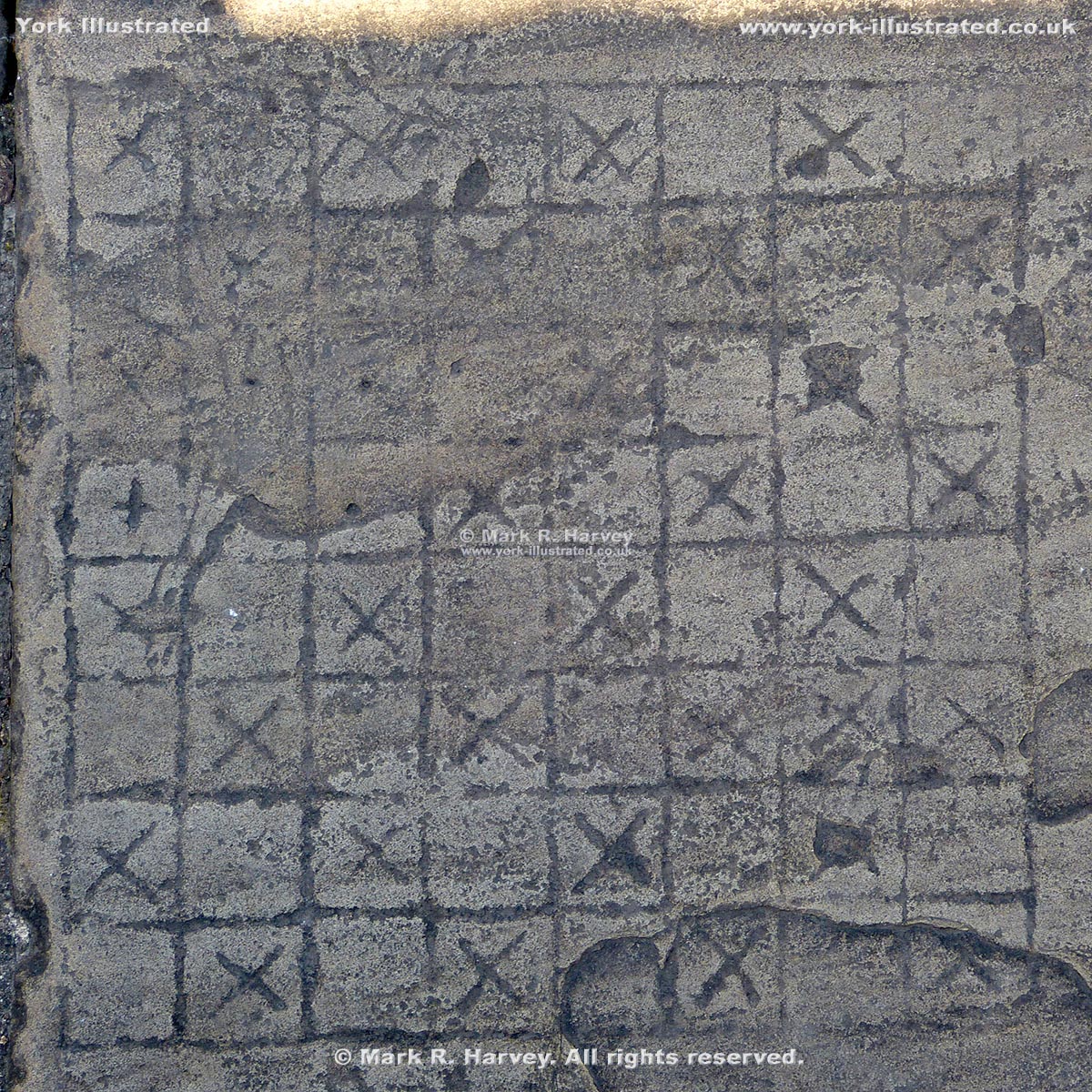
Chess Board Carving on Wall Walk

A chess board has been carved onto a paving slab that forms part of the walkway along the top of the southwestern section of York's City Wall (near Tower 5).

Photo as per caption. Opens larger version.

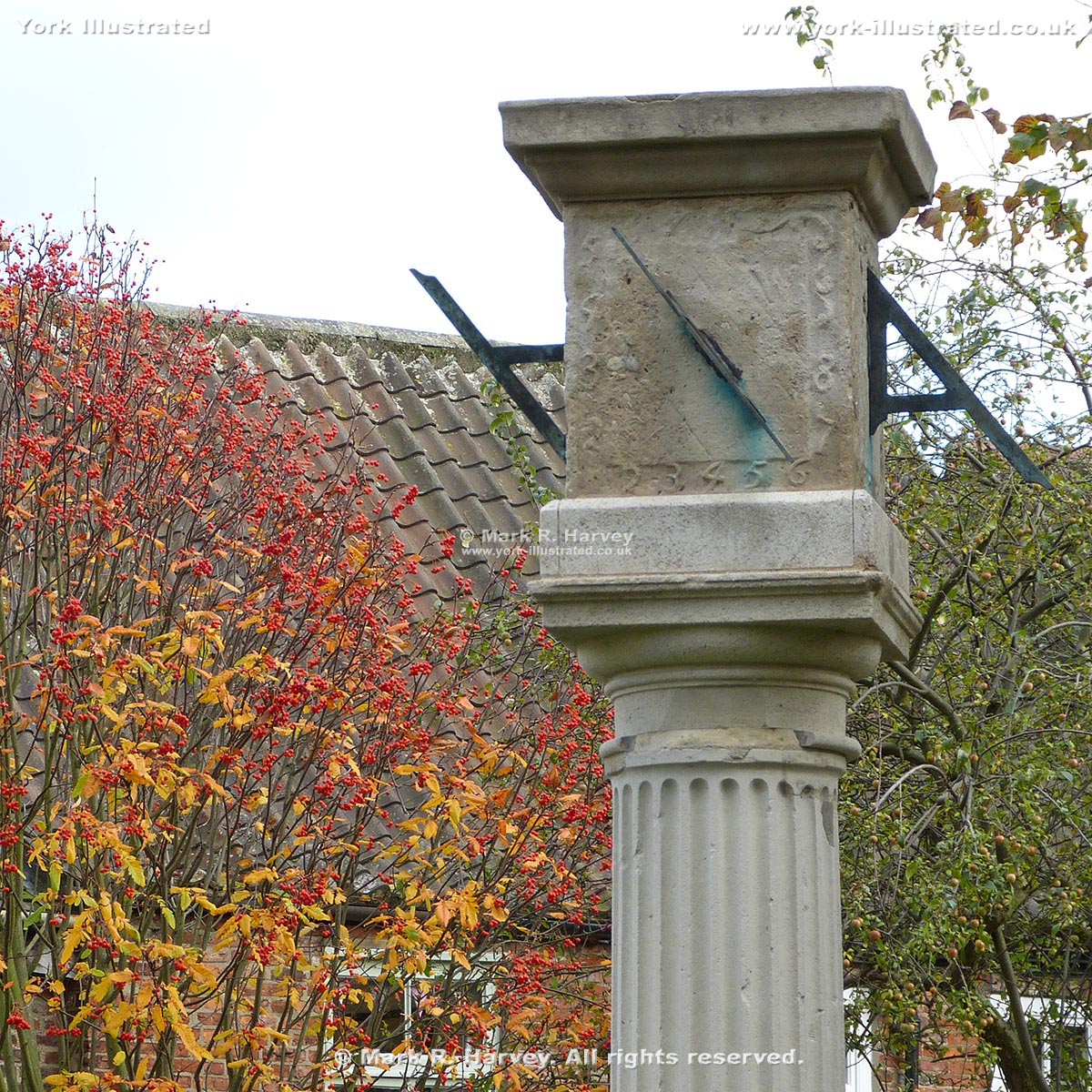
College Green Sundial

The centre-piece of College Green is a circular stone seat with a fluted Doric column rising through the centre, topped by a cubical sundial.

Read more

Photo as per caption. Opens larger version.

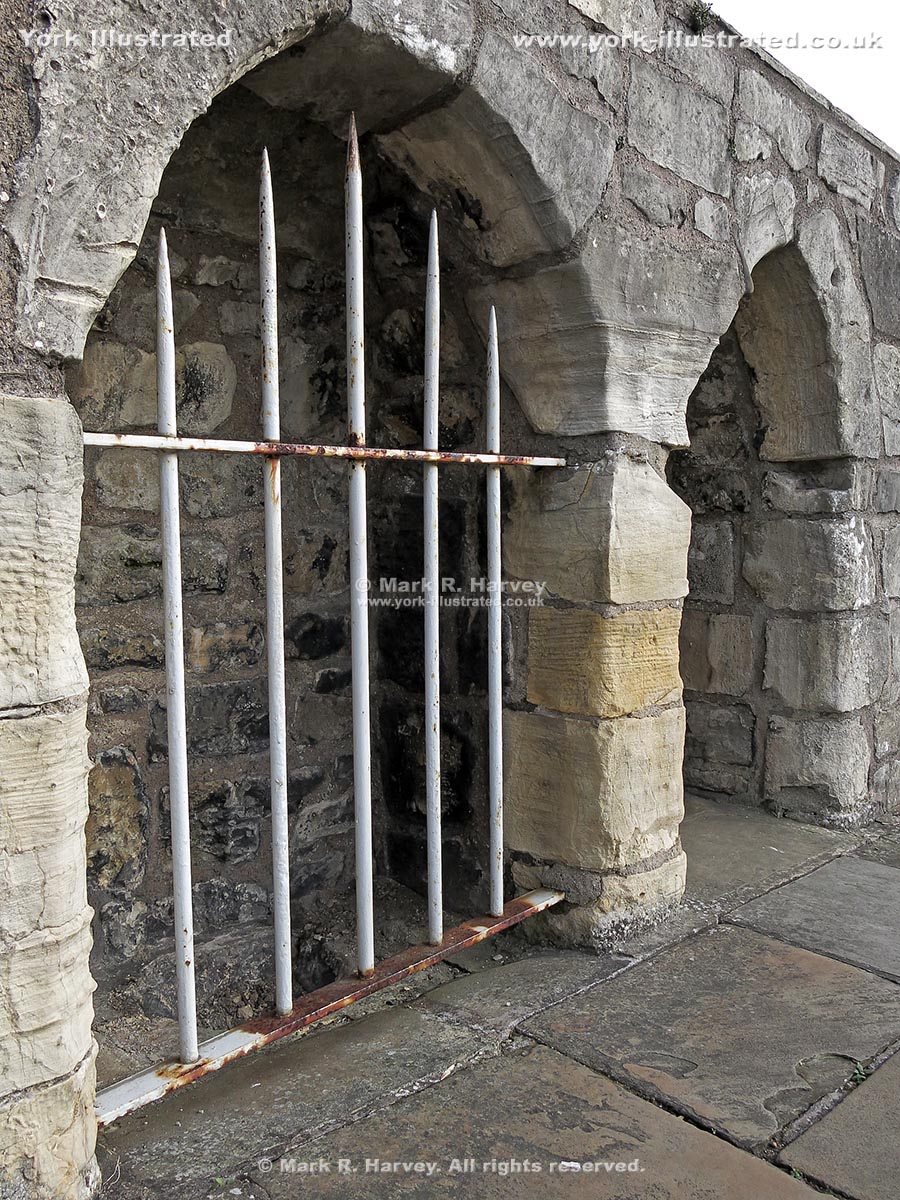
Historic Latrines

Between tower 31 and the site of tower 30, a pair of historic latrines (toilets / urinals) have been set into the City Walls beside the wall-top walkway.

Read more

Photo as per caption. Opens larger version.

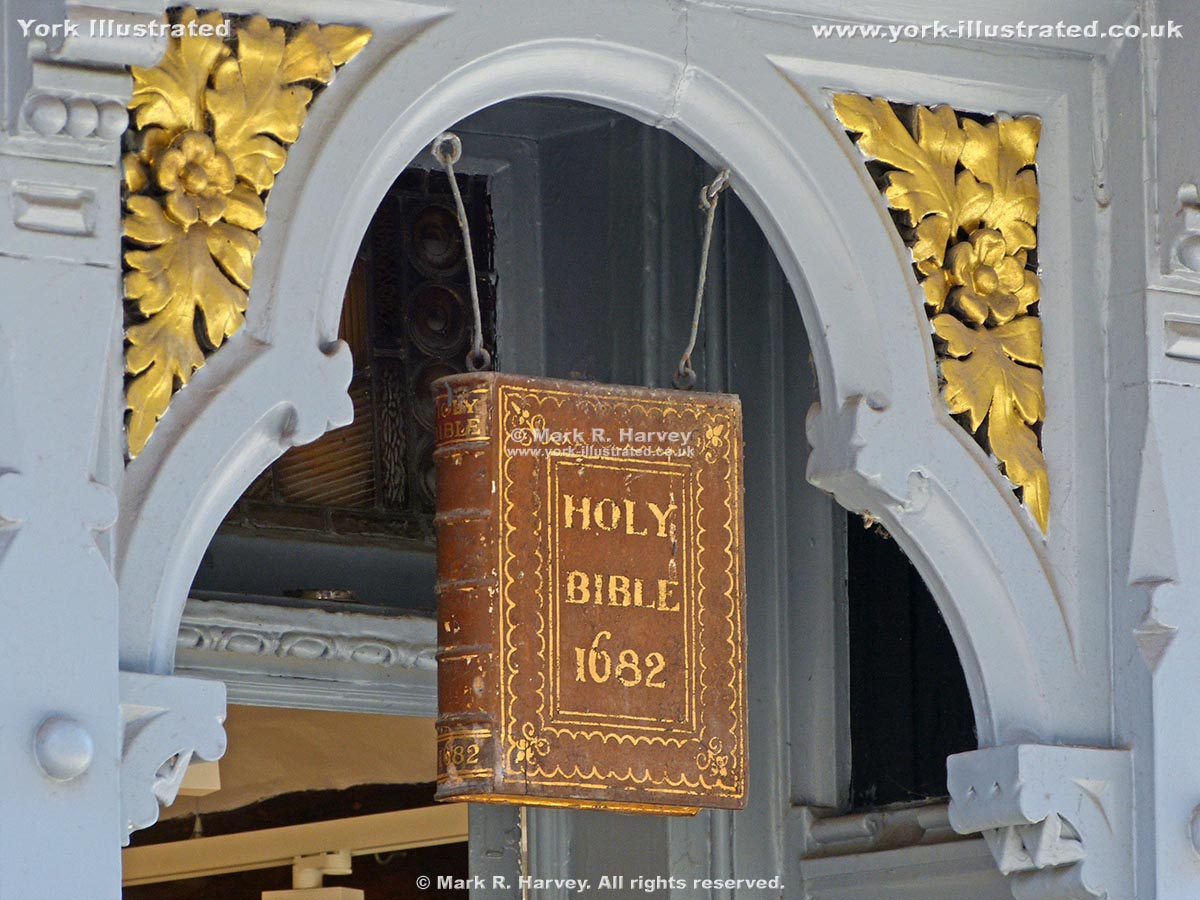
Holy Bible 1682 Carved Wooden Sign

For almost 200 years, this carved wooden sign above the doorway of 35 Stonegate advertised a series of book-related businesses known as "The Sign of the Bible".

Read more

Photo as per caption. Opens larger version.

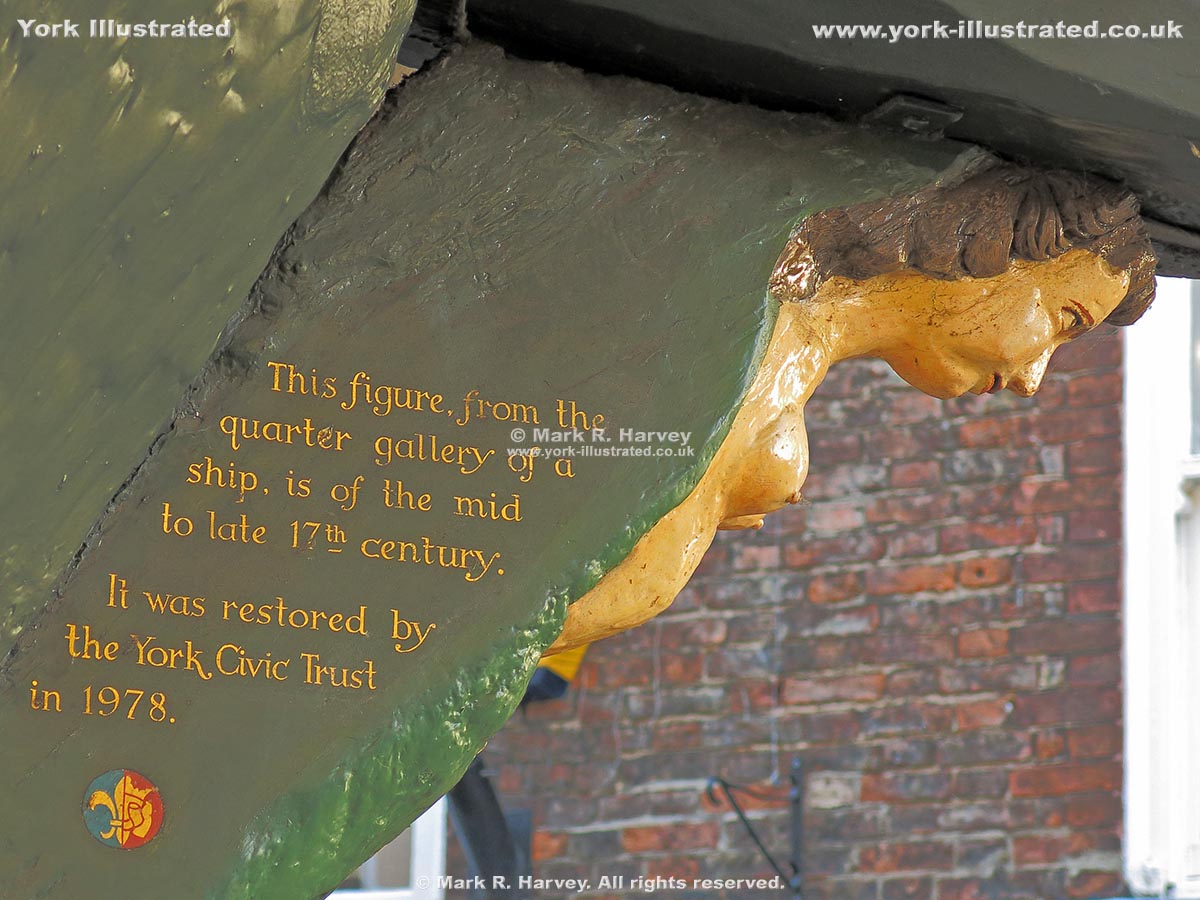
Mermaid Figurehead

The mermaid on the corner post of number 13 Stonegate is believed to have been carved as a ship’s figurehead in the mid to late 17th century.

Read more

Photo as per caption. Opens larger version.

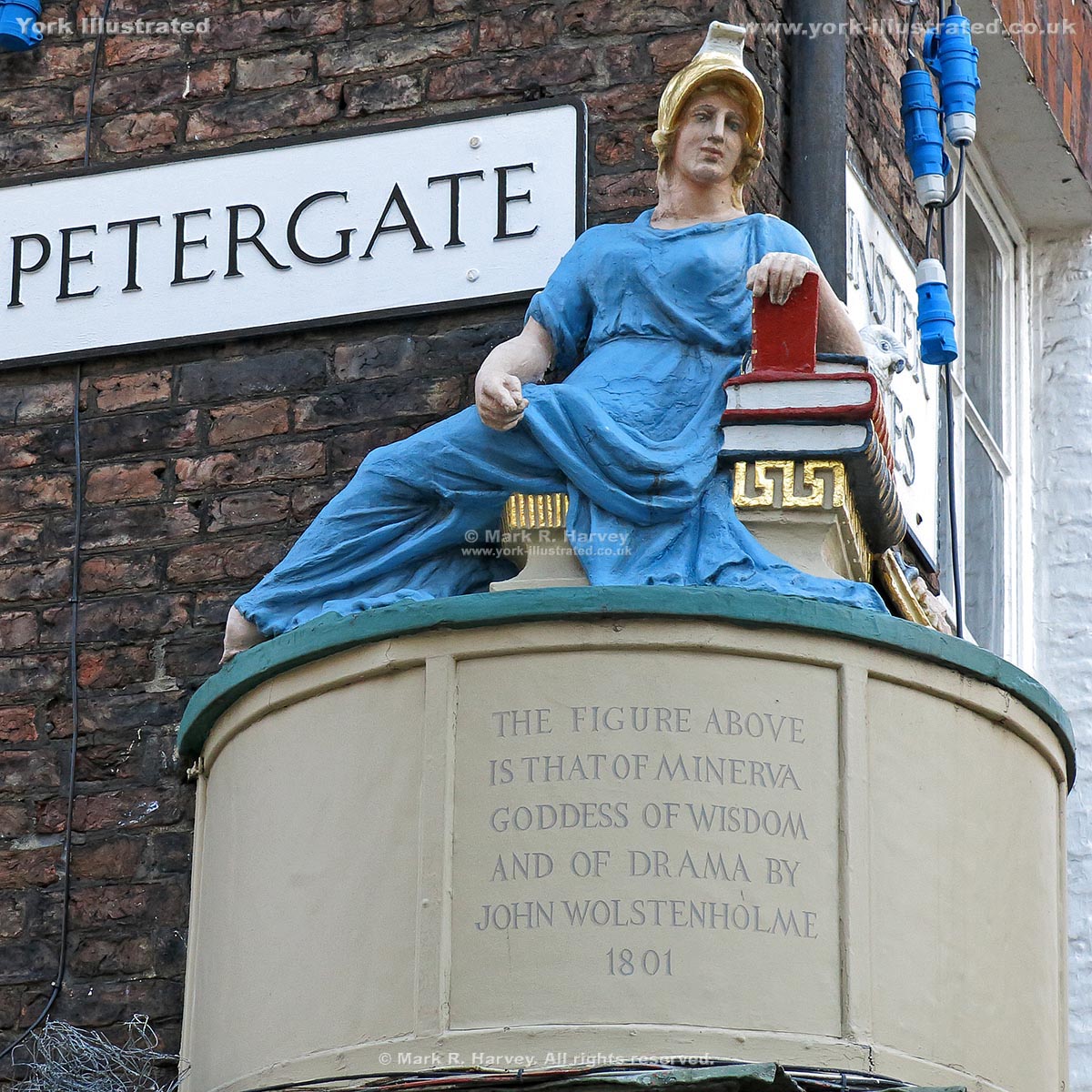
Minerva 3D Bookshop Sign

This carving of Minerva with books, owl and theatrical mask was installed in 1801 to promote a bookshop on the corner of High Petergate and Minster Gates.

Read more

Photo as per caption. Opens larger version.

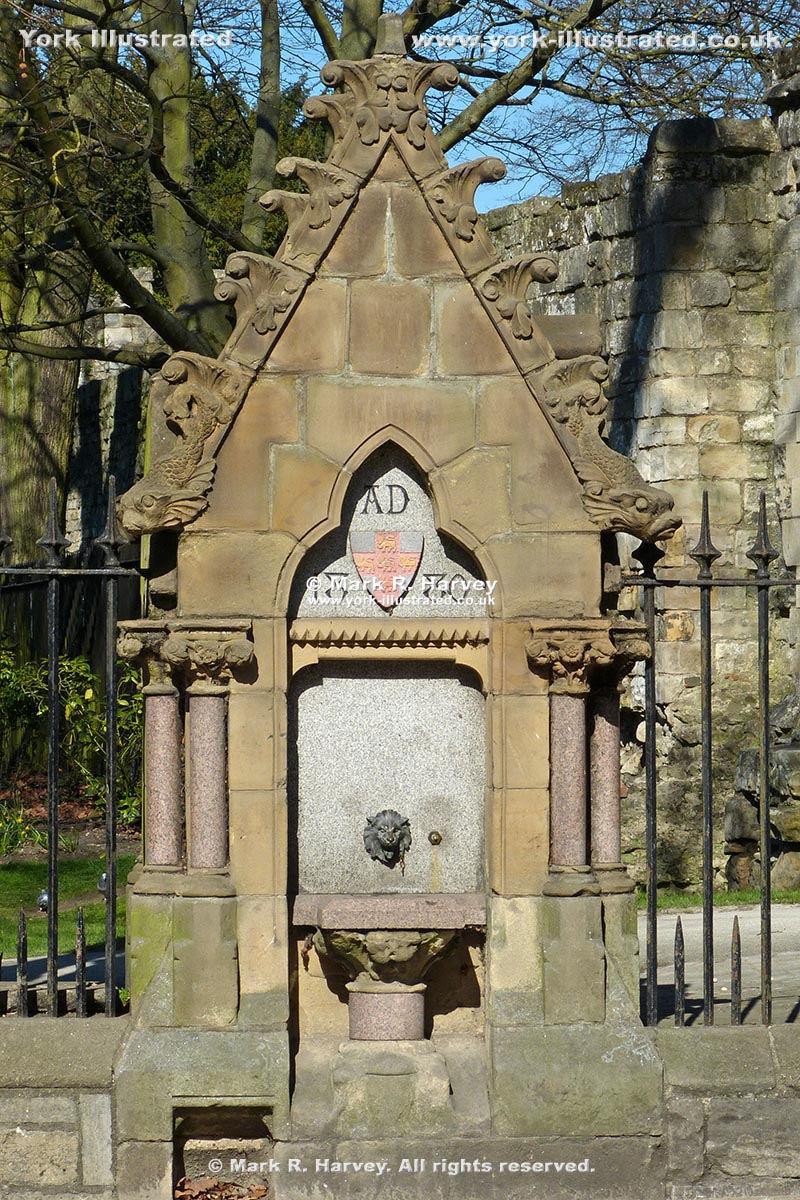
Museum Street Drinking Fountain

The drinking fountain between Museum Gardens and Museum Street was installed in 1880 to provide York citizens with a convenient source of clean water.

Read more

Photo as per caption. Opens larger version.

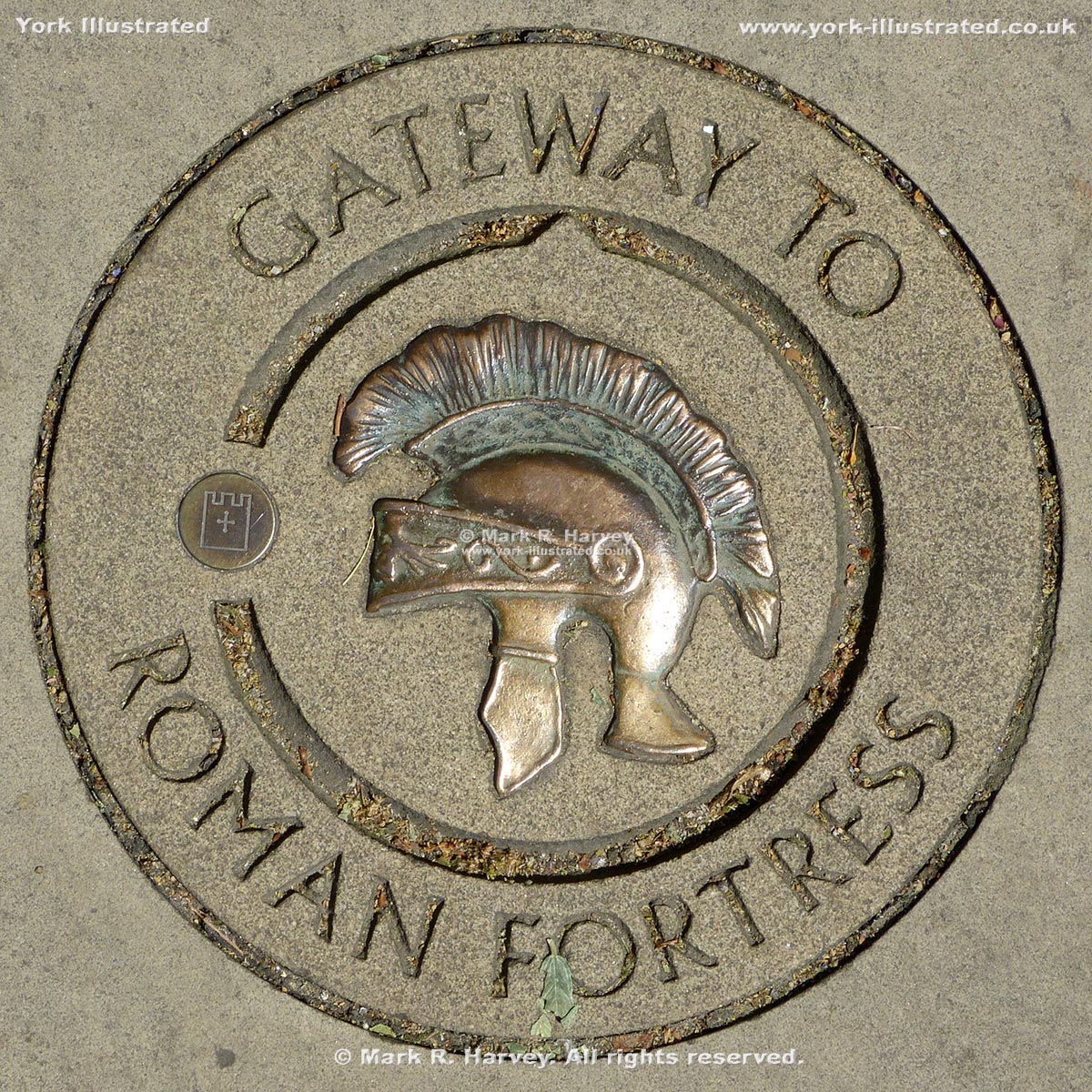
Pavement Marker for Roman Fortress Northeast Gateway (Porta Decumana)

A marker carved into a paving slab on the Wall Walk to indicate the approximate location of the Porta Decumana (the northeast gateway of the Roman fortress).

Photo as per caption. Opens larger version.

Pavement Marker on New Street for Roman Fortress Southwest Wall

A brass plaque set into the pavement on New Street to indicate the approximate location of the southwest wall of the Roman fortress.

Photo as per caption. Opens larger version.

Pavement Marker on Parliament Street for Roman Fortress Southeast Wall

A brass plaque set into the pavement on Parliament Street to indicate the approximate location of the southeast wall of the Roman fortress.

Photo as per caption. Opens larger version.

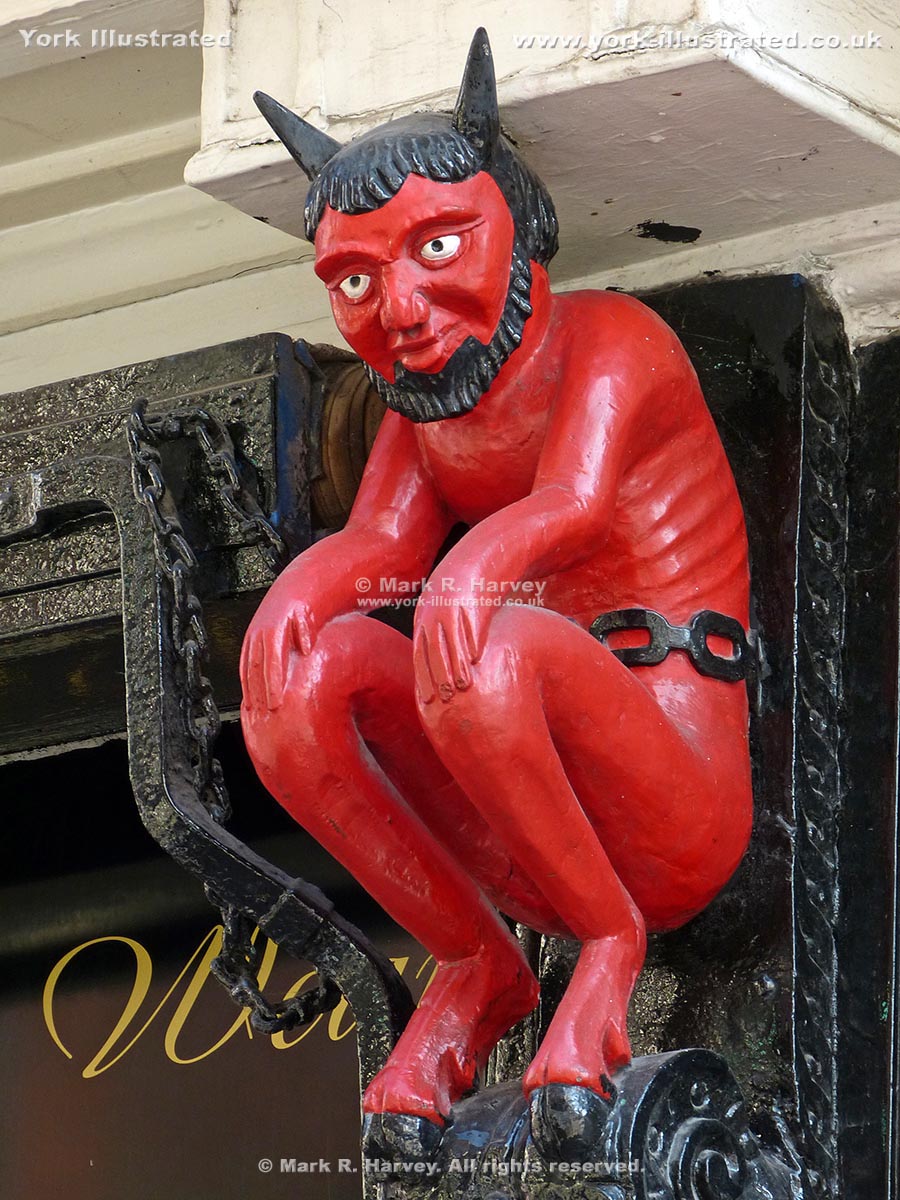
Printer's Devil (a.k.a. Little Red Devil) Carving

For centuries, apprentice printers were known as 'printer's devils' and 3D images like this one were commonly used to mark the location of printing workshops.

Read more

Photo as per caption. Opens larger version.

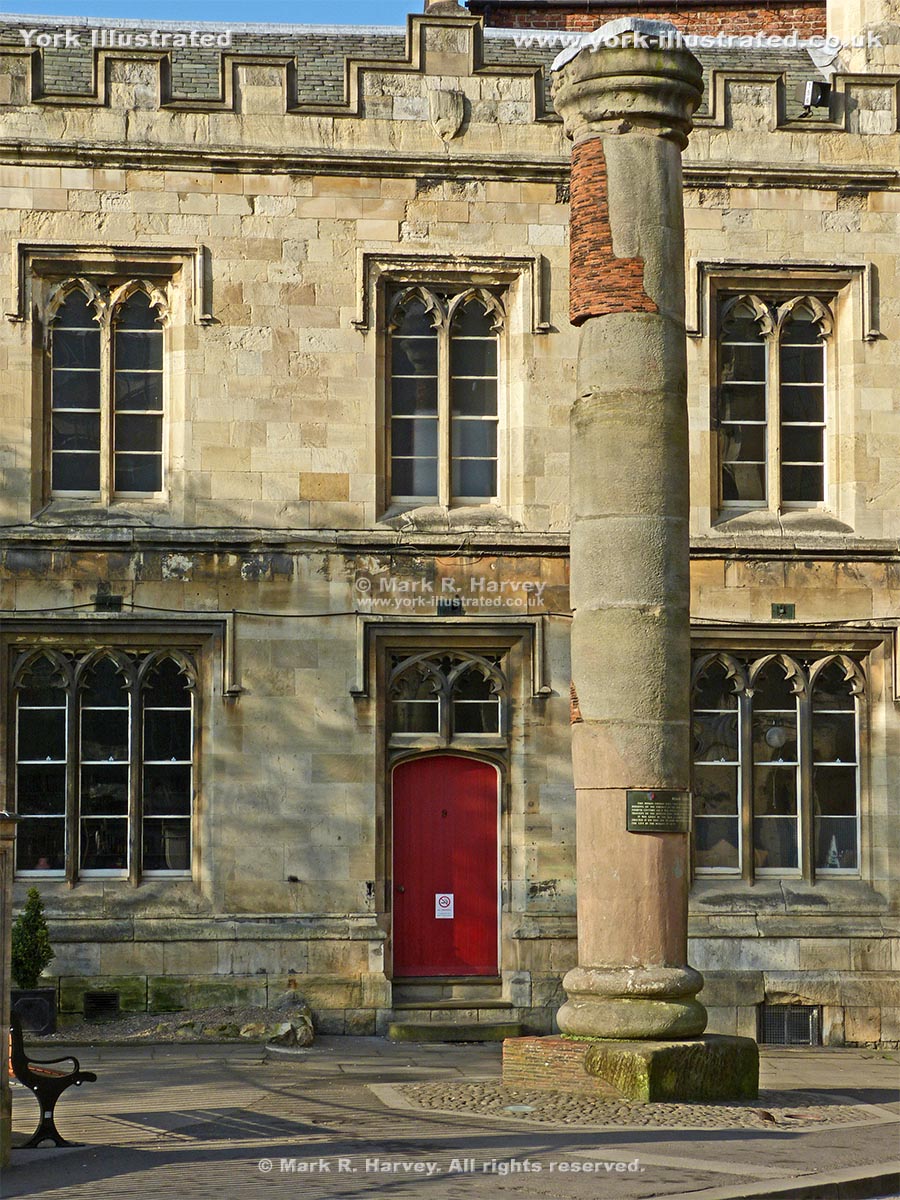
Roman Column

This stone column from the 4th century Roman principia (headquarters building) was found in 1969 during excavations beneath the south transept of York Minster.

Read more

Photo as per caption. Opens larger version.

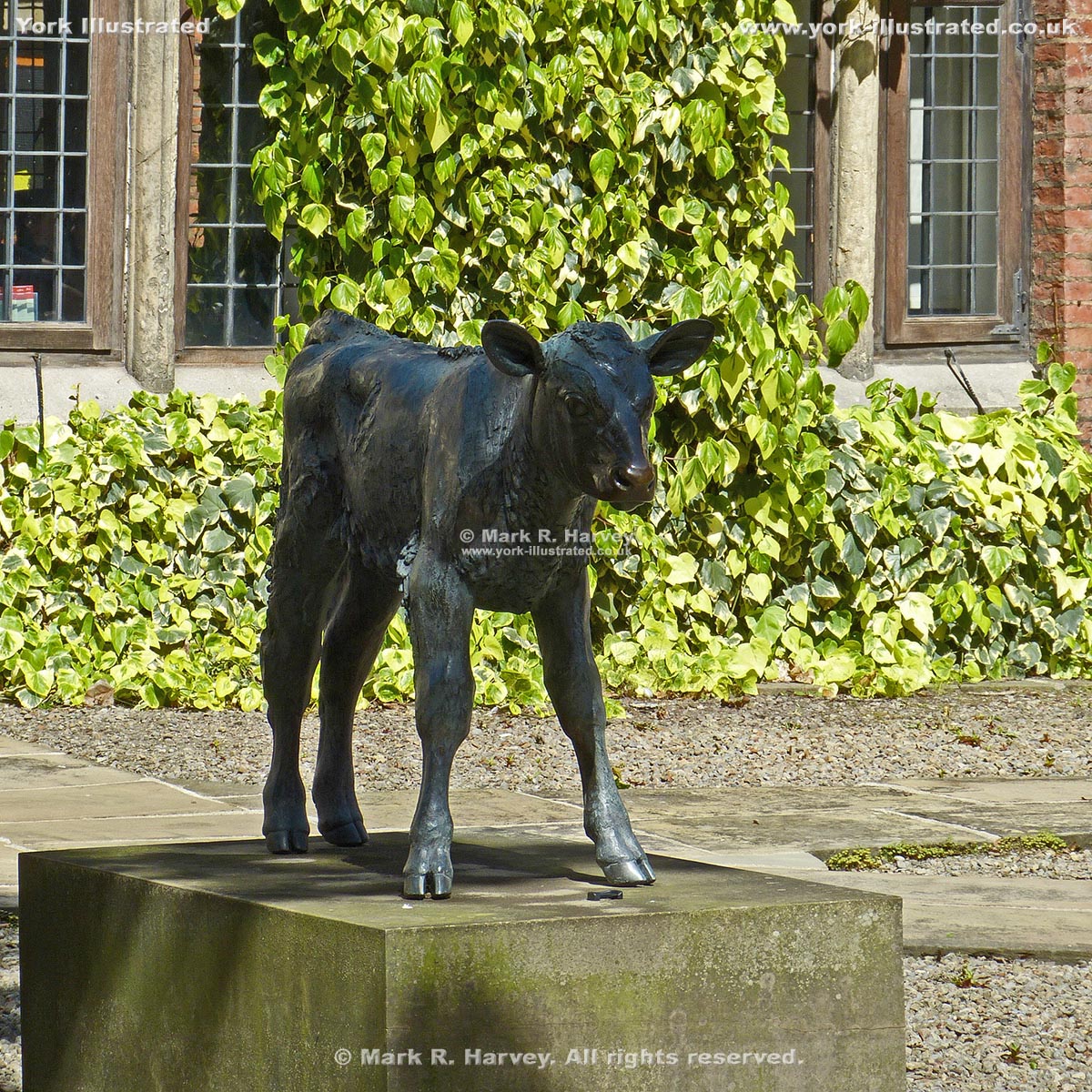
Statue of Friesian Bull Calf

This statue of a Friesian bull-calf was cast in bronze using the 'lost-wax' process from a clay master created by local artist Sally Arnup.

Read more

Photo as per caption. Opens larger version.

Tactile Model of the York Minster Area

A useful and interesting 'tactile model' of the area surrounding York Minster has been installed in Minster Yard, near the Minster's West Front.

Read more